



Taxi drivers ‘barely breaking even’
Middle East tensions, repeated setbacks push cabbies to the brink
FOR the last two years taxi operators have had to band their bellies, foregoing a fare increase while Jamaica grapples with successive setbacks, but the financial strain has come to a head for many who are struggling to break even, while others have already lost their vehicles due to unpaid loans.
With the latest surge in fuel prices linked to the ongoing Middle East tensions, their hopes of a period of stability to finally pursue a fare adjustment have been dashed. And with talks from local authorities about considering work-from-home measures to curb fuel consumption, taxi operators are worried.
President of the All Voice Taxi Association, Lorraine Finnikin, is warning that limiting the movement of commuters would further cut into operators’ earnings; the proposal was raised at a recent press conference at which Energy Minister Daryl Vaz cautioned that Jamaicans should brace for higher fuel costs as the Government can no longer afford to absorb billions in subsidies.
Vaz announced a new pricing mechanism for State-owned refinery Petrojam Limited, citing ongoing geopolitical tensions in the Middle East and indicating that consumers could begin seeing higher petroleum prices as early as this week as the refinery shifts to a tiered system more closely aligned with global market movements.
Finnikin noted that taxi fares in Jamaica increased by 19 per cent effective October 15, 2023 for route taxis and rural stage carriages — the first phase of an approved 35 per cent total increase designed to offset high operating costs. A further 16 per cent increase was planned for 2024, though its implementation was delayed and operators have been feeling the losses, especially over the last three weeks.
“For one of the Probox [motor vehicles], which is one of the more popular taxi cars that we have, prior to the Middle East crisis, an owner/operator would have spent between $5,500 and $6,000 per day to fully stand, that’s working right through the day. The increase started from [an additional] $1,800 in one day to $2,000 within the next week, and we are now at $2,600, so that is somewhere between $1,800 and $2,600 increase in fuel alone,” the president told the Jamaica Observer.
He added that the association presidents across the island who submit documents to the Transport Authority have also seen an increase in stationery costs, such as printing paper and receipt books. He said, too, that maintenance costs for vehicles have also soared.
“We have seen our maintenance equipment and our automatic parts go up to as high as 80 per cent in some cases, especially as it relates to lubricants — that’s the oil we use for servicing of the engine. Our major service parts are brakes, engine oil, spark plugs, oil filter, and air filter, so we have been seeing those increases, but…those maintenance items are not used daily or weekly, some of our members service their vehicle every four weeks, others service every six weeks, and there are some that service every three months.
“You will need to spend money on these things, but the gas is really killing us. And the worst part of it on our part is that we cannot increase our fares, so the income that our members would normally get per day, because the income has not changed, it is from that income they have to go in to buy additional gas…That is a burden on owners and operators because we have been operating for a number of years now at almost operational costs. We are just barely breaking even as it relates to our income,” he shared.
Finnikin warned that work-from-home arrangements would further reduce commuter demand and deepen the financial strain on taxi operators.
“One of the fears that has been driving us since the minister made the remark at the press conference is that our members are significantly upgrading vehicles over the last three to five years, and 70 per cent or more of the upgrades that were done were through loans, and so people start to worry.
“In fact, speaking to one of the rural presidents, he told me that he has seen a significant number of his members have their vehicles repossessed within the last three to four weeks because we are not able to get loans through the commercial funds, where we could get motor vehicle loans at either single digit or a little bit over 10 per cent. We have to be going to the micro lenders and we are getting loans at some very exorbitant interest rate and our weekly payments to these micro lenders are very high, so when you’re forking out an additional $12,000 to 15,000 per week for gas and your income doesn’t increase, then the fear is…that we’re going to be seeing repossession at a high scale,” said Finnikin.
He noted that while some operators have illegally increased fares, he has urged them to desist and remain patient, cautioning that there is only so much strain the sector can bear before it begins to collapse. The president said the operators have been patient, facing one setback after another.
“The deferral [in 2024] was based on inflation. This was not something that the Government had to tell us…We saw the index report coming out of the Bank of Jamaica monthly, and we saw the report coming from the Planning Institute of Jamaica (PIOJ), so we knew it. When the inflation started to gradually go down in 2025, we were watching it earnestly because the 16 per cent, we didn’t want it, we needed it. We were dying for it.
“Every now and again an operator would call and ask, ‘Where is the inflation now, Mr Finnikin?’ We would watch it like a hawk,” he told the Sunday Observer.
“When we saw inflation come to four per cent, I think this would have been mid-June of 2025, we all said, ‘Yes, the Government can’t come tell me anything now. Inflation is at a relatively acceptable level, so we should be able to get our 16 per cent.’ The prime minister was just getting ready to announce the election date; no Government is going to give a fare increase during the election, so we band our belly again,” said Finnikin.
He said operators were hoping for an increase in November, but the devastating Category 5 Hurricane Melissa ripped through the island on October 28, 2025, destabilising the economy and washing away any hopes of a fare increase.
“Then the Bank of Jamaica and PIOJ again started to warn us from late November that we must brace ourselves for increase in [the price of] goods and services in the first quarter of 2026. Now, we all know that the public transportation sector is the largest mover of goods and service so when the bank tells you and PIOJ tells you that there’s going to be a massive increase in goods and service in the first quarter, it put us again now in a worrying position, because that is going to be affecting us directly,” said the president.
He continued: “We saw the increase gradually from as early as December 2025, with all of the effects of Hurricane Melissa. We saw it gradually increasing in 2026, but we were hoping that inflation would be stabilised based on the fact that we were seeing the recovery from [Hurricane] Melissa getting on very fast.”
However, he said operators now have to deal with the fallout from the Middle East conflict and are praying this will be their last hurdle.
Last month, Minister Vaz said operators would know in a matter of weeks, a definitive timeline as to when the increase would be made a reality.
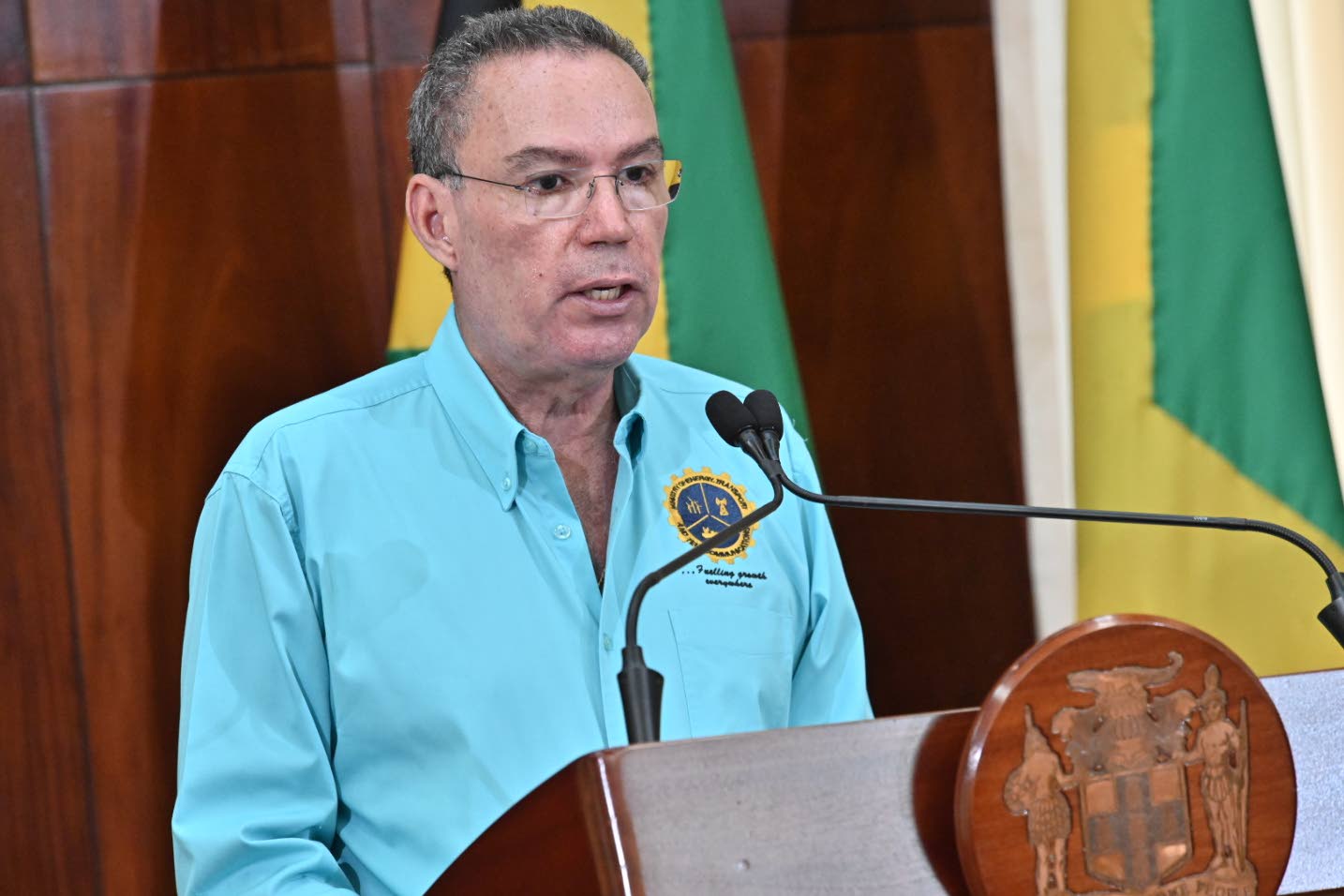
Energy Minister Daryl Vaz making the point during the post-Cabinet media briefing last Wednesday that no decision has yet been made to curtail movements due to increase fuel costs. (Photo: Joseph Wellington)

FINNIKIN…the fear is that we’re going to be seeing repossession at a high scale


