



Observe the boundaries
Education minister cautions against blurring line between crime and school indiscipline
Minister of Education Dr Dana Morris Dixon has cautioned against blurring the line between criminal offences and school-based misconduct, warning that efforts to expand Jamaica’s Child Diversion Programme must not undermine the role of existing child protection systems.
Addressing Thursday’s sitting of the Joint Select Committee reviewing the Child Diversion Act, Morris Dixon made it clear that while troubling behaviour in schools demands stronger intervention, not every case should be absorbed into a criminal justice-based framework.
Her remarks came as the committee examined proposals to use the Child Diversion Programme to address incidents such as school fights, bullying and petty theft, issues which have increasingly been linked to wider concerns about violence among students.
Morris Dixon pointed out that in practice, welfare-based interventions are already taking place through the Child Care and Protection Act (CCPA), particularly via the Child Protection and Family Services Agency (CPFSA), which works directly with families and schools.
“In the situations that have come up in recent times, the CPFSA has been involved with the schools. They have taken the children, they have visited the families, visited the homes, done the psychological support, given that kind of support, and given lots of other support to the children, very similar to what happens in the Child Diversion Programme. There’s just a difference between children who come into conflict with the law and those who are seen to be somewhat uncontrollable or having issues,” explained Morris Dixon.
Despite similarities in approach, she stressed that the distinction between the two systems is fundamental and should not be collapsed.
The minister also urged the committee to take a broader view of the existing framework before proposing legislative changes, noting that multiple agencies are already operating within schools.
“So I think it’s important that we understand the whole lay of the land, which is something I have been saying, so that we understand where child diversion starts and ends, where CCPA starts and ends, and where there are any gaps, in terms of some of the approaches and techniques that and where there are any gaps, and then when we find the gaps, we figure out which legislation is appropriate to do it under,” added Morris Dixon.
She further suggested that some of the challenges may be administrative rather than legislative, warning against duplicating systems that already exist.
Her intervention came in response to a proposal from a student at the University of the Commonwealth Caribbean (UCC) Daniel Barnes, who argued that schools currently lack a clear pathway to deal with escalating misconduct.
“I believe the current pathway for a school is not clear, and being a member of a disciplinary committee, there are patterns observed and brought to the committee by the guidance counsellor, and as they observe behaviour and they bring it to the disciplinary committee, the child is deemed, for want of a better word, uncontrollable, and there is intervention, but not the intervention which causes for a change of behaviour within the child. And so we reach out to the relevant agencies like CPFSA, restorative justice, but that does not cause a change of behaviour within the child,” argued Barnes.
He proposed a three-tiered system designed to intervene early, before misconduct escalates into serious violence or criminal charges.
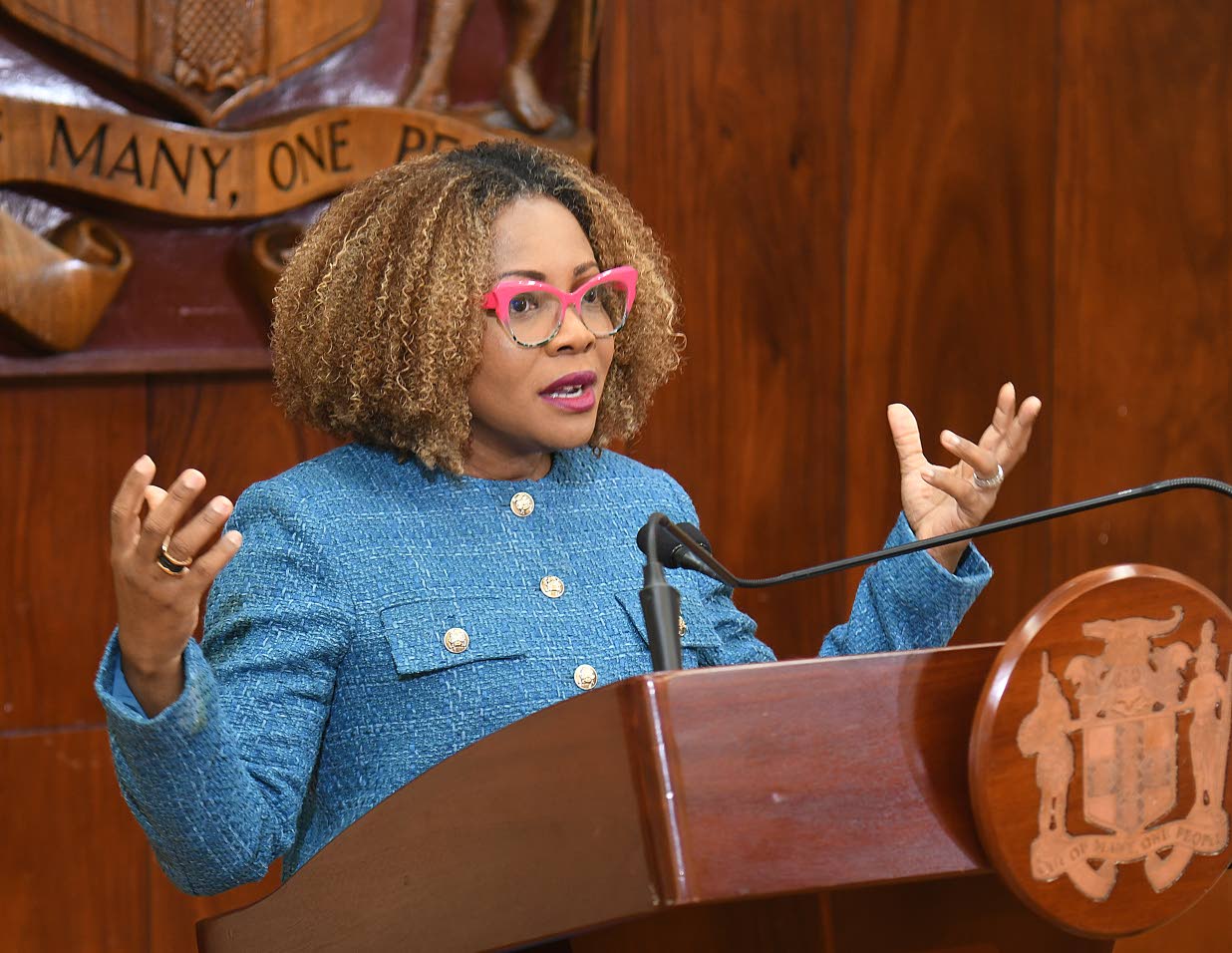
MORRIS DIXON…while troubling behaviour in schools demands stronger intervention, not every case should be absorbed into a criminal justice-based framework (Photo: Karl Mclarty)


