



‘Resounding success’
Organisers, Gov’t say 2026 Carnival showed strong despite setbacks
Carnival in Jamaica stakeholders are pushing back against efforts to define the 2026 season by a single negative incident, insisting that this year’s staging stands as a powerful testament to the country’s resilience, recovery, and creative strength.
Chairman of Carnival in Jamaica Kamal Bankay underscored that the event is far more than a seasonal celebration, describing it as a year-round undertaking that requires sustained planning, promotion, and international engagement.
“As soon as we wrap a [Carnival] season we begin looking forward to another staging,” Bankay explained, noting that the team actively promotes the brand in key markets, such as Trinidad, London’s Notting Hill Carnival, and Miami Carnival, to drive growth.
Heading into 2026, expectations were high. However, those projections were threatened by the devastating impact of Hurricane Melissa, which severely affected sections of western Jamaica and forced a national pivot toward recovery efforts.
“It was a very sad time for our country and… relief and rebuilding efforts would take precedence over anything else,” Bankay said.
Despite the uncertainty that followed, stakeholders made a deliberate decision to revive the entertainment sector as part of the broader recovery strategy.
In the months after the hurricane, Carnival organisers resumed planning with renewed energy.
“We had to work overtime to get everything up and running and to ensure that when we touched the road in April. We gave revellers the best staging of carnival they’d ever seen,” he added.
The 2026 staging delivered strong turnout, high energy, and even historic expansion, including the introduction of Carnival activities in Negril — an area still recovering from the hurricane’s impact.
“Carnival this year showed that Jamaica bounced back. All systems were firing… it felt like one big party and that’s what should have been the focus,” Bankay said, noting that early estimates suggest participation levels matched 2025 figures, with economic impact expected to meet or exceed last year’s performance.
Minister of Tourism Edmund Bartlett echoed that sentiment, describing the road march as both a cultural and economic success.
“It was a great opportunity for tension release and exhaling after that massive hurricane and all the trauma that it brought. It is an excellent show. Jamaica is open for business and we are back,” Bartlett said.
He further praised the organisational capacity behind the event, pointing to its execution as proof of Jamaica’s ability to manage large-scale, complex productions.
However, the celebratory atmosphere was briefly overshadowed by a shooting at a Kingston after-party, commonly referred to as the Big Wall incident, which left three men injured. The matter, involving entertainment figures Jaii Frais and Jahvy Ambassador, has since entered the legal system and continues to attract public attention.
Stakeholders have been quick to condemn the violence while cautioning against allowing it to define the entire season.
Mayor of Kingston Andrew Swaby described Carnival 2026 as a “resounding success” that stimulated economic activity across multiple sectors, even as he denounced the incident.
Bankay was equally firm in distancing the shooting from the broader Carnival experience.
“Having even one unfortunate incident at an after-party for Carnival is one too many. We had over 70 great events for the season, a massive road parade, and all of those things were flawlessly executed,” he said. “What happened is not a reflection of Carnival whatsoever. It obviously was an extreme event… but when that noise settles, people are going to resume talking about how wonderful Carnival was.”
For organisers and stakeholders alike, that is the narrative they hope will ultimately endure — one not defined by a single moment of disruption, but by a season that showcased Jamaica’s resilience, cultural vibrancy, and capacity to rebuild stronger than before.
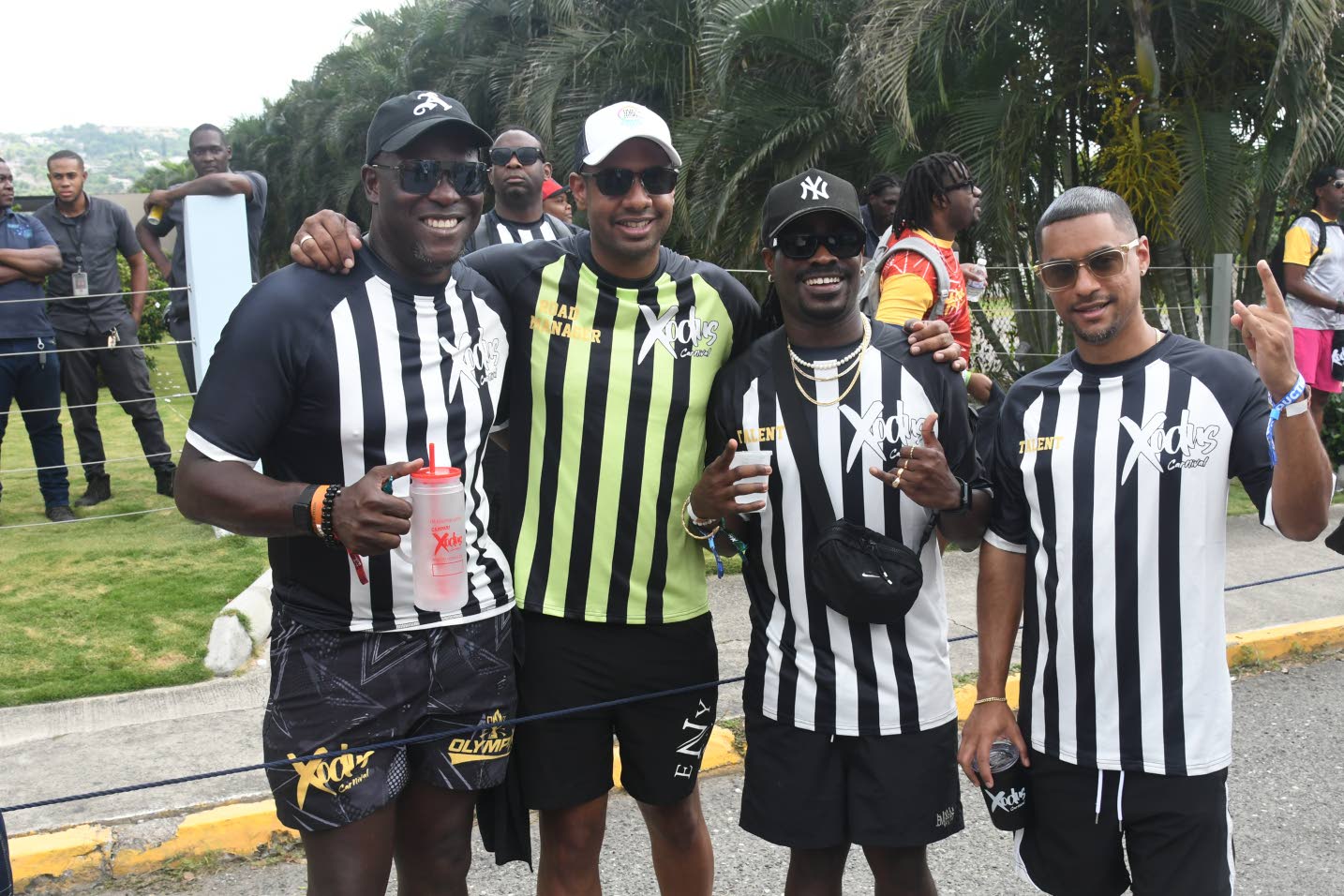
Captured front and centre for the Xodus Olympix were (from left) Flow Jamaica Vice-President and General Manager Stephen Price, Carnival in Jamaica Chairman Kamal Bankay, and Trinidadian DJs Kevaughn “Lurbz” Savory, and Esan “Dr Esan” Ali. (Photo: Karl Mclarty)
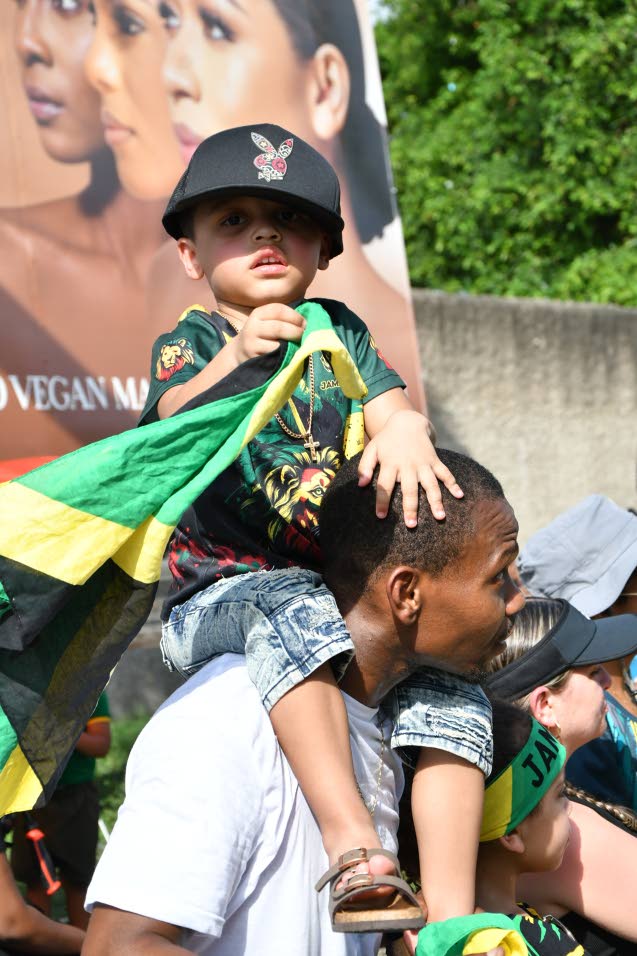
This little one has a bird’s-eye view of the festivities. (Photo: Garfield Robinson)


