



This Day in History – May 18
Today is the 138th day of 2026. There are 227 days left in the year
TODAY’S HIGHLIGHT
2006: Visiting one of the busiest crossing sectors between the United States and Mexico, President George W Bush says in Yuma, Arizona, that it makes sense to put up fencing along parts of the border — but not to block off the entire 2,000-mile length — to keep immigrants from entering the US illegally.
OTHER EVENTS
332: Roman Emperor Constantine the Great institutes free daily bread rations in Constantinople.
1096: Crusaders massacre the Jews of Worms.
1291: After 100 years of control the last Crusader stronghold of Acre is reconquered and destroyed by the Mamluks under Sultan al-Ashraf Khalil
1302: The Bruges Matins, a nocturnal massacre of the French garrison in Bruges by local Flemish militia, takes place; led by craftsmen Pieter de Coninck and Jan Breydel, it sees local Flemish militia slaughtering approximately 2,000 French soldiers and Leliaards (French sympathisers) in their sleep using pikes and goedendags (club with spear).
1565: The Turkish Armada arrives to begin the Great Siege of Malta, aiming to establish the island as their gateway for the conquest of Europe.
1619: Dutch jurist and scholar Hugo Grotius is sentenced to life in prison in Loevestein Castle in the Netherlands; he later escapes in a book chest.
1781: Peruvian revolutionary Tupac Amaru II is forced to witness the execution of his family by the Spanish in the main plaza in Cuzco; he is then tortured and beheaded.
1830: Edwin Budding of England signs an agreement for the manufacture of his invention, the lawnmower.
1896: The US Supreme Court endorses the concept of “separate but equal” racial segregation with its Plessy vs Ferguson decision, a ruling that is overturned 58 years later in Brown vs Board of Education.
A stampeding crowd on Khodynka Field, Moscow, during coronation festivities for Russian Tsar Nicholas II, causes the deaths of an estimated 1,300 people.
1899: An international peace conference is convened at The Hague in the Netherlands; it adopts conventions on warfare and creates the Permanent Court of Arbitration, now the United Nations (UN) International Court of Justice.
1940: Brussels falls to the invading German army in World War II and is subjected to harsh terms of occupation.
1951: The UN, previously without a permanent home, begins to move into headquarters in New York City, USA.
1970: Khmer Rouge forces advance to within 40 kilometres (25 miles) of Cambodia’s capital, Phnom Penh; they are repulsed, but take the capital five years later.
1972: Four bomb-disposal experts parachute into the Atlantic from a Royal Air Force plane and board liner Queen Elizabeth II, followiing a bomb threat.
1974: India becomes the sixth nation to detonate an atomic bomb.
1982: Unification Church founder Reverend Sun Myung Moon is convicted of tax evasion.
1983: The US Senate revises immigration laws and gives millions of illegal aliens legal status under an amnesty programme.
1992: The US Supreme Court rules states cannot force mentally unstable criminal defendants to take anti-psychotic drugs.
1993: Italian police arrest Mafia boss Benedetto “Nitto” Santapaola.
1994: Israel withdraws from the Gaza Strip.
1998: In court case United States v Microsoft, the US Department of Justice and 20 states file an antitrust case against Microsoft.
1999: Millennium, the third studio album by the Backstreet Boys, is released — one of the best-selling albums of all time with over 30 million copies sold.
2001: Saudi Arabia selects the eight foreign companies to take part in its Gas Initiative — three core venture gas projects that have an anticipated worth of US$25 billion.
2003: Barb Tarbox, Canadian anti-smoking crusader, dies at 42.
2009: The Liberation Tigers of Tamil Eelam are defeated by the Sri Lankan Government, ending the Sri Lankan Civil War and almost 26 years of fighting between the two sides.
2011: Dominique Strauss-Kahn, managing director of the International Monetary Fund, resigns, saying he wants to devote all his energy to battling the sexual assault charges he faces in New York; the charges are later dropped.
2012: Facebook, an American company offering online social networking service, makes its trading debut with one of the most highly anticipated IPOs in Wall Street history; however, by day’s end Facebook stock closes up only 23 cents from its initial pricing of US$38.
2015: An 11-judge panel of the ninth US Circuit Court of Appeals in San Francisco says a three-member panel of the same court should not have forced YouTube to take down an anti-Muslim film that sparked violence in the Middle East and death threats to actors.
2017: American television producer and political consultant Roger Ailes — a highly influential figure in the Republican Party, especially as the founding president of the Fox News Channel (1996–2016) — dies at age 77.
2018: All of Chile’s 34 Roman Catholic bishops offer their resignation to Pope Francis in the wake of a child sex scandal.
2020: US President Donald Trump confirms he is taking controversial drug hydroxychloroquine to combat COVID-19.
2021: India records the highest recorded daily COVID-19 death toll to date in the world with 4,529 deaths
2022: Amid a nationwide US baby formula shortage, President Joe Biden invokes the Defense Production Act, requiring suppliers to fulfil orders to baby formula manufacturers first.
2025: Russia launches its largest attack on Ukraine since the beginning of the war, with 273 drones.
TODAY’S BIRTHDAYS
St John Paul II, Polish pope of Roman Catholic Church and third longest-serving pope in history (1920-2005); Hugh Shearer, Jamaica’s third prime minister (1923-2004); Ai Weiwei, Chinese activist and artist (1957- )
– AP/Britannica.com/OnThisDay.com/ Jamaica Observer
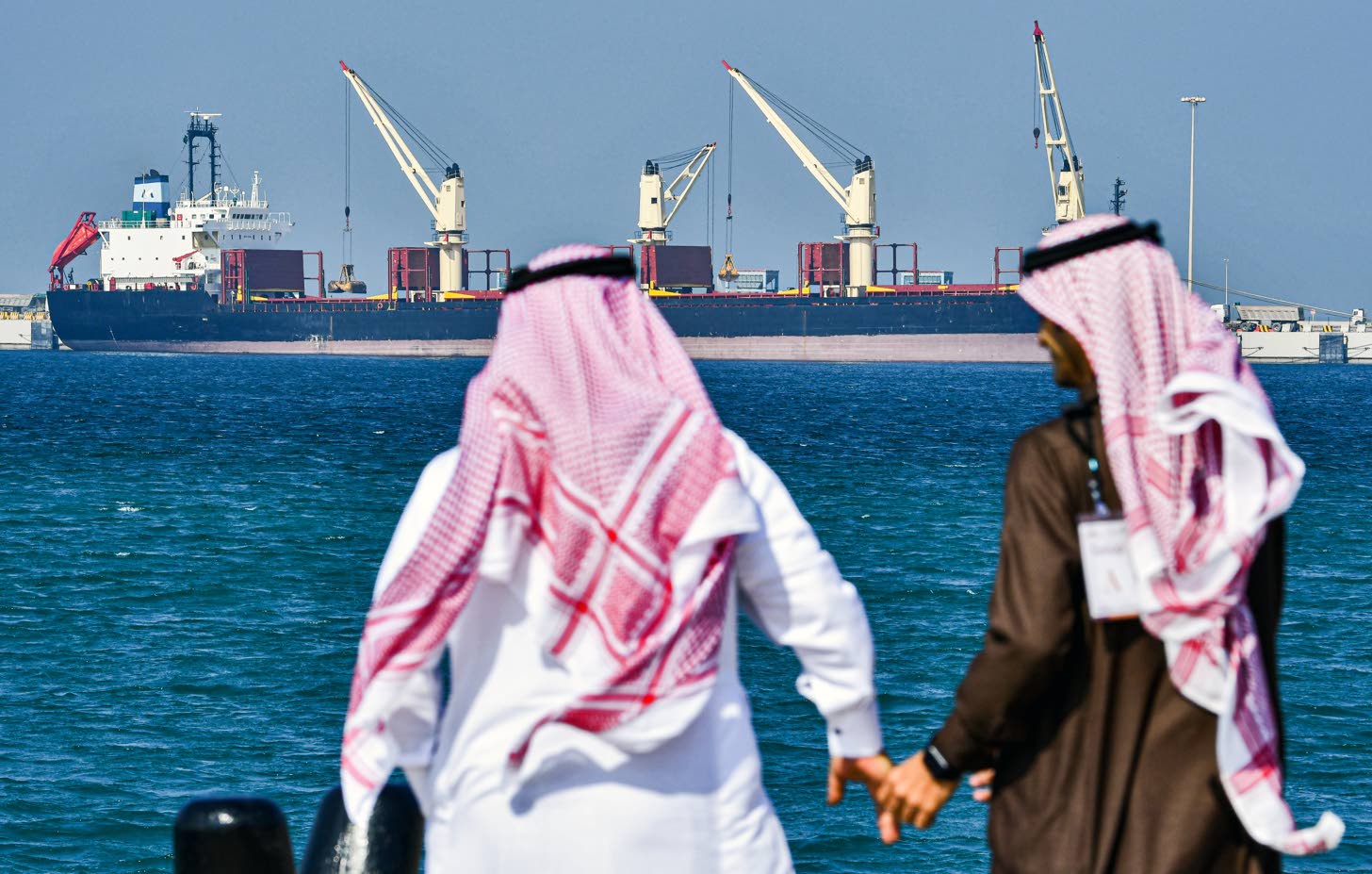
An oil tanker in the distance docks at the port of Ras al-Khair, Saudi Arabia. Today in 2001 Saudi Arabia selects the eight foreign companies to take part in its Gas Initiative — three core venture gas projects that have an anticipated worth of US$25 billion.Photo: AFP
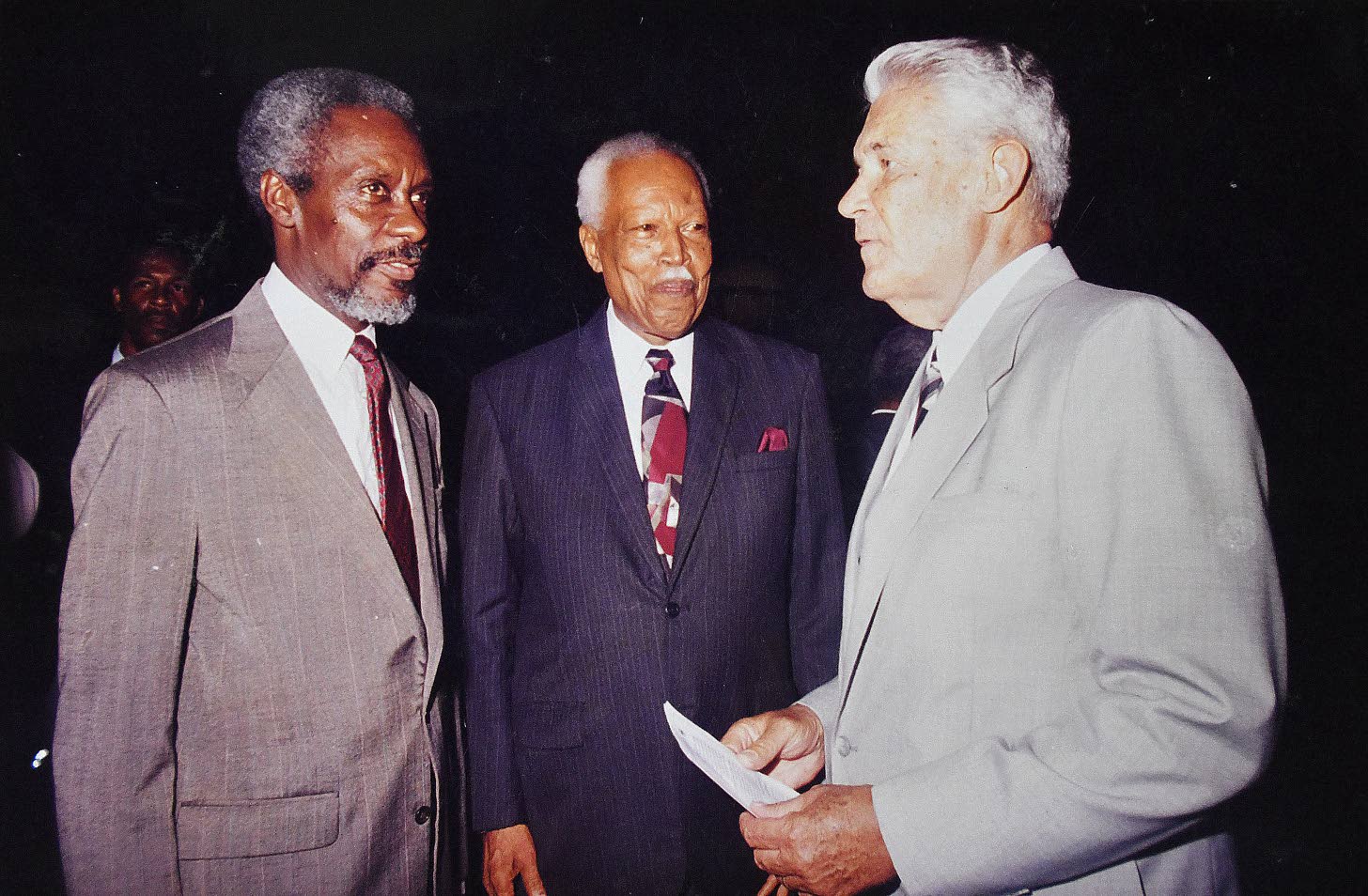
Hugh Shearer (centre), Jamaica’s third prime minister, stands between his successor, Prime Minister PJ Patterson (left), and predecessor Michael Manley. Shearer was born on this day in 1923 and died in 2004 at 81.a


