LESSONS LEARNT!
Beryl, Melissa pain guiding utility companies as they prepare for 2026 Atlantic Hurricane Season
JUST seven months after Hurricane Melissa ravaged Jamaica’s south-western parishes the island is bracing for another Atlantic hurricane season which starts tomorrow, with the major utility companies saying they are as ready as they can be.
Forecasters with the United States National Oceanic and Atmospheric Administration (NOAA) are predicting a below-normal season, which runs June 1 to November 30.
NOAA predicts a 35 per cent chance of a near-normal season, a 10 per cent chance of an above-normal season, and a 55 per cent chance of a below-normal season.
The agency is forecasting a total of eight to 14 named storms — winds of 39 miles per hour (mph) or higher. Of those, three to six are forecast to become hurricanes — winds of 74 mph or higher, including one to three major hurricanes with winds of 111 mph or higher.
Representatives of Digicel, Flow Jamaica, Jamaica Public Service Company (JPS), and National Water Commission (NWC) detailed their preparedness strategies during a Jamaica Observer Press Club at the newspaper’s main office last Thursday, insisting they are now as prepared as they will ever be.
JPS was particularly hard-hit by Melissa, with an estimated $3.5 billion in damage to its transmission and distribution lines and more than 540,000 customers losing electricity.
But JPS Chief Operating Officer Lance Becca told the Observer editors and reporters that the company has restored supply to most of its customers and has used the recovery period to improve both infrastructure and response capabilities.
“As of today [last Thursday], we have restored supply availability to over 99.9 per cent of our customers and we still have a handful that’s still out there. We’re still working in conjunction with them so when they’re ready, we should be there to help get them back on the grid,” Becca said.
He said JPS has focused on building stronger systems rather than only replacing what was lost.
“We’re not just going back with the same old poles. We’re going with thicker poles. We have new technologies called PoleCrete [a rapid-setting alternative to traditional concrete and aggregate backfill for utility pole installation] which kind of secures the…poles. We’re putting more storm guides in to really make sure that the poles are resistant to high winds and those type of weather environments,” added Becca.
He said lessons learnt from Melissa have already been incorporated into planning for the new hurricane season.
For Digicel’s Chief Executive Officer Stephen Murad, hurricane readiness has become a permanent state of operation.
“I don’t think we have been out of hurricane preparation and execution for the past two years, so I don’t think hurricane prep really exists as a phrase any more in our world. I [don’t] think we have been out of it since Beryl [July 2024],” Murad said.
He told Observer editors and reporters that within three months of Hurricane Melissa’s passing last October, Digicel restored 100 per cent of its mobile network customers and all fixed-network customers and has since focused on network optimisation and strengthening infrastructure.
Murad said the company has expanded its tower network, built additional fibre transport routes, deployed more solar-powered sites, and developed alternative connectivity solutions using satellite and microwave technology.
“Up to the hurricane we had 925 towers in Jamaica as part of this programme…So every year we will build more towers. Why? Because we need more coverage. More high-rise buildings in Jamaica means coverage is going to be intercepted by concrete and steel buildings. We need to re-increment the building. So today we are about 935 towers. We will probably build another five this year,” said Murad.
He pointed out that Digicel has also become more resilient operationally, learning how to manage large-scale fuel distribution to keep generators running during prolonged outages.
“I always think the most important thing is you have to learn and learn quickly, and do things differently because I think the public would not forgive us if we didn’t learn from our [experiences] and do things differently,” said Murad.
Flow Jamaica, Vice-President and General Manager Stephen Price said the company has made significant investments since Melissa while adapting to increased demand for digital services.
He explained that while the fixed network is still in recovery, with about 82 per cent of users back online, service was fully restored for Flow’s mobile customers.
“From a mobile perspective, we’re 100 per cent up. And 100 per cent up generally, right across the island, because we’ve also invested in adding additional sites as well since the hurricane,” Price said.
He noted that network traffic has increased by approximately 60 per cent since Melissa last October and highlighted a growing adoption of digital services among Jamaicans.
Price also pointed out that Flow has invested about US$85 million in network infrastructure and another US$27 million in additional spectrum capacity while strengthening backup systems and redundancy measures.
“I would say, we started our programme in July last year, actually. We have now undergrounded somewhere around 80 kilometres of transmission cables, which have really helped us. Since the hurricane, we have reinforced a couple more landing sites in terms of sub-sea, particularly our Negril site as well, and our Black River site…” added Price as he pointed to the company’s need to adjust in the case of storm surges.
Price told the Press Club that Flow now has direct-to-cell capabilities, with about 40 per cent of its mobile network supported by satellite due to its partnership with Starlink, and has expanded its disaster recovery options for business customers.
“We are as prepared as we can be,” declared Price. “While no network is immune to any kind of weather event, I think what is key is that we believe that we have the business continuity plans to respond in as quick a time as possible to make sure that we deliver on it.”
The NWC also believes it is entering the season in a stronger position despite continuing repairs to some storm-damaged infrastructure.
NWC Acting Corporate Public Relations Manager Delano Williams said the entity has restored service to between 98 and 99 per cent of its 551,000 customers but continues to grapple with damage caused by both hurricane-force winds and flooding.
“There has been no infrastructure that has not been or could not have been impacted by a scale of what Hurricane Melissa brought to us. We have 100,000-gallon tanks which have just been decimated,” Williams said.
He explained that while many systems have been restored, some communities continue to experience disruptions because of damaged pipelines, saturated wells, and ongoing repair work.
“What that means is that even while we’ve restored a number of our facilities, there are still places where water supply has not come back to its optimum regularity, meaning they’re used to getting it seven days a week. Now they may have four days, five days.”
Against that backdrop, Williams said the NWC is investing approximately $1.2 billion in backup generation and resilience projects.
“We’ve already begun the procurement from last year into getting generators that are mobile. We are already spending out of $1.2 billion for additional generators to be placed at not just those primary plants which support main town centres but what you’d call the secondary ones that distribute water from the main plants further inland or to more customers,” Williams said.
He said the utility is also rehabilitating wells and expanding water sources across the island. When asked whether Jamaicans should feel confident heading into the season, Williams was unequivocal: “My short answer is yes.”
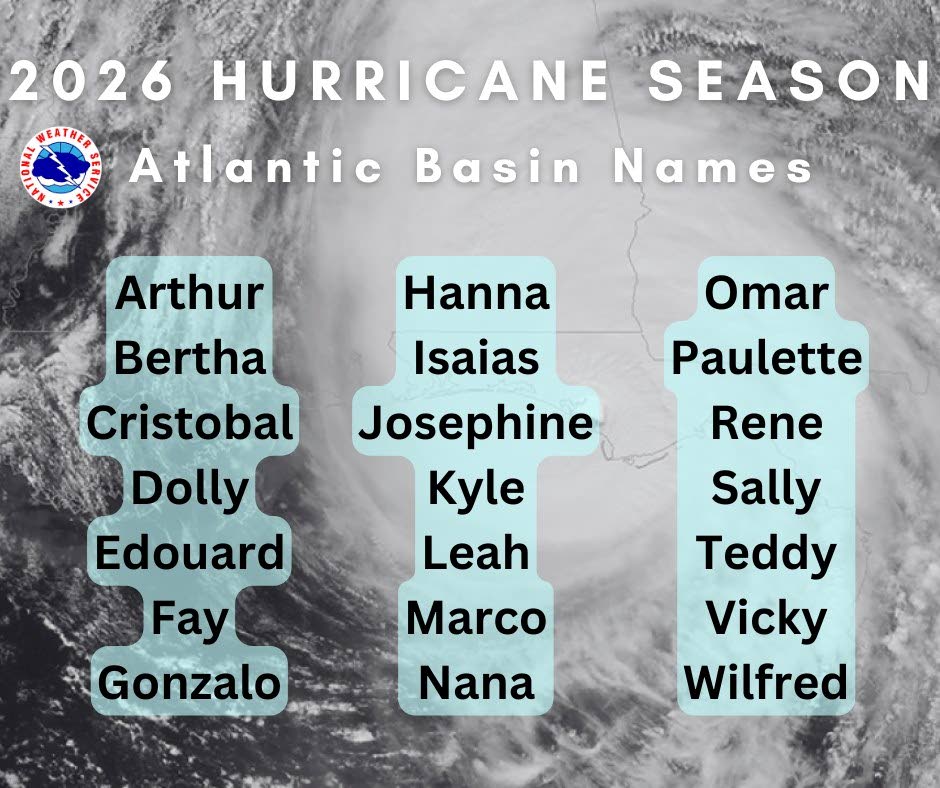
Photo: NOAA
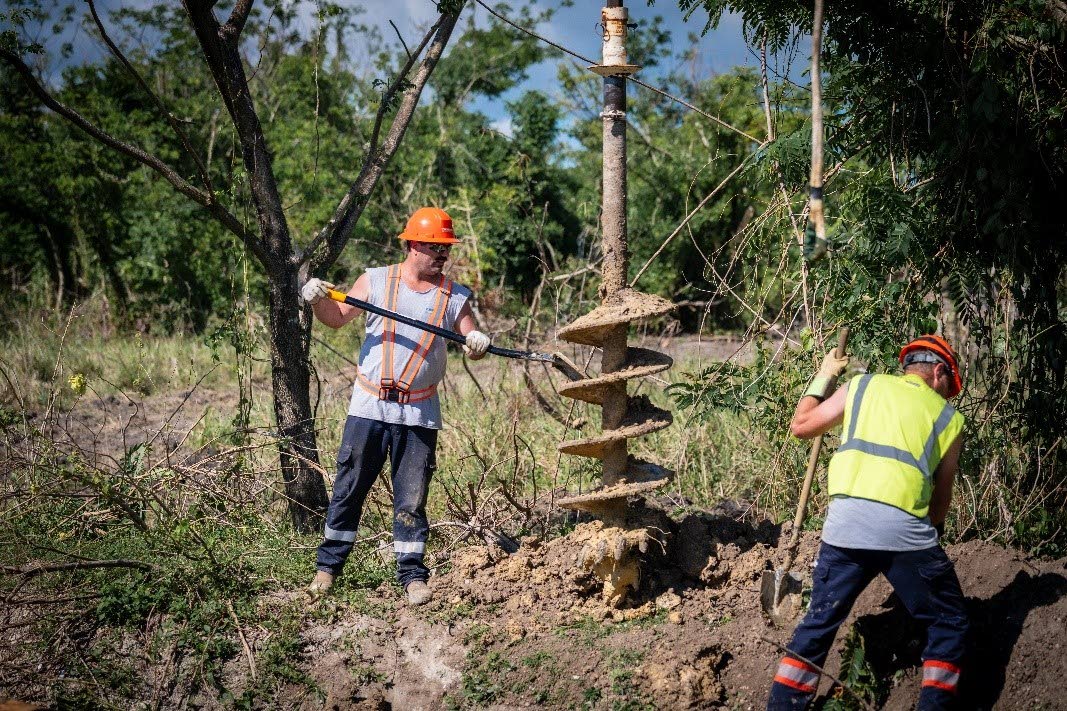
Crew members from Canadian contracting firm, Holland Power Services, are assisted by a digger derrick as they dig holes for the replanting of several JPS poles uprooted during the passage of Hurricane Melissa.