



SHAPING THE FUTURE
Sprint icon Fraser-Pryce commits to youth development through Pocket Rocket Foundation Student Athlete Summit
Before Shelly-Ann Fraser-Pryce became one of the greatest sprinters of all time, she was a promising student athlete with her whole life ahead of her. Drawing from those experiences, she wants to ensure today’s student-athletes are equipped to compete at a professional level or build successful futures outside of sports.
Jamaican sprint legend Fraser-Pryce, through her Pocket Rocket Foundation, held the second staging of its Student Athlete Summit at the Jamaica Pegasus hotel in Kingston on Friday.
This year’s event attracted more than 150 students from 30 high schools islandwide, up from 100 participants representing 20 schools last year. The event has also expanded regionally, with students from St Vincent and The Grenadines taking part.
The Pocket Rocket Foundation has been making an impact at the junior level through several initiatives, including awarding close to 120 scholarships to high school student athletes for the past 13 years.
However, Fraser-Pryce told the Jamaica Observer that hosting the Summit was essential in giving students a space to find support and personal growth.
“We want to grow, we want student athletes to come out, and we want to reinforce the things that they are going through year after year because [sports] is not just one year, it’s every year, and for a lot of them there are different seasons in their journey,” she said. “An athlete last year was a champion or they were successful, but this year, probably, they didn’t do so well at Champs and they would need that motivation to kind of fuel them for the next year. “
Jamaica College student athletes Kai Kelly (left) and Darnell Douglas (right) listen to Pocket Rocket Foundation founder Shelly-Ann Fraser-Pryce (second left) and noted American politician Stacey Abrams during the Pocket Rocket Foundation Student Athlete Summit at Jamaica Pegasus on May 29, 2026. Photos: Joseph Wellington
“So we are just hoping to provide an environment that these student-athletes can come and they can really just offload any tension, any difficult moments that they have, and they can also build themselves up for the next year, whichever sport that they play, whether it’s track or netball or football, whatever it is.”
While sport was a central focus, the Summit also exposed student-athletes to perspectives beyond play through presentations from high-profile speakers, including American politician and author Stacey Abrams.
Fraser-Pryce says wholistic development must be a priority given the limited lifespan of an athletic career.
“Being an athlete is not the only thing that they do, they do other things, and I want them to understand that they are a student first before they are an athlete, and we don’t know what can happen,” she said. “Challenges can come, obstacles can come, and they will eventually stop doing track or stop doing football, and we want them to be able to function in society in a positive way and not feel like they have lost everything when they have given up their sport.”
“It’s important to show them that, yes, we want you to be successful at your sport, but we also want you to pay attention to what you learn in the classroom because nobody can take your education away from you. What you will do ultimately is pair both things and create a platform that will eventually lead you to have a successful life, even after sport.”
After nearly 20 years at the highest level, Fraser-Pryce retired last year with three Olympic gold medals and 10 World Championships titles, creating one of the most decorated careers in track and field history.
While encouraging student-athletes to pursue their ambitions, Fraser-Pryce emphasised the need for patience and personal development beyond sports.
“When I started track, I wasn’t so driven and motivated, I was just doing it for doing it sake and eventually I found my footing and then I started to chase greatness. But what I do understand is that my journey is not going to be the journey for everybody else, so you have to really assess where you are in your life and in the stages and make adjustments as they come,” she said.
“Going professional right away may not be the right choice right away, and sometimes it can be the right decision. That’s why you have to rely on your community, the people who are around you that really support you and give you that 100 per cent honesty and feedback that you can use to make decisions.”
Fraser-Pryce added, “I know a lot of athletes want to become professionals, they want to become the next Shelly-Ann and the next Usain [Bolt] and the next you name it, but the reality is not all athletes will have that journey, and that is why it’s important that you focus on knowing who you are outside of your sport and building yourself up. Using the sport as a stepping stone to going to college, getting an education, find things that you are passionate about and get involved in your community. So I would say to them: Take it in stages, assess as you go.”
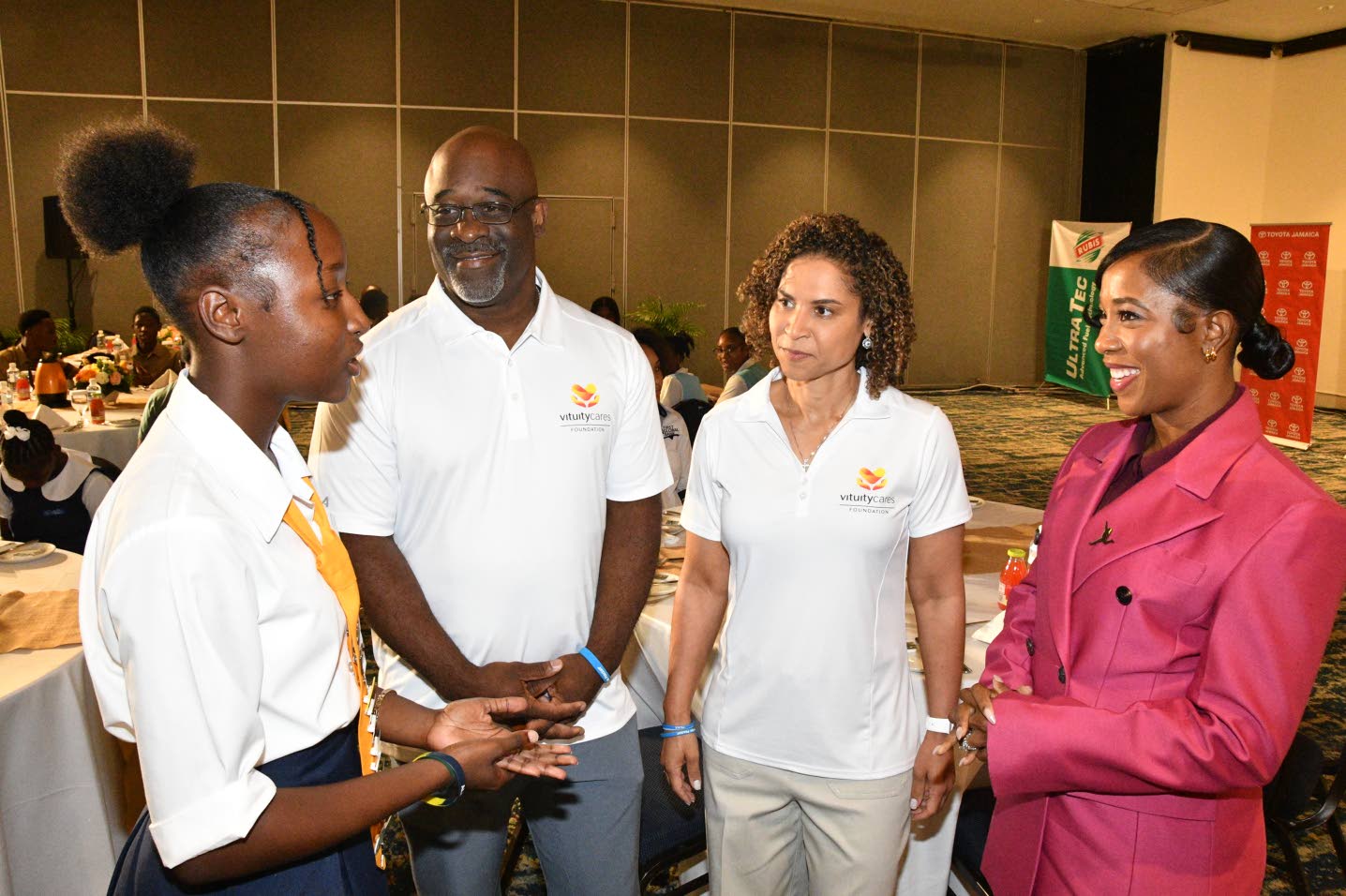
Convent of Mercy Academy lower six student Peter-Gaye Gray (left) engaged with Vituity Physician Director Dr Maureen Bell (second right), Pocket Rocket Foundation Founder and Chair Shelly-Ann Fraser-Pryce (right) and Vituity CEO Dr Imamu Tomlinson.


