



DEAD MAN BOUGHT AMMO
Integrity Commission says FLA database was manipulated
The Integrity Commission has concluded that the database of the Firearm Licensing Authority (FLA) was manipulated, with records showing a man purchasing 2,000 rounds of ammunition nearly three weeks after his death.
The finding forms part of a long-awaited report tabled in Parliament on Tuesday and emerged from the commission’s investigation into allegations of corruption, impropriety, and irregularity at the FLA that became the centre of a fierce political dispute in recent weeks after Opposition members accused Parliament’s presiding officers of delaying its tabling.
According to investigators, four entries were made to the Licence Management System (LMS) account of firearms dealer Kent Brown, who operates a firearm business, showing three individuals purchasing a combined 6,000 rounds of 12-gauge, bird-hunting ammunition.
However, when the commission examined the transactions, it found evidence suggesting the purchases could not have occurred as recorded.
“The DI’s [Director of Investigation] conclusion is premised on the fact that Shevon Robinson, former database administrator at the FLA, made four entries to the LMS of Mr Brown, of three individuals purchasing a total of 6,000 12-gauge, bird-hunting ammunition, without the request or consent of Mr Kent Brown,” the report stated.
The Integrity Commission found that one of the purported purchasers told investigators he had never purchased bird-hunting ammunition and had never hunted birds. Another admitted to hunting birds but said he had not done so since 2015. But most strikingly, a third individual had died approximately three weeks before one of the transactions was allegedly recorded.
Investigators ultimately concluded that the records were not simply inaccurate, but reflected deliberate interference with the system.
“The DI concludes that the FLA’s Licence Management System (LMS) was manipulated by the FLA, and it appears that inaccurate information was inputted in Mr Kent Brown’s LMS account,” the report said.
The Integrity Commission went further, suggesting that the apparent insertion of fabricated information into the FLA’s Licence Management System could amount to a prima facie breach of Section 5 of the Cybercrimes Act, which deals with offences involving the unauthorised manipulation of computer data.
Despite that conclusion, no criminal referral was made. The report explained that a server failure at the FLA created evidentiary gaps and prevented investigators from fully determining who was responsible for the entries.
The database findings were only one part of a wider investigation that uncovered concerns about inventory management and accountability failures within the agency.
During an inspection of the FLA’s vault operations, investigators found that 191 rounds of 0.22 ammunition belonging to a licensed firearm holder could not be accounted for. The commission also reported deteriorating storage bags, fading labels and weaknesses in inventory controls that made tracking items more difficult.
Although investigators examined only a portion of the records stored in the vaults, the findings were serious enough for the commission to recommend that the Ministry of National Security commission a comprehensive independent audit of all FLA vaults and storage facilities.
Furthermore, not all of the allegations investigated by the commission were substantiated.
The report found no evidence that firearms earmarked for destruction had gone missing from FLA custody. Investigators verified more than 1,200 firearms and firearm parts that had been designated for destruction and concluded that the allegation could not be supported by the available evidence.
Similarly, the commission said it was unable to determine allegations that a former FLA officer demanded $2 million from Brown, or that a $500,000 bribe had been paid in another matter. In both cases, investigators said the available evidence was insufficient to arrive at a definitive conclusion.
The FLA, however, disputed key aspects of the commission’s findings.
Chief executive officer of the authority Shane Dalling rejected the suggestion that the LMS had been manipulated, arguing instead that the disputed entries may have resulted from long-standing administrative practices in which information technology personnel assisted dealers who were unable to access the system themselves.
“I don’t believe — I’m not agreeing, at any point, that the system was manipulated to do this,” Dalling told investigators, which is recorded in the tabled report.
He nevertheless acknowledged that established procedures may not have been followed.
“Mr Robinson posting those transactions would — and I’m saying this is where I would agree that a breach may have taken place, that he ought to not have taken any directive on the phone or otherwise, but should have gotten it in writing,” he was quoted in the report.
The report also recorded evidence from former Database Administrator Shevon Robinson, who stated that IT staff sometimes entered transactions on behalf of dealers when requested to do so.
“Based on the aforementioned, ISTD [Information Systems and Technology Division] staff would update these records for the dealership or range using their login credentials,” Robinson said.
The Integrity Commission ultimately rejected the explanation that the disputed entries reflected routine administrative activity, maintaining that the LMS had been manipulated and that information appearing to be fabricated had been entered into Brown’s account.
The commission has recommended a series of reforms aimed at strengthening accountability, improving record management, and safeguarding the integrity of the FLA’s information systems, inventory controls, and storage operations.
Among the recommendations are an independent audit of the agency’s vaults, stronger procedures for recording and tracking ammunition and firearms, improved data backup and recovery systems, and tighter controls governing access to and alterations of records within the LMS.
Investigators also called for measures to enhance oversight and ensure greater accountability for the management of information and inventory within the agency.
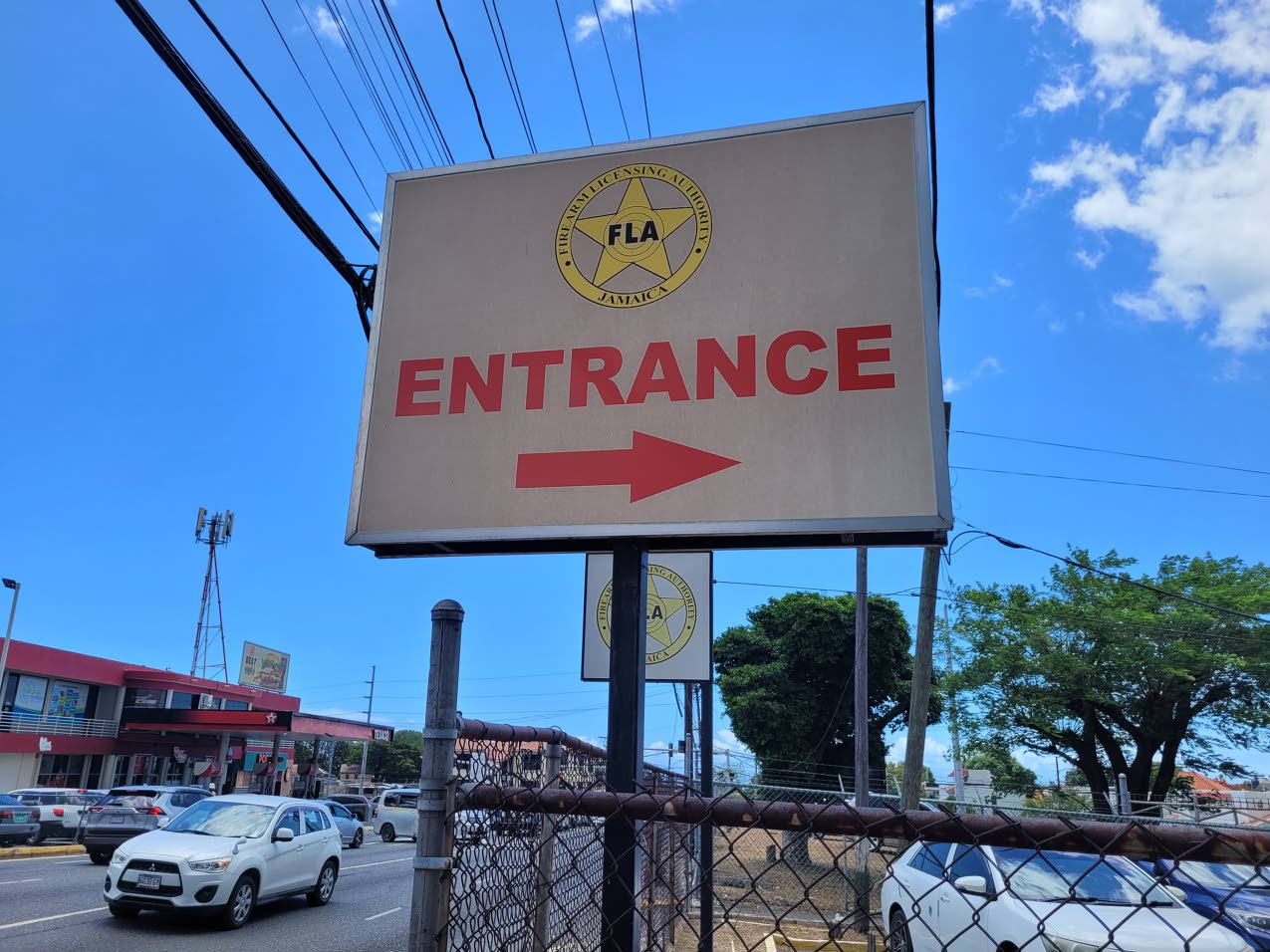
An August 10, 2023 photo of a sign outside the offices of the Firearm Licensing Authority (Photo: Jason Cross)

The Integrity Commission found that one of the purported purchasers told investigators he had never purchased bird-hunting ammunition and had never hunted birds.


