



Jamaica’s polymer money is lasting twice as long — but the smallest notes are wearing out fastest
THE Bank of Jamaica (BOJ) is seeking durability improvements for its lower-denomination polymer banknotes after finding that roughly 22 per cent of the $50, $100 and $500 notes it processes are too damaged to be returned to circulation, even though the switch from cotton-based notes has performed better than expected overall.
The gap has emerged as one of the clearest signs that Jamaica’s lower-denomination polymer notes are not holding up as well as the higher-value bills.
The central bank said it is already working with its manufacturer to strengthen the durability of the lower denominations, even as the new notes are lasting more than twice as long as the cotton-based currency they replaced.
“Notwithstanding the banknotes performing in line with expectations, the BOJ has been working with the manufacturer to identify ways to further improve durability, particularly for the lower denominations,” the bank said in response to questions from the Jamaica Observer.
The planned enhancements will be incorporated into future print runs without changing the appearance or security features of the notes.
The findings come nearly three years after Jamaica launched its polymer banknote series on June 15, 2023, issuing $11.5 billion worth of the new currency on the first day of distribution.
At the time, the BOJ said the switch was expected to deliver notes that would last at least 50 per cent longer than the cotton-based series then in circulation.
Based on the Bank’s latest assessment, that target has been comfortably exceeded.
Jamaica’s polymer notes are now lasting more than three years on average, compared with approximately 1.5 years for the cotton-based notes they replaced. Replacement rates have also declined across all denominations.
The improvement carries financial implications for the central bank.
When the polymer series was introduced in 2023, the BOJ disclosed that it spent approximately $1.4 billion annually procuring banknotes. The transition was expected to reduce the amount of money the BOJ spends replacing banknotes over time.
“This longer lifespan is a significant benefit as it requires the bank to replace banknotes less frequently, thereby achieving long-term savings,” the BOJ said.
Yet the gains are far less evident among the lower denominations.
According to the BOJ, about 22 per cent of the $50, $100 and $500 notes it processes are classified as unfit for recirculation. Among the $1,000, $2,000 and $5,000 notes, the comparable figure is about 2 per cent.
That amounts to an 11-to-one difference in the proportion of notes deemed unsuitable for continued circulation.
“A significant contributor to the volume of banknotes deemed as unfit is how they are handled by the public,” the BOJ said. Notes may be removed from circulation because they are torn, soiled, defaced with graffiti, or damaged by attachments such as staples and pins.
The $50 and $100 notes are the workhorses of everyday cash transactions — used for bus fares, market purchases and small retail transactions where notes pass rapidly from hand to hand. Higher-value denominations, by contrast, typically move through fewer transactions before returning to banks or ATMs, exposing them to less wear and tear. The BOJ said the pattern is consistent with international experience.
The BOJ said the public can help extend the life of polymer notes by avoiding practices such as folding, crumpling, writing on them or attaching staples and pins.
The issue extends well beyond a handful of damaged notes.
By the end of 2025, polymer banknotes accounted for $304.5 billion, or 96.8 per cent of the value of all banknotes in circulation. The latest BOJ monetary data show approximately $301.5 billion in notes circulating through the economy as of April 2026, highlighting how completely the transition has reshaped Jamaica’s currency system.
For the BOJ, that scale magnifies both the benefits and the shortcomings of the programme. Longer-lasting notes reduce replacement costs, but weaknesses in the most heavily used denominations can quickly affect a large share of the cash economy.
Even so, the central bank remains confident that the transition is delivering the results it set out to achieve.
“BOJ is satisfied with the performance of the polymer banknotes to date,” the bank said.
The data support that assessment. The notes are lasting longer than expected, replacement rates have fallen and the durability target that underpinned the polymer conversion has been exceeded. The challenge now is whether the BOJ can narrow the gap between the denominations most Jamaicans use every day and those that appear to be benefiting most from the transition.

Jamaica’s polymer banknotes are now lasting more than three years on average — more than twice as long as the cotton-based notes they replaced — although the performance of lower denominations continues to lag behind higher-value bills.
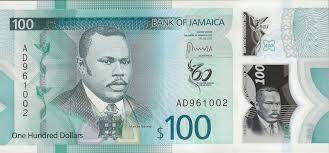
The $100 note is among the lower-denomination polymer banknotes that the BOJ says experience the most wear and tear because of frequent handling and everyday use.


