



The trillion-dollar question
Space Exploration Technologies Corporation (SpaceX) launched its spectacular initial public offering (IPO) on Thursday, June 11. It started out at a price of US$135.00, and by the end of the day was in the US$160.00 region. At the time of writing, it is at a stratospheric US$173.00, and seems poised to go even higher.
The IPO was the largest in history. The company floated 555.6 million shares and secured a mind-boggling US$1.76 trillion valuation. This made Elon Musk, the founder and chief stock holder, the first trillionaire, at least on paper.
At its founding in 2002, SpaceX fetched a modest valuation of US$27 million. To reach where it did on Thursday is a meteoric ascent perhaps not untypical of the force of the rockets that SpaceX sends into space. Mega stocks like Amazon, Google, Nvidia, and others have demonstrated this kind of activity with their IPOs.
In the case of SpaceX and the euphoria surrounding the stock, those who invested in the IPO seem to be blissfully ignoring sobering truths that have made some analysts and sagacious commentators cautious about the IPO, even to the point of describing it as Nobel laureate Paul Krugman did in a recent Substack post as a human Ponzi scheme. While rockets may be built to withstand the Earth’s gravitational pull, markets are not so welcoming.
Let us look at some facts. Throughout 2025, SpaceX, in its generally accepted accounting principles (GAAP) — the rulebook by which US companies must record and measure their financial information — reported a net loss of US$4.94 billion. This proved not to be a temporary setback for the trend continued into the first quarter of 2026 when a net loss of US$4.27 billion was recorded. The trend suggests a capital burn rate higher than generated revenue. Most of this capital is being consumed to build out an artificial intelligence (AI) infrastructure that has proven to be quite expensive. It is estimated that close to US$40 billion is being put into AI capital expenditure by SpaceX. As part of his IPO pitch, Musk has prophesied the establishment of data centres in space, an idea not far-fetched, but which clearly will not see the light of day anytime soon.
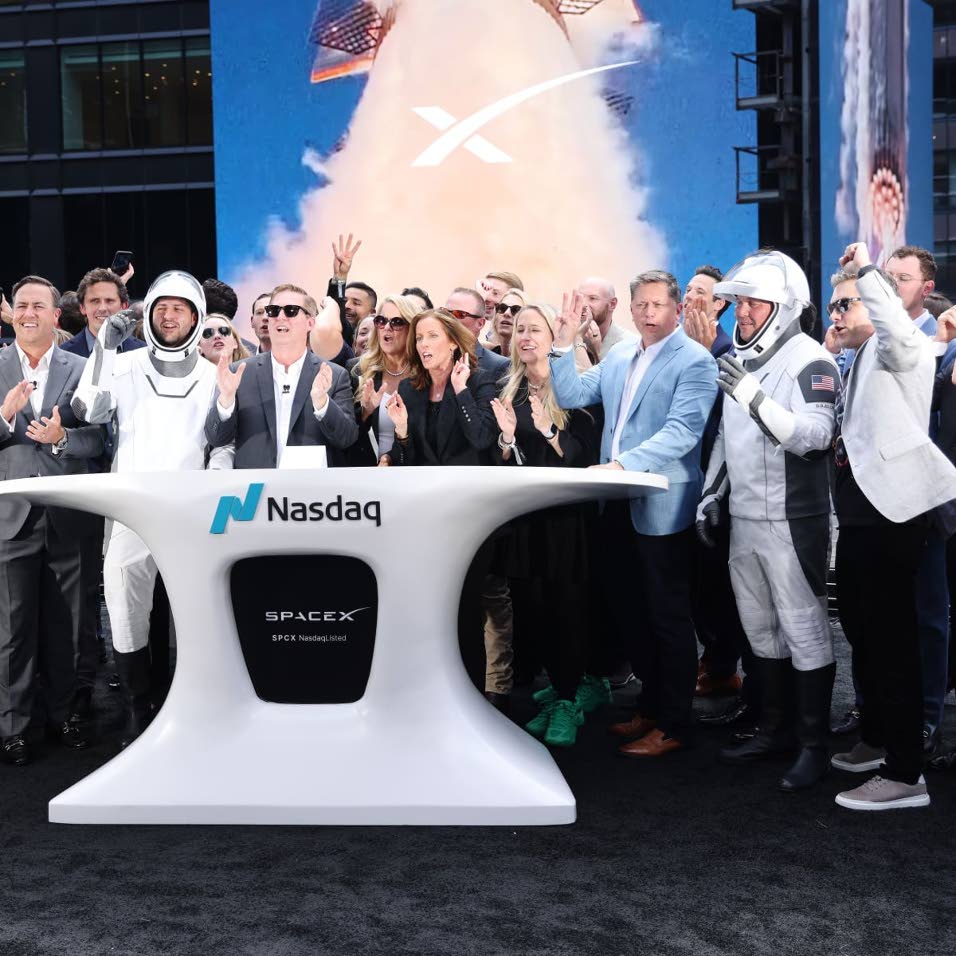
Space Exploration Technologies Corporation (SpaceX) launched its initial public offering (IPO) on Thursday, June 11.
This means that in the short term a lot of cash will be consumed before a single cent of profit will be returned to shareholders, who have invested largely in promises not substantiated by any clear evidence that these can be realised anytime soon, and at a horrific price. When the present euphoria fades, what will all this mean for the everyday shareholder?
Another arm of SpaceX of which people should be mindful is the XAI conundrum. When Musk bought Twitter, which he soon converted to X, it was a viable concern, but soon went downhill when Musk sought to “liberalise” the platform and allowed, in a nutshell, unsavoury content which big advertisers found detestable. Many headed for the hills, leaving a revenue gap which Musk was not able to close while holding a big debt with the banks. As advertising is the mother’s milk of such enterprises, it became abundantly clear that what Musk was hoping to achieve with his new acquisition was not working. X has become a shadow of its former self. Merging the entity with SpaceX was not a bad move, but will it remove the revenue problems that existed, though this has improved to some extent?
The only section of SpaceX that is showing real progress is Starlink, the satellite link that provides Internet connectivity across the globe. Interestingly, over a year ago, I remember mentioning to my wife that if Musk got this right, he could become the first trillionaire. Go figure!
Starlink has great potential as a revenue-earner, but it will not be sufficient to salvage SpaceX in the short term. It certainly does not presently stand up to any real econometric measure to give credence to the massive value given to SpaceX, of which it is a part.
So what then shall we say of SpaceX going forward? I will be more generous than considering the IPO a human Ponzi scheme, but based on the above considerations of the state of the company going into the IPO, there is need for a lot of caution regarding what the company is proposing to justify its valuation and the boon to be reaped in the future.
At the centre of this is the main actor himself, Musk. A lot of the perceived future success of the company is riding on his star power and his perceived ability to sell the devil a
Bible.
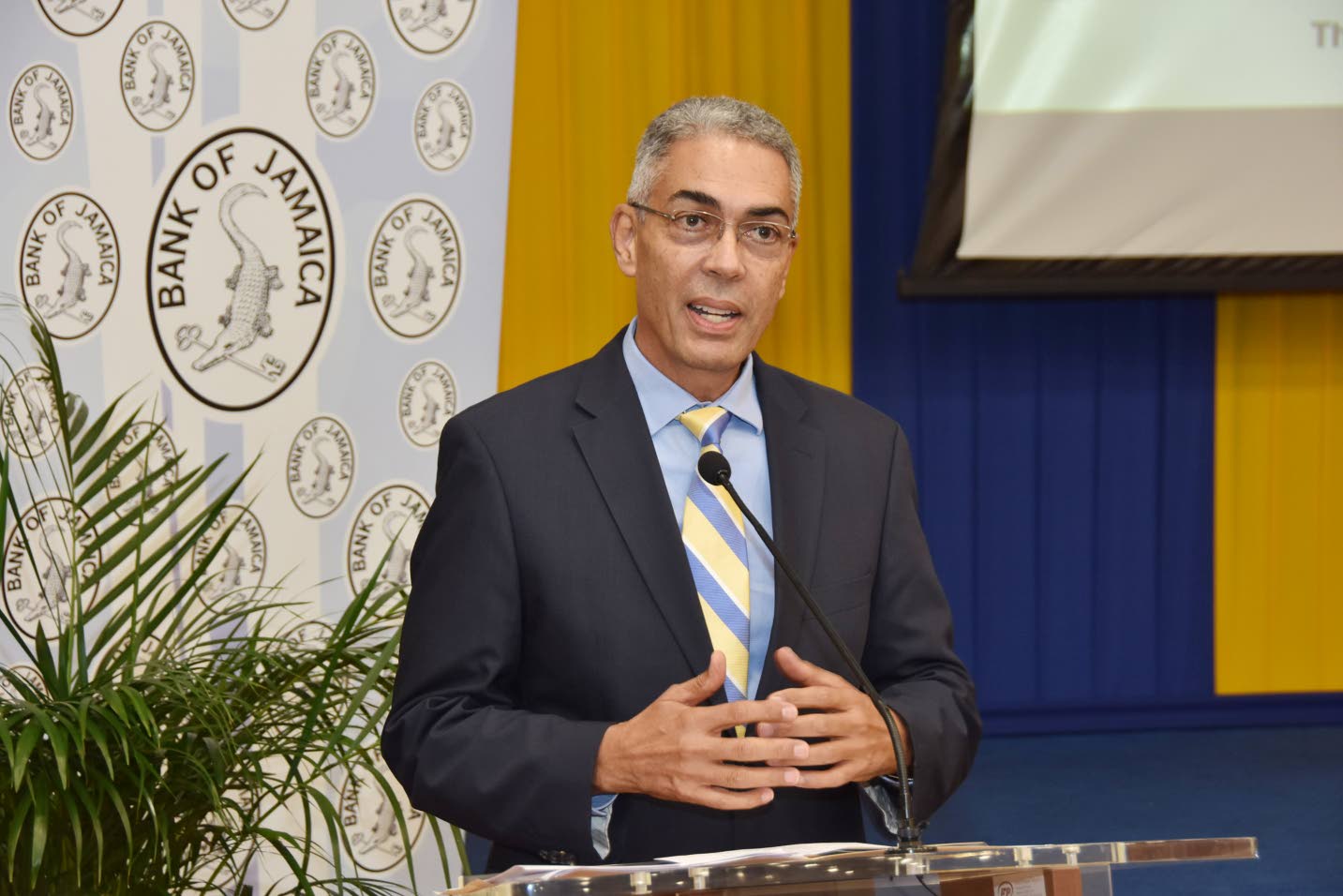
Richard Byles.
What I see going into the IPO is the outworking of the psychology of mass persuasion. Wall Street and the Donald Trump Administration have gone along for the ride, literally forcing the public to participate in a scheme built on the promises of one who has proven to be a larger-than-life personality.
So Musk being deemed the first trillionaire is a status achieved on promises such as colonising the moon and Mars and venturing into the vast interstellar space in years to come. This, at the moment, is hot air, hype that is not based, and indeed cannot be, on any real, structured business proposal or defined by a credible econometric measure. It is hyperbole based on faith in a future which is largely a figment of Musk’s imagination and assumed genius.
By getting people to believe in his genius, Musk has pulled off what very few, if any living today, could. Except for his power to persuade, he did not do this alone, but was aided and abetted by the very institutions that should protect the public from such events. SpaceX, in its present iteration, has too much of a cracked and faulty foundation to merit the value assigned to it. And as any third-grade structural engineer will tell you, if you construct a building on an already cracked or faulty foundation, it will not be long before the whole edifice comes tumbling down.
As the euphoria subsides and reality kicks in, beware. The stock will continue its meteoric rise, but as with all IPOs, it will meet with gravity. I am no investment adviser, but to the retail investor, especially, my word would be to take what you can now, and when the dust settles see where the company is headed and act accordingly.
Congratulations to Richard Byles
He has steered the bank through some difficult times: the COVID-19 pandemic, hurricanes Beryl and Melissa, as well as the supply chain disruptions caused by ill-fated wars: Ukraine v Russia and US and Israel v Iran. The governor has described these as “considerable exogenous turbulence” which have tested the resilience of the bank and the mettle of those in charge of its operations.
His concerns regarding the seeming unwillingness of banks to lower interest rates when the statutory rates are lowered by the BOJ is a valid one. He is also right in his insistence that the central bank must remain independent and must never be compromised on the altars of political expediency. This must be the guiding principle that governs the tenure of whoever succeeds him.
This column wishes the governor well for the future and thanks him for his service.
Dr Raulston Nembhard is a priest, social commentator, and author of the books Finding Peace in the Midst of Life’s Storms; Your Self-esteem Guide to a Better Life, and Beyond Petulance: Republican Politics and the Future of America. He also hosts a podcast — Mango Tree Dialogues — on his YouTube channel. Send comments to the Jamaica Observer or stead6655@aol.com.
Raulston Nembhard


