



A test of the things we hold dear
One of the very strong platforms that US President Donald Trump campaigned on was aggressive immigration reform. He derided the Joe Biden Administration for the lack of security at the country’s Southern border and allowing all kinds of unsavoury characters to enter the country unimpeded. He promised that if he is elected president he would embark on one of the most comprehensive and aggressive deportation of illegal aliens, thereby shaking up American immigration policy as no one had ever shaken it before.
His posture was very appealing, especially to members of his ‘Make America Great Again’ (MAGA) base. They were thrilled that in Trump they would have a president and a hero who would carry out one of their most ardent wishes. When Trump got elected for his second term, he did not disappoint. The US Immigration and Customs Enforcement (ICE) agency under the Department of Homeland Security was given the task of carrying out his aggressive policy. Agents were unleashed in various cities — largely blue, democratic states. They did so with the kind of vehemence one would expect of the Trump Administration. In time, even legal citizens were caught up in the ICE dragnet.
In Minnesota, Alex Pretti and Renee Good were shot and killed by federal agents for protesting their abominable abuse of people’s fundamental rights. The due process of law was hardly regarded. Fundamental human rights granted to people on US soil by the constitution were brushed aside. Like other policies that were being pursued by the Trump Administration, such as the gutting of the federal workforce, many mistakes were made. Any perceived alien defined by certain characteristics; for example, brown people, largely Hispanics, were considered fair game to be picked up and bundled like cattle to be carted off to detention centres, some of which were not fit for human occupation.
But who in the Administration cared? Many of these, by Trump’s description, were mere “murderers and rapists” or vermin not fit to live in America. It was not possible for the detained to live indefinitely in America, especially since so many were being picked up, even though the number satisfied the millions that Trump had prophesied he would detain in a short period. So the Administration turned its attention to third countries to assist the US in temporarily hosting these immigrants. It is expected to ease the burden on the US while justifying the need to round up many others.
Enter other countries that have signed up or edging, like Jamaica, towards doing so. The Government has argued that it has merely signed a memorandum of understanding (MOU) with US authorities regarding the matter and no concrete agreement has been signed. Minister of National Security and Peace Dr Horace Chang has stated that this is a work in progress, Jamaica will not be detaining anyone, and if it should take in third-country nationals (TCN), it would be 25 individuals every two weeks. At no point will there be more than 25 TCNs in Jamaica.
A couple of questions arise: How will their status be defined? Is there going to be special legislation to define their status?
The Jamaican Government is expected to house third-party nationals in transit from the US to their home countries.l
I am personally queasy about Jamaican participation in a programme fraught with the abuse of people’s fundamental rights and denial of the due process of law. It is clear that the US Constitution does not weigh too heavily in the Administration’s treatment of the “stranger” on its soil, though humane treatment of all people on American soil is a bedrock principle that has been central to the American social psyche and captured by its main law, the constitution.
In its hurry to fulfil an election promise, not to mention the racial elements of the policy, it is clear that the policy was not well thought out. Finding itself in a pickle to deal with these people, other countries are being pulled in under the guise of MOUs to help out. But to help out is to aid and abet a policy that has, at its very core, the denial of people’s fundamental rights to be treated fairly.
Jamaica has to decide whether it wants to be a participant in this kind of policy. It is not a simple matter of the strong bilateral relationships that Jamaica has enjoyed with America over the years, it is about our value system and the things we hold dear, which has always had at its centre fundamental respect for the rights of others.
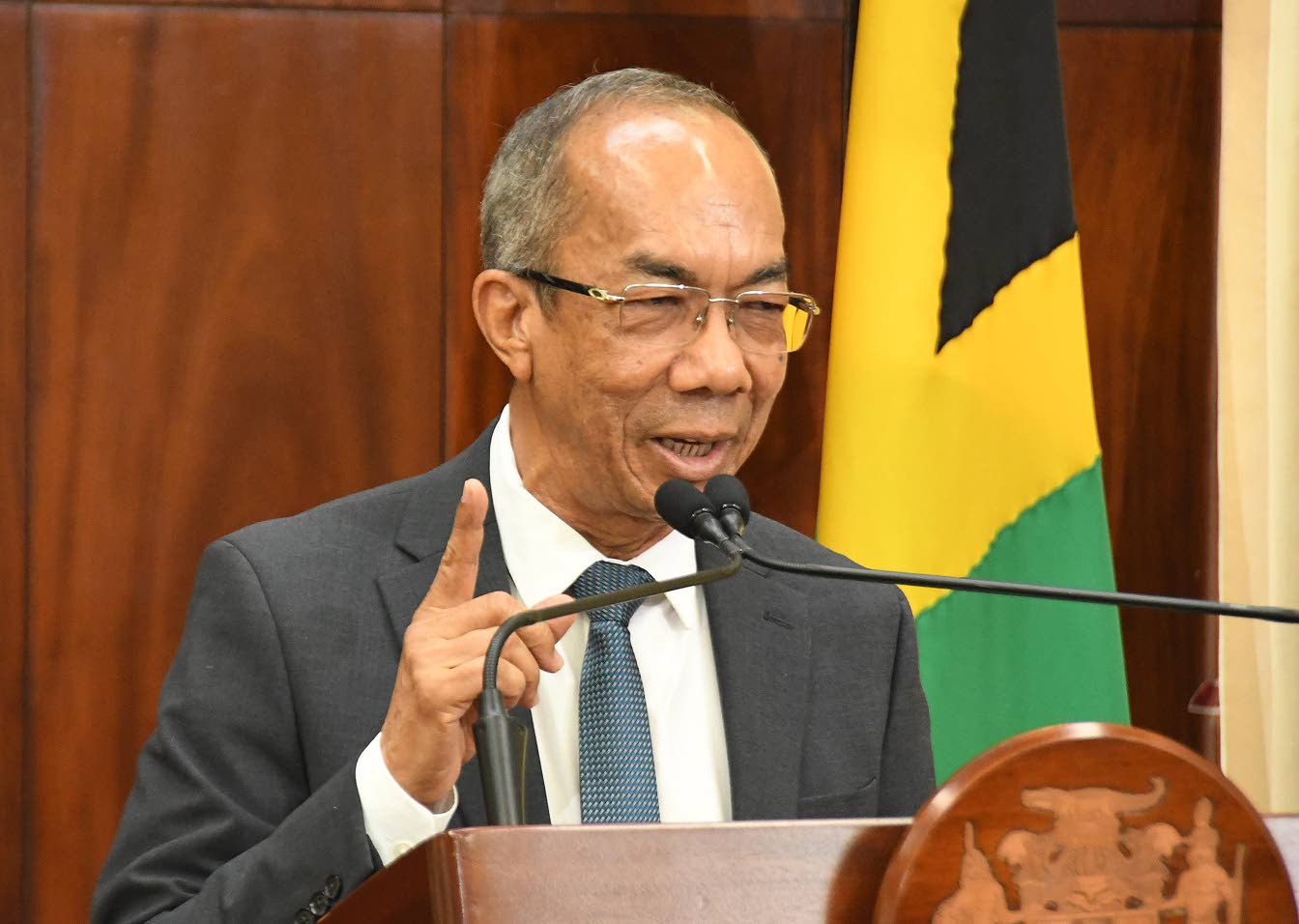
Dr Horace Chang Naphtali Junior
Yes, I understand the character of the present US Administration and the penchant of the president to rain retribution on those who oppose him and do not accommodate what he desires. While we have to be pragmatic and recognise the character of the geopolitical space in which we now operate, there should never be a time when we sacrifice the things we hold dear on the altar of political and economic expediency. We will rue the day when this happens.
Prime Minister Dr Andrew Holness often speaks of the sovereignty of Jamaica. Part of that sovereignty, Prime Minister, is to stand firm on the principles and beliefs that we cherish as a nation, come what may.
Dr Raulston Nembhard is a priest, social commentator, and author of the books Finding Peace in the Midst of Life’s Storms; Your Self-esteem Guide to a Better Life; and Beyond Petulance: Republican Politics and the Future of America. He also hosts a podcast — Mango Tree Dialogues — on his YouTube channel. Send comments to the Jamaica Observer or stead6655@aol.com.
Raulston Nembhard


