



St James residents eager for CARE
MONTEGO BAY, St James — Norwood resident Mark Spence is already thinking of ways in which he could use the Ministry of Health and Wellness’ Community Arranged Response Efforts (CARE) Fund to help youngsters in his community who have made unwise lifestyle choices.
“Substance abuse is one of the things I would focus on because almost every young man that you pass on the road is smoking and drinking every morning,” he told the Jamaica Observer.
“Some of them have no parents… They live on their own, they have to start working early or their parents can’t send them to school; so mentally they are disturbed. Having a programme like this, I think, is a very good thing,” added Spence.
He was one of several residents who gathered inside the Montego Bay Cultural Centre, Wednesday evening, as part of a sensitisation session on CARE, a $500-million initiative that will provide grants for community-led health and wellness projects.
Spence is convinced that he can make a difference if there is funding support.
“Sometimes, it’s so difficult to go and write proposals for the private sector; it’s hard to get that funding. If the Government say that they have this amount and are willing to give you, as long as you are registered, then I think it’s easier to get it… than [in] the private world; and so I think it’s a good thing,” he told the Observer after the info session.
Attendees were briefed on CARE’s areas of focus as well as the groups that are eligible to make project proposals. These include community and faith-based organisations, non-governmental organisations (NGOs), as well as civil society groups.
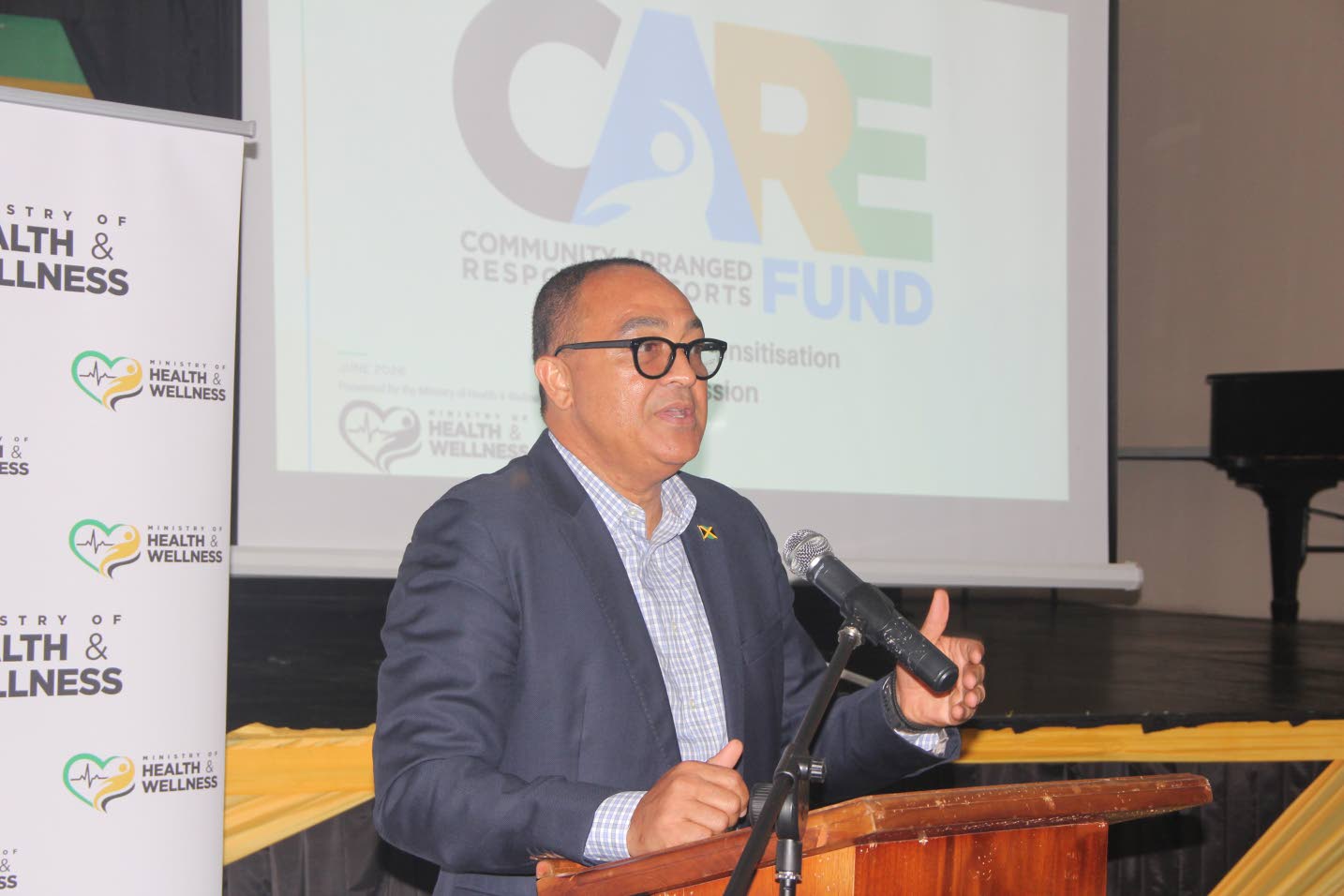
Health and Wellness Minister Dr Christopher Tufton addresses a gathering at the Community Arranged Response Efforts (CARE) Fund sensitisation session in Montego Bay on Wednesday.
President of the Mount Salem Community Development Committee (CDC) Winsome Barnes sees CARE as a way to boost the success of several initiatives the CDC is mulling. She is particularly eager to do something about the amount of time children are spending on electronic devices.
“A one-year old, six-month-old child sits all day; they see what’s in front of them, the tablet or something. I think we need to tell parents about the dangers of this,” she said.
Barnes, who also spoke of concerns about the declining birth rate, the need to provide support for individuals with mental health challenges, as well as the importance of physical activity, said her team members will now decide on next steps.
“When I get back to my persons we are going to sit and we are going to look at these areas and then we are going to try and come up with a proposal to fit one of these areas,” she said.
Albion resident Cheruth Wright sees the programme as a way to improve work she has already been doing in her community if her proposal is approved.
“With this I can actually support my community more because now it’s outside of my pocket, outside of dues, outside of having to ask for help. They are saying, ‘I can help, just come to me.’ I love that,” she said.
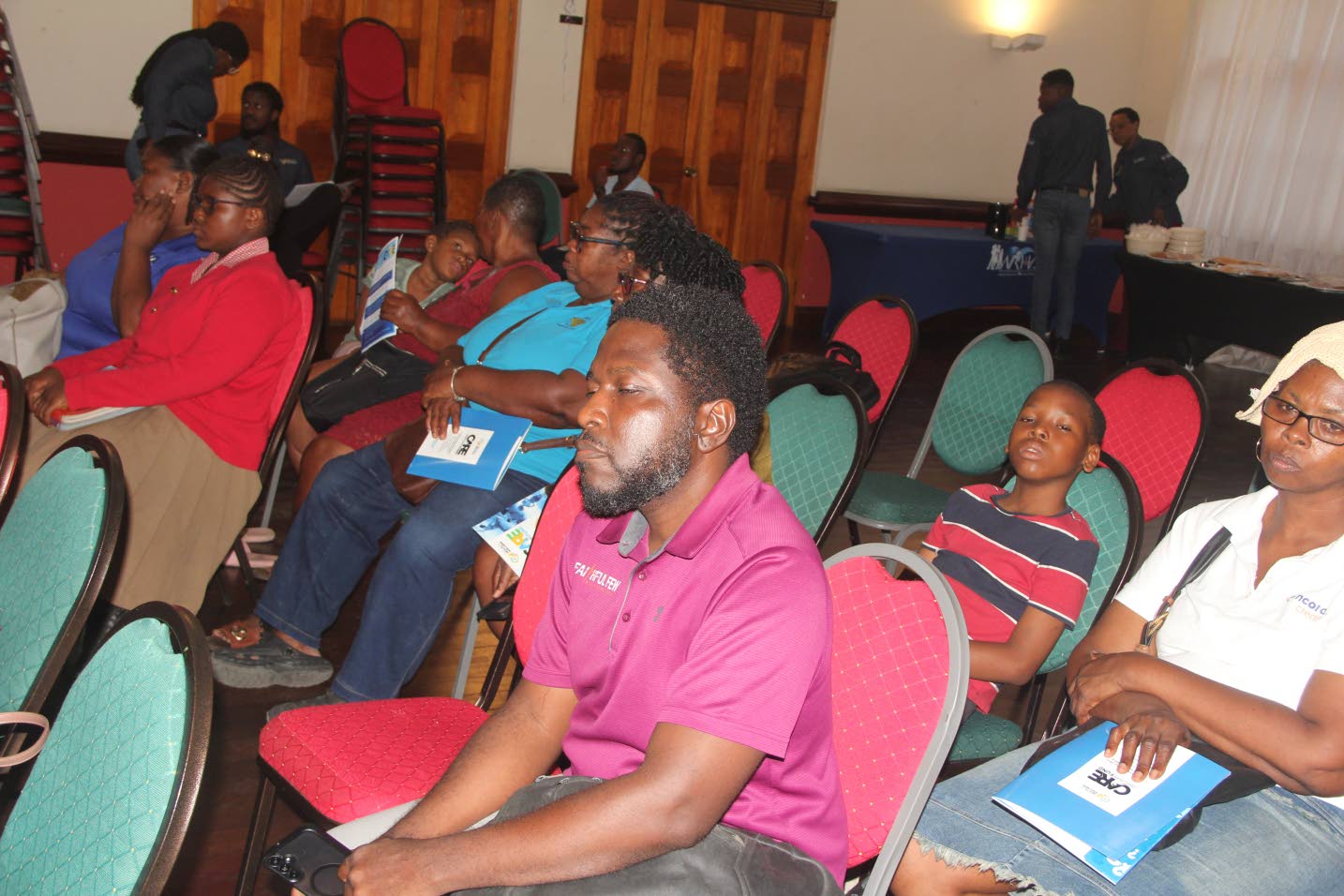
Residents of St James listen, Wednesday, during a sensitisation session on the Ministry of Health and Wellnes’s recently launched Community Arranged Response Efforts (CARE) Fund.
“Community-based projects for the children and the elderly [would be the focus] because we are already doing that right now. I would like to build on that more,” added Wright.
Health Minister Dr Christopher Tufton, who was at Wednesday’s sensitisation session, pointed out that CARE is part of a wider strategy. He noted that Government has substantially increased the funds allotted to health care over the last few years, moving it from $60 billion in 2015 to $140 billion last year.
He explained why community-level intervention, which CARE is expected to fuel, is vital.
“A lot of the things that we have become afflicted by, in terms of sickness, are linked to the influences within our environment. The foods that we eat; the alcohol that we consume in the format that we consume it, especially; the addiction to social media; the other influences of that environment really start within the place where we reside and collectively where we come together as a community,” he said.
“We have concluded that outside of building hospitals, health centres, giving more medication to cure illness, we also have to work harder to prevent illness. The way to prevent illness is to engage communities, engage families, and to influence those communities and families towards a more health-seeking behaviour, better lifestyle, better decisions for better quality of life. That’s a very simplistic explanation of what it is,” Tufton added.
According to the health ministry, a minimum of 100 programmes are expected to fall under CARE. Applicants are encouraged to follow the process outlined by the ministry through its Enabling Environment in Health and Client Services Division under which the CARE Fund falls.


