



Ministry cautions against costly registration packages after parent complaints
FOLLOWING concerns from parents on social media over the affordability of enrolment packages, which Jamaica Observer checks have shown can run close to $30,000, the Ministry of Education, Skills, Youth and Information (MoEYI) has urged public high schools to keep registration costs for incoming grade seven students at a minimum.
“Creating an accessible environment for all students is crucial, ensuring that financial barriers do not interfere with their ability to enrol and thrive in school. Children must not be denied access, [should be] given the registration forms at minimal cost, and [should be] allowed to pay for incidentals at a later stage,” said Chief Education Officer in the MoEYI Terry Ann Thomas Gayle in a bulletin released on Tuesday, following an Observer request to the ministry for a comment.
She also noted that it was imperative for all schools to maintain communication with parents and guardians, to ensure that they understand their options, emphasising that all public institutions were under the mandate of the ministry and its instructions.
The directive comes as some parents carried their frustrations to social media, after schools began officially releasing the cost of their registration packages following the release of Primary Exit Profile (PEP) exam results last week. Some parents questioned the necessity and high cost of some of the fees presented.
The Observer assessed several schools’ packages across the island for the upcoming school year, and found that while some traditional high schools are charging at lowest, $5000, the highest package found was priced at $26,500. Most of the schools surveyed ranged between $8,000 and $12,000.
Packages for some schools at the higher end include student assessments, diagnostic tests, student handbooks, physical education gear, swimsuits, badges, identification cards and insurance. At the lower end, the packages include just the basics — school handbook, crests and printed material.
In previous years, the ministry sought to impose a cap on registration fees charged by public high schools, with the ceiling set at $5,000 in 2020 before being increased to $6,600 in 2023.
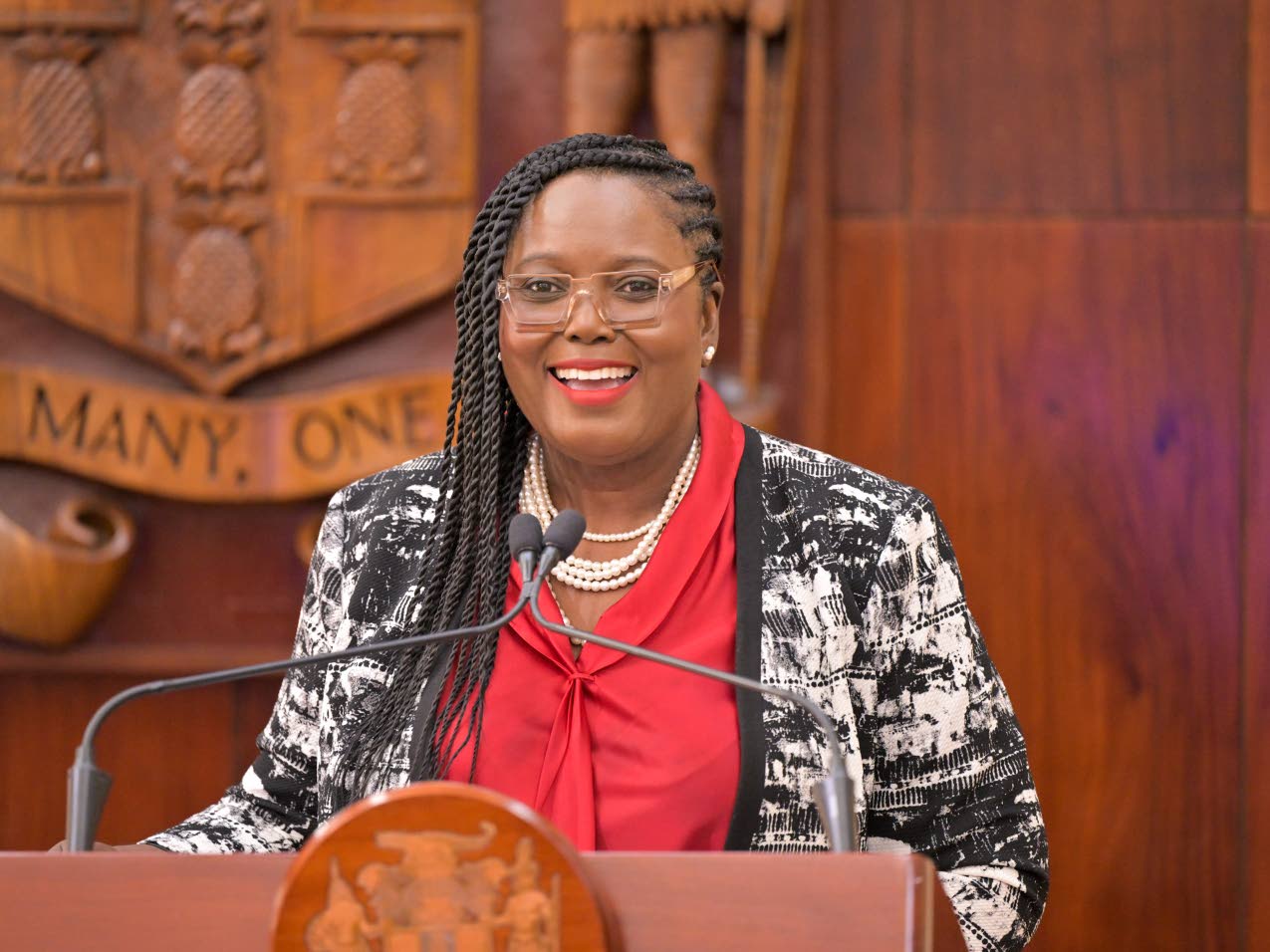
THOMAS GAYLE…creating an accessible environment for all students is crucial.
At the time, former Minister of Education Fayval Williams explained that the decision was made in keeping with the ministry’s mandate of ensuring that the cost to parents remained minimal for children to attend school or access their education.
The ministry also pledged additional resources or differentiated funding where the required justification and supporting documents were provided to aid the smooth operation of schools, adding that the cost of these resources should not be shouldered by parents and, therefore, should not be shifted to them or made mandatory.
Yesterday, Thomas Gayle said students are not to be denied access to their education because of an inability to pay. “School administrators are reminded that they are agents of the Government public education system and, therefore, are expected to follow the policy guidelines issued by the MoESYI and to enforce the laws of the land. Policies contrary to the ministry’s policies or the laws of the land, such as the Child Care and Protection Act, are not valid, even if they are ratified by the board. What is illegal in society is illegal in schools,” she charged.
Meanwhile, Thomas Gayle also highlighted that student participation in summer programmes was not mandatory and should not be viewed as a condition for high school registration.
“Once a student is placed via PEP into a high school or granted a space via the transfer process, parents should not be made to feel they must participate in the summer school programme,” she said. “While we encourage parents to take advantage of these opportunities for remediation, enrichment and skill development for their children, we understand that not all families may be able to accommodate the associated costs.”
She further encouraged school administrators to explore ways to provide support for those students who wished to participate in summer programmes offered by institutions but were deterred by financial constraints.
“This could include payment plans, fee waivers in certain cases, collaboration with the school’s alums, or alternative resources. Students are not to be denied access to their education because of an inability to pay,” she said.
For his part, Opposition spokesperson on education Damion Crawford cautioned parents and other critics against flagging the institutions’ prices as excessive without first examining what is included in each school’s registration packages.
“If I don’t know what’s included in the package, it’s hard for me to assess if the package is too expensive,” he said.
He argued that if the fees accurately reflect the cost of the contents being offered within the packages but remain beyond the reach of many parents, the responsibility should fall to Government to provide assistance rather than expecting schools to absorb those costs.
“If it is that these packages are appropriately costed, but it’s still unaffordable, it falls to the Government to make interventions so as to subsidise the cost. However, I’m sure the schools are not within a position to be able to subsidise the cost on their own. So if it is that the cost is appropriate, but it remains unaffordable, then it would be upon the government to participate on behalf of the students,” said the shadow minister.
He maintained that registration packages cannot fairly be compared without considering what each school includes in its structure fee, noting that the value of the packages may differ due to the different amenities offered.
“It is for the Government to intervene if it remains unaffordable. So, something can be legitimately costing $100,000, and I don’t have $100,000, but it legitimately costs that. So if it is a legitimate cost, then the Government should intervene and offer some subsidy on behalf of the people,” he said.
CRAWFORD…if it is that these packages are appropriately costed, but it’s still unaffordable, it falls to the Government to make interventions so as to subsidise the cost


