



The end of an era
Last week, back-to-back funerals, on Friday and Saturday were held for two of Jamaica’s most prominent, patriotic leaders: Ian Xavier Forte on Friday and Dennis Hugh Lalor on Saturday, both very highly regarded gentlemen of law and business, respectively.
The impressive tributes to former retired Court of Appeal President Justice Ian Forte emphasised his personal characteristics. His friend Lloyd Pinnock spoke about his loyalty, kindness, and trustworthiness, while Past President of Kiwanis Club of North St Andrew Clive Tapper noted that he served for 52 years, during which the club was globally recognised nine times due to Forte’s efforts in areas such as encouraging “good character” in young people. The head of the Stella Maris Ushers Association (the church where the funeral was held) credited him with being a good listener, unflappable, and self-confident.
Professor Kent Pantry, former director of public prosecutions (DPP), noted that when he arrived to serve under Forte (then DPP), the lawyers there, including Forte, had all been trained in London. He credited Forte with ensuring, through an open-door policy and competitive training that his team of Caribbean-educated lawyers matched “technically” the very best lawyers in the private sector, who, at that time, were typically educated in the UK.
Retired Justice Clarence Walker, judge of appeal, outlined Forte’s career from private practice to the DPP, then becoming one of the first two judges of the famous “Gun Court” and onwards to Court of Appeal president, stating throughout that one of his watchwords was “fairness”.
Chief Justice Brian Sykes also emphasised that Justice Forte, upon becoming president of the Court of Appeal in 1989, brought a humanity and sensitivity to the role as his career bridged both the colonial and post-colonial eras which shaped how he applied the law as a prosecutor and particularly as a judge. He described Forte as not seeking attention but commanding respect due to his “character, intelligence, and integrity”, being devoted to a life of public service, including ultimately as judge of appeal in Bermuda.
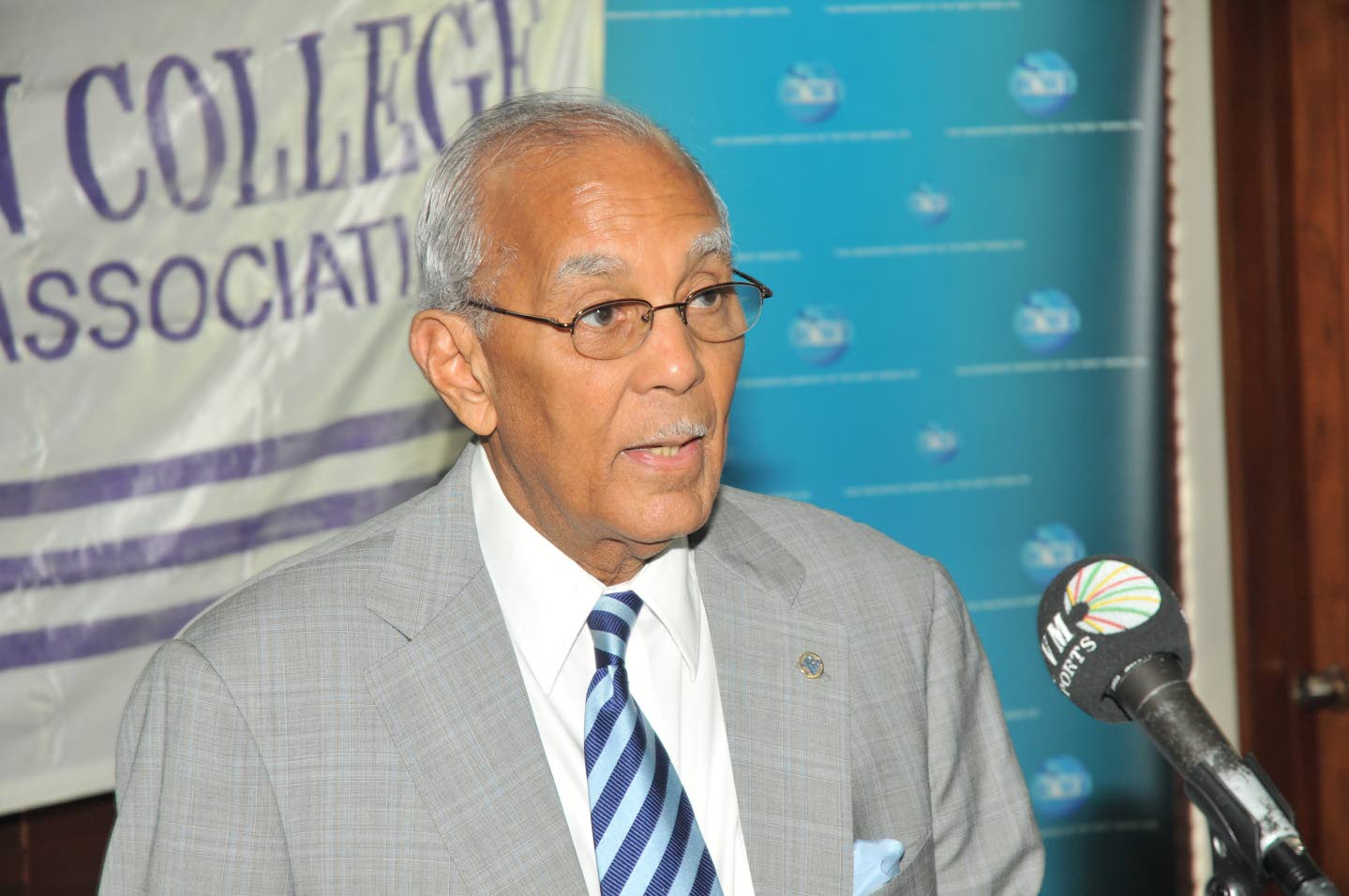
Dennis Lalora
Justice Marva McDonald-Bishop, the first woman president of the Court of Appeal — who the previous Friday had convened a special sitting of the court in honour of Justice Forte — commended his humility, authenticity, and empathy. She said that despite being a judge he was “not judgemental”, and his greatness was in his humanity, although “he has been immortalised in his well-reasoned judgements”. She added that amongst his watchwords were “always forgive” and “malice is like poison”, and also underscored his confidentiality and impartiality.
His wife, Marlene Malahoo Forte, in a touching tribute more fully described in last Sunday’s Jamaica Observer article ‘He was home’, said her husband was a man of “towering strength”, wisdom, character, and quiet authority. Although, she said, he was disappointed that she hadn’t continued in the law, as he thought she would have been “leading a legal branch of government”, he agreed that Jamaica’s “politics needed someone like me”, and her husband acted as her chief political advisor, offering his “deep knowledge of Jamaica” right up to his passing.
The passing of Dennis Hugh Lalor also marks the end of an era. His son, Paul Lalor, recounted his career in insurance, particularly the role of Lister Mair in taking him under his wing, and the role he and his great friend Danny Williams played in the establishment of Life of Jamaica. He described his father as fiercely principled, a leader, mentor, and educator who was very persuasive. He recounted how his father was able to persuade the recipient of a lower-than-expected job appraisal score that it was “good news as it offered so much room for improvement”. Paul remembered his father as having a unique gift for “making people feel special”, and recalled his legendary birthday cards, laminated newspaper clippings, and that he was always impeccably dressed.
Dennis Chung gave a tribute on his independence and integrity, describing how, under then minister of finance, the late Don Wehby, Lalor had been chosen to chair the very difficult divestment of Air Jamaica, and had to grapple with the revelation that at the very last stage of the negotiations, just as 1,700 people were to be rehired the next day, Trinidad had said it wanted to include the Air Jamaica trademark in the 300-page legal agreement.
He described Lalor as subscribing to the old adage “It is easier to catch flies with honey than vinegar”, suggesting that Lalor’s style was to make suggestions and allow the recipients time to “reason it out”. Another favourite adage was, “When elephants fight, the grass suffers,” as part of his deep concern both to “build Jamaica” and to “create opportunities for the less fortunate”.
Lalor’s biggest impact on nation-building probably occurred while he was president of the Private Sector Organisation of Jamaica during Jamaica’s critical economic reform period of 1990 to 1992. His most prominent of many contributions at that time is only briefly captured in a speech from his book of speeches, Visions for Nation Building, in which he addressed the grand debate that continued “around the decision of the government to liberalise exchange control” in September of 1991, noting that three months after daily levels of hard currency inflows had quadrupled, although to a still tiny total of US$150 million in the entire commercial banking system.
Another key contribution was as the founding chairman of The University of the West Indies Development and Endowment Fund after Hurricane Gilbert, now headed by Carla Seaga, who described him as fighting “tirelessly to help young people achieve their dream of achieving a tertiary education”, and which funded the restoration of the University Chapel, where the memorial service was held.
In addition to their sartorial elegance, both men believed, in the last words of Justice Forte to me, in “making themselves useful” in the interest of Jamaica’s national development.
Walk good, gentlemen, secure in the knowledge that you both did your part.
Keith Collister


