



Peace Prize
•Jamaica most peaceful country in the C’bean, says Global Peace Index •Country on course for one of the safest years in its modern history
LESS that 24 hours before Minister of National Security Dr Horace Chang told Parliament that Jamaica is on course in 2026 to record “one of its safest years in modern history”, the Global Peace Index named Jamaica the most peaceful country in the Caribbean.
On Tuesday, Dr Chang used his address to close the 2026/27 Sectoral Debate in the House of Representatives to point out that, as of June 29, murders in Jamaica are down 23 per cent when compared with the same period in 2025.
“This has placed Jamaica on course to record one of the safest years in its modern history. If that trajectory holds, we will end 2026 with fewer than 600 murders,” said Chang.
“Just a few years ago, that would have seemed out of reach; today, it is within sight, because the country has stayed the course and because this Government has stayed the course,” Chang added.
Hours earlier the Institute for Economics and Peace (IEP) — an independent, non-partisan think tank that has so far published 20 renditions of its Global Peace Index — said Jamaica was the third-most peaceful country in North and Central America and the 70th most peaceful place on the planet.
“In the rankings, Jamaica scored a 1.919 overall, which is a slight decline of 0.030 points from last year, causing it to drop one spot in the global rankings. Still, that score keeps it firmly ahead of regional neighbours like Trinidad and Tobago (79th), the Dominican Republic (89th), Cuba (109th), and Haiti, which remained the least peaceful country in the region at number 142.
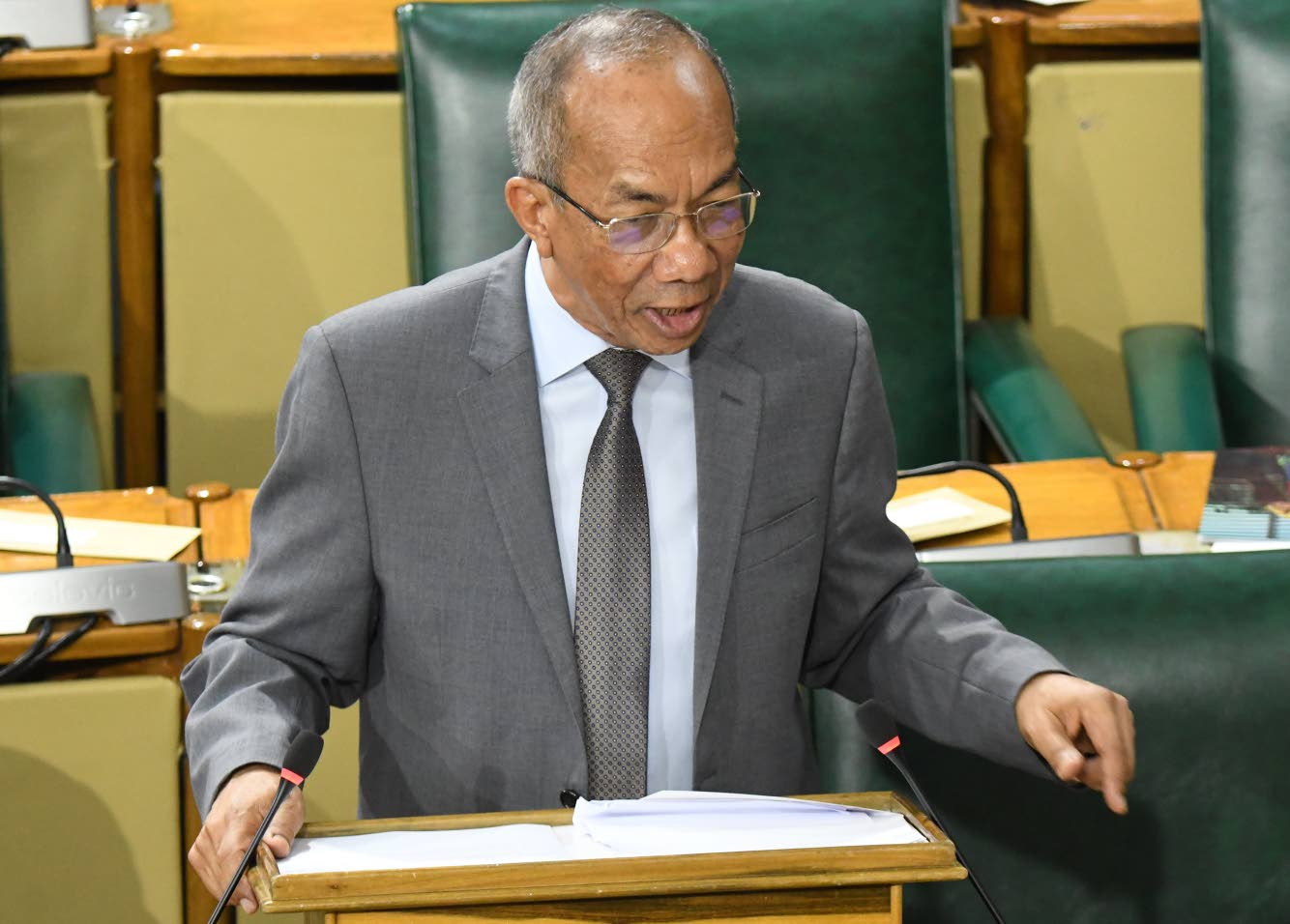
CHANG… it is a national turning point and we are not pausing to admire the numbers, we are pressing forward (Photo: Naphtali Junior)
“Jamaica performed best in the rankings in the ‘ongoing conflict’ category, reflecting its low levels of both internal and external conflict. Its ‘militarisation’ score was also solid compared to other nations in the region. The country, hit by a devastating hurricane last year, was slightly weaker in the ‘safety and security’ sector, which shows its higher crime rates, political stability, and perceptions of safety,” said the IEP in its report.
The IEP list ranks 163 different independent states and territories, covering 99.7 per cent of the world’s population. To finalise its rankings, the researchers behind the list use 23 “qualitative and quantitative indicators” across three key areas — societal safety and security, ongoing domestic and international conflict, and militarisation.
The top slots, based on the IEP’s indicators, were dominated by nations in Europe, with Iceland once again claiming the top spot for the 19th consecutive year, with a score of 1.161. That was followed by New Zealand, Switzerland, Slovenia, and Ireland.
In his address to Parliament on Tuesday, Chang, the deputy prime minister and Member of Parliament for St James North Western, noted that at the close of 2025, Jamaica recorded 674 murders, the first time in more than 32 years that the annual total fell below 700.
“Our national homicide rate dropped from 40 per 100,000 residents in 2024 to 24 per 100,000 in 2025, a decline of 41 per cent. That is not a marginal improvement. It is a national turning point, and we are not pausing to admire the numbers. We are pressing forward,” Chang declared.
He told the Parliament that this progress did not happen by chance, and it did not happen on its own.
“It is the product of deliberate policy, sustained investment, and the determined work of the men and women across our national security architecture. It is the result of major infrastructure investment under Project ROC (Rebuild, Overhaul and Construct), with police stations being constructed and rehabilitated across the island.
“It is the result of a record recruitment and promotion cycle within the Jamaica Constabulary Force, strengthening both capacity and morale. It is the result of an expanded JamaicaEye surveillance network and the continued modernisation of policing tools and operations,” said Chang.
He said it was also the result of institutions that are being strengthened with purpose. These include the Major Organised Crime and Anti-Corruption Agency; the Passport, Immigration and Citizenship Agency; the Jamaica Defence Force; and the Jamaica Cyber Incident Response Team.
Chang told the Parliament that the correctional services and the rehabilitation processes have been transformed with the recidivism rate declining from 41 per cent to 27 per cent, the most significant reduction recorded in recent history.
“None of this would matter without the cooperation of the Jamaican people. It would not be possible without the dedication of the professionals on the front lines or the commitment of those who work tirelessly behind the scenes. They shape the legislation, develop the policies, prepare the concept notes, and craft the speeches that guide this national effort,” Chang said.
He argued that a safer Jamaica was not being built by institutions alone. Rather, it is being built by citizens who have chosen to stand with law enforcement, to share information, to reject criminality, and to reclaim their communities.
“When I opened this debate, I told this honourable House that Jamaica was making historic progress in the fight against crime and violence. Today, I rise to report that those gains have not only held, but they have deepened. The downward trajectory has continued, confirming that Jamaica is not witnessing a temporary decline, but a sustained transformation in public safety,” Chang said.
The ranking from the Global Peace Index, which shows Jamaica as the third most peaceful country in North and Central America and the 70th most peaceful place on the planet.


