



Despair fuels hope
Grieving family launches fund-raiser to buy equipment that could have quickly diagnosed matriarch’s illness
After four desperate days watching 79-year-old Cinderella Williams decline from an aggressive form of blood cancer which remained undetected until she was critically ill, and the shocking discovery that a single machine — the only one of its kind in the island that could have confirmed the disease and telegraph the exact treatment — had been down for two years, her family, determined to save lives in her memory, has launched a GoFundMe campaign to raise the US$200,000 towards the purchase of the equipment.
The Flow Cytometre machine, which also served patients at the University Hospital of the West Indies (UHWI) operated under the Department of Pathology at the University’s Mona Campus in St Andrew. The critical diagnostic machine used to identify blood disorders became inoperable almost two years ago and has not yet been replaced. Today, blood samples requiring flow cytometry must be sent to Florida for testing. Because shipments are limited to specific days of the week, patients can face critical delays in diagnosis and treatment.
Flow cytometry is a diagnostic tool that helps doctors confirm and monitor leukaemia and lymphoma, determine the stage, and predict how aggressive the cancer might be and decide treatment options. They can also check how well treatments are working or if cancer has returned.
That opportunity was however denied Williams who wound up at the facility after complaining of not feeling well in May.
“I can’t say the presence of the machine would have saved her because Mom was pretty sick before she got to the hospital. She was still walking around strong but she wasn’t feeling well, so she went to her doctor who told her it was dehydration and prescribed rehydration salts,” her son Dale James told the Jamaica Observer in a recent interview.
A day later, however, it became clear that it was more than dehydration after it took Williams more than an hour to move from her bedroom to open her front door when a relative visited to check on her.
“When he got her to the hospital she was talking and coherent but disoriented in terms of where she was and the time. Checks revealed she was very sick. I didn’t understand the full magnitude,” James said, in explaining that William’s white blood cell count was abnormal and her calcium level elevated.
“They said all of this pointed to a very aggressive form of blood cancer. She was hospitalised the Wednesday, by Thursday morning they were telling us all of this. I got to Jamaica Friday morning. The next step would have been to do a flow cytometry test to confirm the diagnosis to determine how you treat,” James explained.
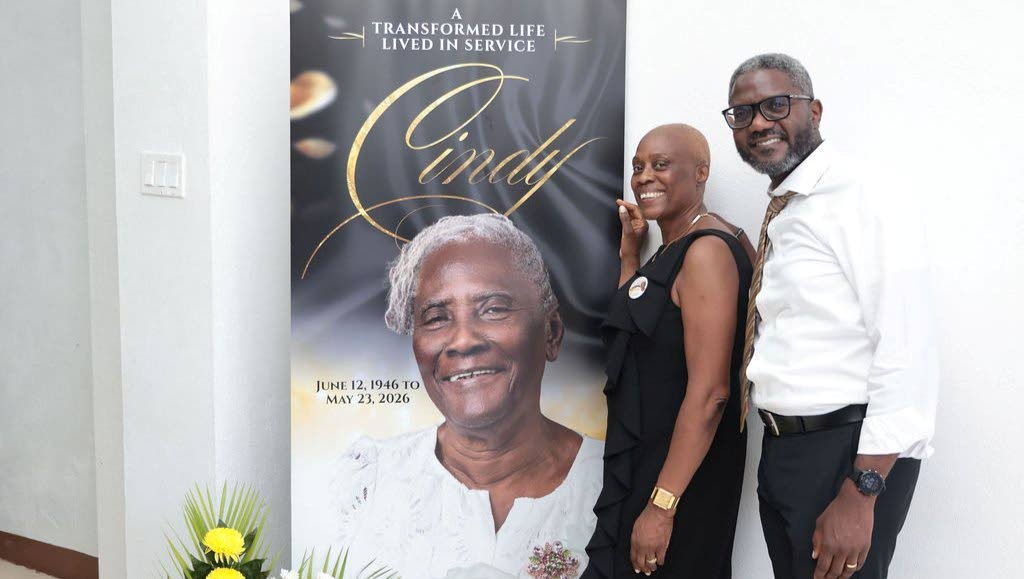
Siblings Valerie Campbell-Elliott and Dale James with a life-size photo of their mom, Cinderella Williams, at the June 13 homegoing service for the family matriarch at Emmanuel Apostolic Church in the Corporate Area.
His mother, he said, missed that window, however, as she did not live through the weekend, passing on Saturday May 23, from what was believed to be Adult T-cell Leukaemia/Lymphoma (ATLL). It was a particularly difficult blow as his wife passed last August. In reliving the trauma of helplessly watching his mother who had been his “bedrock” slip away, James is adamant that Jamaica’s health-care system is in need of urgent life support.
“I want to lay my mom to rest and then try and do this tangible act of help. I want to start and raise a bigger conversation about the state of health care in Jamaica because it is appalling. Just for the short time I was there with my mom from Friday to Saturday when she passed, the experience was so atrocious. And the more people I talk to, the more stories I hear dating back to before I was born,” declared James, who is in his forties.
While he noted that he is fully aware of the stresses and the strain under which health professionals in Jamaica labour, he said the lack of compassion displayed by many is aggravating. The chartered financial analyst and financial risk manager currently resides abroad and one day hopes to return home. But he is troubled by some of what he has seen.
“You are going to get sick and die unless the Lord grants you a miracle because the health-care system is atrocious. The quality of health care is appalling. In some ways I get that some people are getting services and are unwilling to pay so we are not getting the money to offset certain services, but the basic care and empathy was not there. You don’t get to choose who lives or dies,” he said.
“I think your responsibility as a health-care provider is to treat everyone with a level of dignity and I think that was missing. So I want to raise my voice in a very meaningful way about the state of our health-care system. There is no way you can persuade a young professional like me who loves this country deeply to return when the state of health care is like this,” added James.
With the 80th birthday plans for his mother replaced by those for her homegoing service on June 13, the family asked that, in lieu of floral tributes, individuals contribute to their campaign to raise funds to procure the Flow Cytometre machine. It will be formally handed over to the UHWI’s Haematology Department once received.
“I cannot say whether a confirmed diagnosis would have changed her outcome. What I do know is that she, her doctors, and our family were forced to fight without access to timely diagnostic information. No patient should face that disadvantage. For many Jamaicans, faster diagnosis can mean earlier treatment, more options, and more time with loved ones. A new flow cytometre would give UHWI’s dedicated medical professionals a vital tool to diagnose patients more quickly and begin treatment sooner,” James said in a note attached to the appeal which can be found at https://gofund.me/bc2bb71df.


