



Local first: Jamaican professionals’ role in rebuilding
LAST week when we wrote about future-proofing Jamaica, we spoke of data, digitalisation, indigenous knowledge, and the laws that must catch up with the storms we now face. We closed with a promise that licensing and certification, done properly, would come.
That promise stands. But eight months after Hurricane Melissa, with reconstruction money promised to now start moving through the system, the more urgent question is not only how Jamaica builds back better, it is who gets to do the building and whether the dollars spent on that work stay home or leave with the next flight out.
For the Construction Industry Council, that is not a rhetorical question. It is an economic one, and the answer has been sitting in plain sight for a long time: Every dollar spent with a Jamaican firm, a Jamaican tradesperson, a Jamaican supplier, is a dollar that gets spent again in Jamaica. These dollars mean money for wages, school fees, the corner shop, the next job and for rebuilding resiliently.
A dollar spent on a fly-in contractor, imported labour, or materials sourced and financed entirely abroad completes one transaction and then it is gone. Reconstruction on the scale Jamaica now faces will either compound that first kind of dollar many times over across every parish, or it will not.
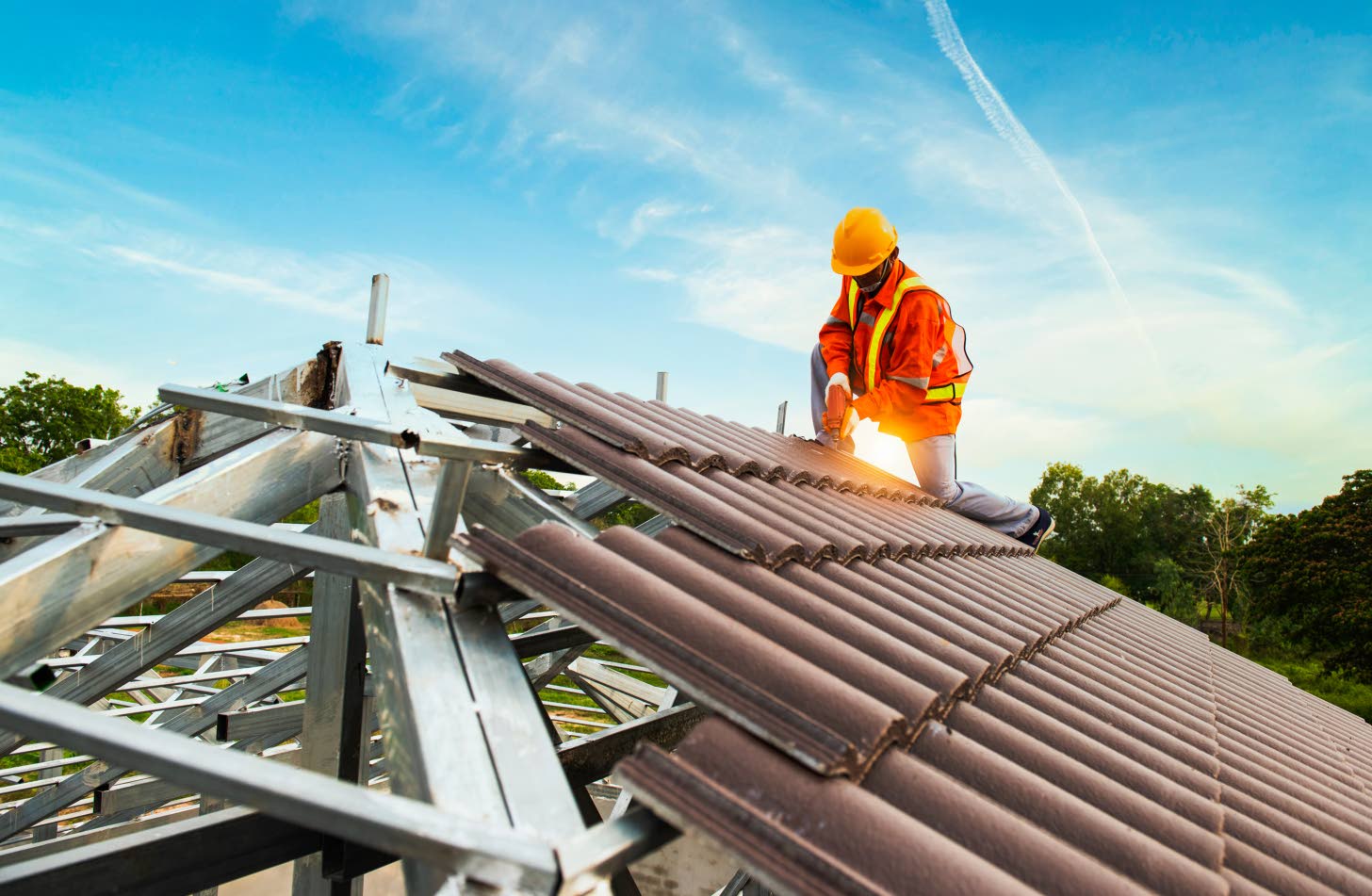
National accounting classifications tend to capture construction at its most visible point — the pouring of concrete, the raising of a wall — and stop there.
A narrower industry than the numbers admit
Construction is regularly cited as contributing roughly 10 per cent of Jamaica’s gross domestic product (GDP), and that figure alone should command attention. But it understates the industry as the Construction Industry Council actually represents it, and that undercount has consequences.
National accounting classifications tend to capture construction at its most visible point — the pouring of concrete, the raising of a wall — and stop there. They do not fully capture the value created earlier — in planning, design, land surveying, and quantity surveying — nor the value sustained afterward in property and facilities management, valuation, and the decisions made at a building’s end of life. The council’s membership spans that entire arc.
When the classification is narrow the multiplier is invisible, and when the multiplier is invisible decision-makers cannot see the marginal difference between one procurement choice and another, between a contract awarded to a local firm using local materials and one that is not, between rebuilding in place and relocating, between a project structured to draw in Jamaican subcontractors at every tier and one that does not. Those differences compound across hundreds of projects. Jamaica needs to start measuring them.
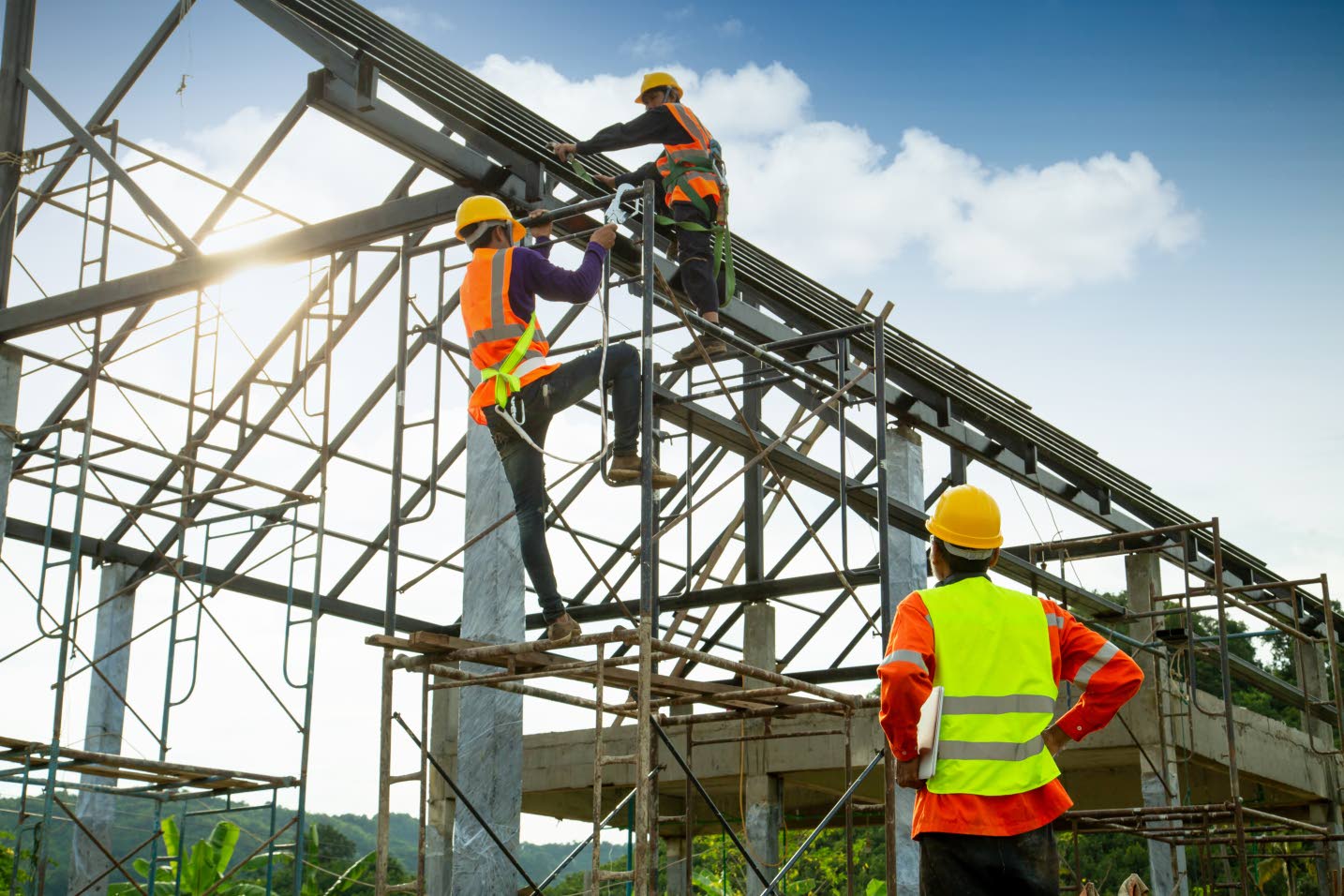
Construction is regularly cited as contributing roughly 10 per cent of Jamaica’s gross domestic product.
Licensing is the right goal, not the only lever
We said last time that professionalisation, certification, and full licensing across the built environment is the direction in which Jamaica must go. We also said, plainly, that this is a medium-to-long-term undertaking. It requires finalisation and implementation of legislation, institutional capacity, and time for which reconstruction cannot wait.
The practical question this raises is, ‘What protects quality and channels work to legitimate local builders in the meantime?’ Our answer is, ‘A temporary baseline.’ This is an interim standard of registration and verification, run through the council’s constituent professional bodies — in partnership with parish authorities — that a contractor or tradesperson can meet now: proof of prior work, tax compliance, basic safety practice, insurance where applicable. Admittedly it is well short of full licensure but enough to distinguish a known, accountable local builder from an unknown one. It would not replace the licensing regime to come but it would be the bridge that lets local capacity be engaged responsibly while that regime is built.

Professionalisation, certification, and full licensing across the built environment is the direction in which Jamaica must go.
NaRRA, and the honesty
As the National Reconstruction and Resilience Authority (NaRRA) moves from legislation to implementation the proof of the pudding is in the eating, and our constituent bodies — representing architects, engineers, quantity surveyors, land surveyors, builders planners and valuation surveyors — have said so publicly. Their reaction has been mixed, as it should be with an institution this consequential. There has been genuine commendation for a mechanism built to cut delay and coordinate a reconstruction effort of unprecedented scale. There have also been genuine concerns, and we will not pretend otherwise. Questions about role duplication with the Bureau of Standards, parish building authorities, and professional registration boards; questions about who monitors what, and who is accountable when something is missed. These are not objections to reconstruction moving quickly. Rather, they are the ordinary, necessary questions of an industry being asked to work inside a new structure, and they deserve real answers rather than reassurance alone.
A phased plan, not a wish list
Whatever the shape those answers take, the Construction Industry Council takes its own role in closing these gaps seriously, and we are putting forward a phased approach rather than a single demand.
In the immediate term we are proposing a local-first procurement stance within NaRRA-led and NaRRA-adjacent contracts: preference and set-asides for qualified Jamaican firms, contracts unbundled into lots that local and regional builders — rather than only the largest international players — can actually bid on. We also want to see the interim baseline registry described above standing up within months, not years.
In the medium term, that interim registry should feed directly into the formal certification and licensing framework anticipated under the Building Act, linked to the national digital permitting and compliance data infrastructure we have already called for. This will ensure that a builder’s history, once verified, follows him instead of resetting with every parish and each project. This is also the stage at which NaRRA, the Bureau of Standards, parish authorities, and the professional associations should formalise, in writing, who inspects, who monitors and who is accountable, so that “coordination” is a defined division of labour rather than a hope.
In the longer term, we want to see full licensing taking effect in law, backed by continuing professional development and, ideally, recognition across Caricom so that Jamaican credentials travel as far as Jamaican builders are willing to go.
None of this is protectionism for its own sake. It is a recognition that reconstruction spending is the largest single lever Jamaica will pull on its own construction economy for years to come, and that lever can either build local firms into the kind of enterprises that outlast this recovery or it can pass through the country and leave nothing behind but new buildings. The Construction Industry Council knows which outcome we are working toward, and we stand ready, as before, to help build the systems that get us there.


