



A woman with a purpose
Shelly Heaven is shaping Jamaica’s agriculture with FarmLinkr
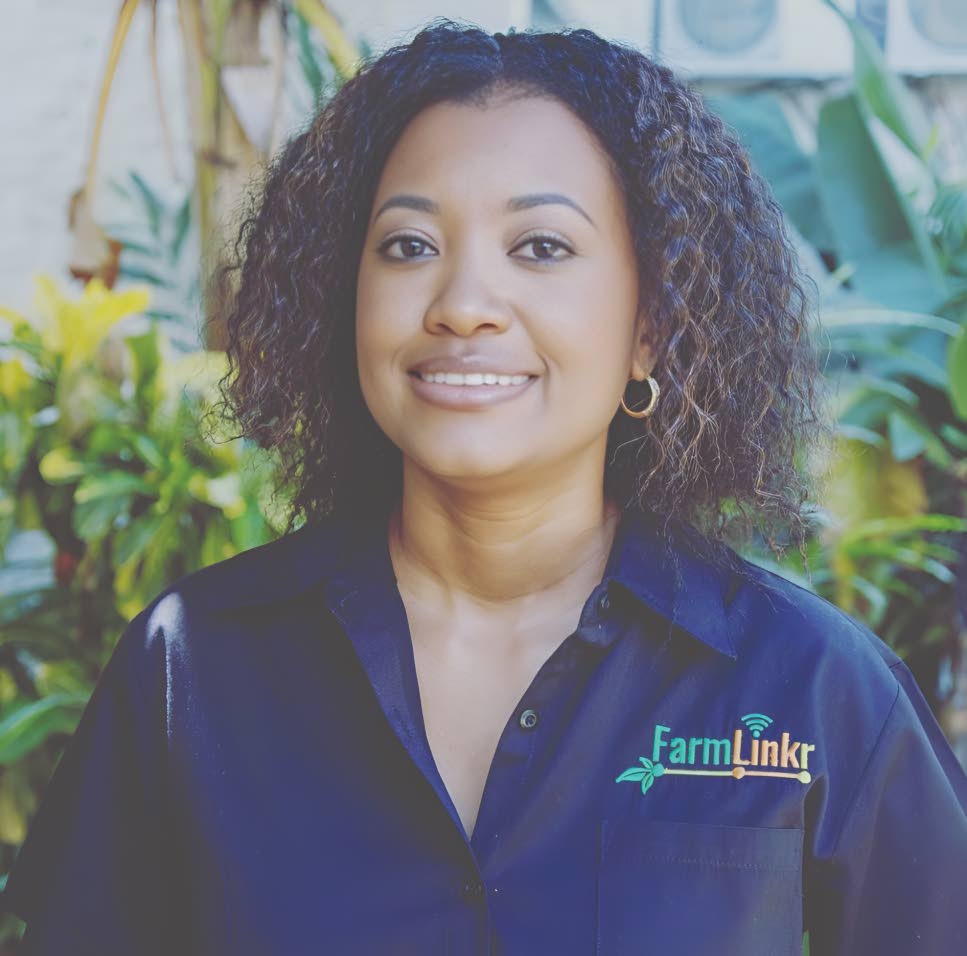
SOME revolutions begin with a protest. Others begin with a business plan. For Shelly Heaven, the possibility of changing Jamaica began much closer to home: at the family table, with her two young sons learning that the food they ate was not simply something that filled them, but could shape the lives they lived.
Long before FarmLinkr became a growing agricultural business, Heaven had developed a conviction that what Jamaica eats matters, and that the country’s relationship with food could have profound consequences for its health, its farmers and its future.
It was this conviction that eventually led her into agriculture. Not because she had always planned to become an agricultural entrepreneur, but because she began to see the connections between problems that were often treated separately. Jamaican farmers were producing food but did not always have reliable access to markets. Consumers wanted fresh, nourishing produce but could struggle to find it consistently. At the same time, Jamaica was blessed with fertile land and an abundance of agricultural products while facing a growing burden of non-communicable diseases. To Heaven, these were not isolated challenges. They were pieces of the same puzzle.
She began asking what could happen if the relationship between the people growing Jamaica’s food and the people buying it could be made simpler, stronger and more efficient. That question became the foundation for FarmLinkr.
When Heaven first envisioned the business, she was not thinking about warehouses, branded products or islandwide delivery. Her original idea was an online, location-agnostic marketplace that would allow farmers to showcase what they had available and give buyers an easier way to find what they needed. It was a relatively simple solution to a very real problem: connecting supply with demand.
But entrepreneurship rarely unfolds exactly as planned.
As Heaven listened to the market and responded to what consumers and farmers actually needed, the business evolved. FarmLinkr moved beyond simply connecting buyers and sellers and became a business that sells and delivers products islandwide, while also developing branded products that have made their way into supermarkets. The evolution was not a departure from the original vision, but an extension of it. Heaven recognised that if the goal was to make local food more accessible, FarmLinkr had to be willing to meet consumers where they were.
That willingness to adapt has become one of the defining characteristics of her entrepreneurial journey. Technology remains an important part of FarmLinkr, but Heaven has never treated technology as the end goal. The platform is a means of creating connections, while the larger ambition is to make it easier for consumers to discover, access and choose wholesome, locally grown food and, in doing so, create stronger opportunities for the farmers producing it.
Her journey has also given her a wider view of what Jamaican agriculture could become.
Heaven points to the Netherlands as an example of what is possible when agriculture is treated not simply as traditional farming, but as a sophisticated, technology-driven industry. For Jamaica, she sees opportunities in climate-controlled and protected agriculture, precision farming, artificial intelligence, data-driven farming, drones, sensors and robotics. For a country operating within the hurricane belt, these technologies could help farmers become more resilient while improving consistency, productivity and efficiency.
More importantly, Heaven believes this transformation could change who sees themselves in agriculture.
For young Jamaicans, agriculture does not have to mean only planting, harvesting and working the soil by hand. It can mean engineering, technology, logistics, data, marketing, artificial intelligence and entrepreneurship. It can create careers for young people who may never have imagined that agriculture had a place for their skills.
But Heaven knows that vision alone cannot transform a sector. Investment is necessary, and she has become an advocate for what she calls “patient capital” for agricultural businesses. Rather than viewing agriculture simply as an industry too risky to invest in, she believes the right technology, infrastructure and systems can help manage those risks and create businesses capable of producing sustainable returns.
a
It is this belief that sits behind Heaven’s description of Jamaican agriculture as a “sleeping gold mine”.
The phrase is not simply about the value of Jamaica’s land. The opportunity lies in everything that could be created from it: stronger local food systems, greater market access for farmers, reduced dependence on imported food, new businesses, new technologies, new careers and greater economic value from what the country already has. Jamaica has the land, the climate, the agricultural knowledge and the people. What Heaven sees is an industry that has enormous wealth within it, but has not yet been fully developed, modernised or mined for its potential.
For her, the answer is not to abandon traditional agriculture, but to build on it intelligently.
“Agriculture is a sleeping gold mine; let’s start mining smartly and wake up this sleeping treasure chest for our country.”
Today, Heaven, founder and chief executive officer of FarmLinkr, has been ranked #71 on Businessuite’s Women Power 100, recognising Jamaica’s most powerful and influential businesswomen. The recognition adds another milestone to an entrepreneurial journey that began with a personal concern and grew into a much larger purpose. But perhaps the most significant part of her story is not the recognition itself. It is what her journey reveals about starting before everything is figured out.
For younger women trying to build something of their own, Heaven’s experience offers an important lesson. A purpose does not always arrive as a fully formed business idea. Sometimes it begins with noticing a problem, asking a difficult question and being willing to follow the answer. Her journey shows that the first version of an idea does not have to be the final one. Businesses evolve when entrepreneurs listen, learn, adapt and remain committed to the problem they set out to solve.
There is also something particularly powerful in the fact that Heaven did not enter agriculture because it was the obvious path for her. She entered because she saw an opportunity to make a difference. That distinction matters for women still finding their footing in business. The journey does not always begin with certainty, capital or a perfect roadmap. Sometimes it begins with conviction and the courage to build from there.
For Heaven, that journey has now grown beyond building a company. She wants FarmLinkr to play a role in transforming Jamaican agriculture, strengthening the relationship between farmers and consumers, opening new markets, encouraging innovation and making local food more accessible. She wants to see a generation of Jamaicans view agriculture differently, not as an industry stuck in the past, but as one capable of driving the country’s future.
What began with a mother thinking about the food on her family’s table became a business built around connecting farmers with consumers, and that business has grown into a vision for what Jamaica’s food system could become.
The farmer remains an essential part of that journey. The consumer is the one who ultimately chooses what reaches the plate. FarmLinkr exists in the space between them, building the connections that make those choices easier and creating greater opportunities along the way.
Heaven’s vision is bold, but its starting point is remarkably simple: Jamaica already has something valuable. The opportunity now is to recognise it, invest in it and build it smarter.
The sleeping gold mine is here. Shelly Heaven believes it is time for Jamaica to start mining.


