



Holness pushes museum expansion to preserve Jamaica’s history
Prime Minister Dr Andrew Holness says Jamaica is moving to build a wider network of museums across the island, with the expansion designed to ensure every Jamaican child has an opportunity to learn about the history, struggles, and achievements that shaped the country.
According to Holness, the Government’s vision includes museums dedicated to different periods and aspects of Jamaica’s development, including a national museum in Morant Bay, a museum in Port Royal, a facility in western Jamaica focused on National Hero Sam Sharpe and the Christmas War, and a long-discussed sports museum.
He also indicated that Jamaica could establish a dedicated museum for music.
Holness, who was speaking on Tuesday at the official opening of the Alpha Mercy Historical Centre at the Convent of Mercy Academy ‘Alpha’ campus on South Camp Road in Kingston, argued that preserving the country’s history should be treated as a national priority rather than simply a means of attracting visitors.
“We must take the preservation of our history seriously. Our historical buildings, institutions, documents, traditions, and stories are part of Jamaica’s national wealth. Once lost many of them cannot be recovered. Preserving them is, therefore, not an exercise in nostalgia, it is an investment in identity, education, and national confidence.
“Young Jamaicans should know the institutions that helped to shape their country, they should know the stories of Jamaicans who saw problems in their society, took initiative, took ownership with passion, and did something about it,” said Holness during the opening of the facility which is designed to preserve and tell the story of the Sisters of Mercy of Jamaica and their contribution to education, healthcare, social outreach, and the care of vulnerable Jamaicans.
He argued that Jamaica has not done enough to celebrate the people and institutions that have contributed to the country’s development, warning that the resulting gap can leave young people searching elsewhere for figures to admire.
“These are the stories that we need to tell, these are the heroes we need to celebrate, this is the information we need to put out in our society. Unfortunately, we don’t do enough of it, and so that gap — where our young people are looking for persons to emulate, to be inspired and stimulated — it is being filled by pretenders, by pied pipers who are leading them astray,” said Holness.
Against that background, he said the Government’s museum programme should be designed with Jamaican children and citizens at its centre rather than being driven solely by the tourism market.
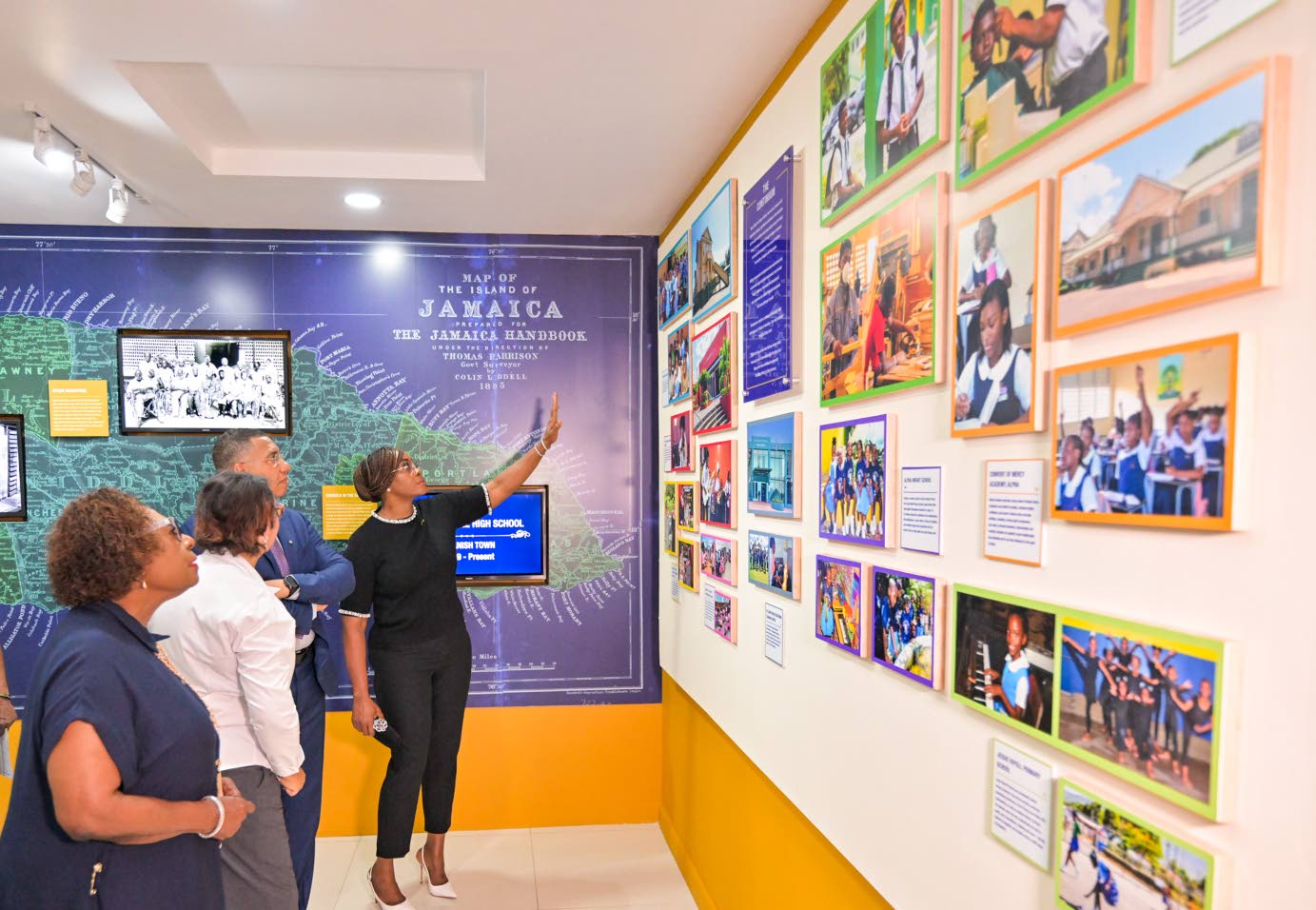
Speaker of the House of Representatives Juliet Holness (right) describes the images that capture the various work carried out by the Sisters of Mercy of Jamaica, during a tour of the newly opened Alpha Mercy Historical Centre. Listening (from second right) are Prime Minister Dr Andrew Holness; CEO of the Sisters of Mercy of Jamaica, Marcia Tai Chun; and Minister of Culture, Gender, Entertainment and Sport,Olivia Grange. (Photo: JIS)
Holness said one of the most significant projects in the pipeline is the proposed museum in Morant Bay, which will focus on Jamaica’s post-Emancipation history.
The historic St Thomas town was chosen because of its connection to the 1865 conflict involving Paul Bogle, a pivotal episode in Jamaica’s history.
“I met with the architectural and design teams, and it was last week, Wednesday or Thursday, and the plans are moving well, and it will be a museum about the post-Emancipation history of Jamaica, and, therefore, it is sited quite perfectly, in my mind, in Morant Bay, the site of the Paul Bogle Rebellion,” he said.
He said the Government is also advancing plans for Port Royal, where a facility has already been built and is expected to be curated into a museum by next year.
Furthermore, the planned western museum would focus on the Christmas War and Sam Sharpe, linking the institution to Jamaica’s pre-Emancipation history.
Holness also revived the Government’s plan for a national sports museum, saying the idea has been discussed for years but had lacked the resources or capacity needed to bring it to fruition.
The prime minister said the planned museums should also make history easier for ordinary Jamaicans to understand, particularly younger people who may find engaging with traditional historical documents difficult.
“The history will be curated. It will be translated from the documents written in the past into more interactive ways of understanding it and the display of the artefacts, including statues and symbols,” he said.
For Holness, the wider museum programme is ultimately about creating a stronger connection between Jamaicans and the country’s past while using that knowledge to shape the future.


