



All in the timing
Samuda says MoBay Bypass will ensure no major traffic disruptions from massive water project
MONTEGO BAY, St James — Water Minister Matthew Samuda has given an assurance that proper planning, which factored in completion of the under-construction Montego Bay Bypass Road, will ensure there is minimal disruptions to traffic in the city while work is being done on the Western Resilience Water Project.
Water transmission mains are currently being installed along sections of the North Coast Highway, and work will eventually begin within the precincts of the western city. Samuda explained that this was taken into consideration when the project was being developed.
“We timed the commencement of these works with the completion or the expected completion of the Montego Bay Bypass,” he said Wednesday morning during a tour of the ongoing works.
The bypass is slated to be completed next month.
“When you are getting closer to Montego Bay, there will be an alternative route that persons are able to take,” the minister added.
Sections of Rose Hall main road where work is now being done are experiencing heavy traffic, as the usual dual-lane carriageway on either side has been reduced to a single lane in each direction.
There have been concerns that, closer to Montego Bay, the works could create additional challenges for already heavily trafficked roadways.
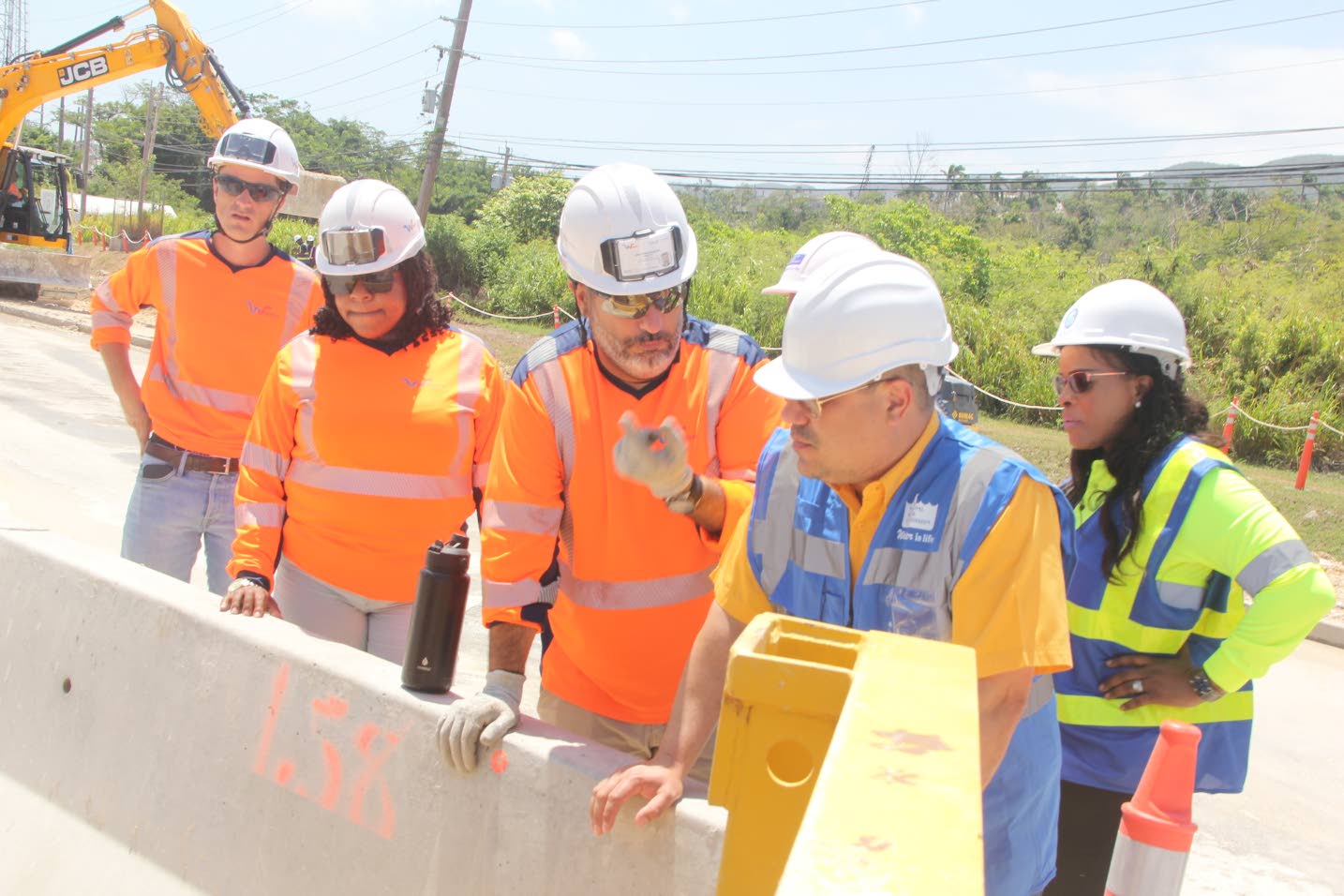
Water Minister Matthew Samuda (second right) is joined by stakeholders, Wednesday, as he examines work being done to lay transmission mains as part of the Western Water Resilience Project.
“This project was done in careful collaboration and a lot of planning went into it with the National Works Agency (NWA) and the [managers of the bypass project] National Road Operating and Construction Company (NROCC) as well,” assured Samuda.
“We have also looked at other road work that is to take place in and along the corridor to ensure that we are not creating a total lockdown of the city at the same time,” he added.
There has long been criticism of what appears to be a lack of communication between entities doing infrastructure projects, with roads dug up soon after being paved. However, Samuda said the general approach for the massive water project is to finish working before road repairs are made under the Government’s Shared Prosperity through Accelerated Improvement to our Road Network (SPARK) programme. Stressing that disruptions will be unavoidable, he asked commuters to think of the big picture.
“We thank the citizens for their patience, we know we are causing some traffic [snarls] but this work is critical to create the water resilience we need in the north west of Jamaica for the next 25 to 30 years; so a little pain now for 25 years of reliable water supply,” Samuda said.
The Western Water Resilience Project is expected to enhance potable water distribution across the country’s western belt.
“The programme will see 67 kilometres of new transmission main laid from Martha Brae all the way to Terminal Reservoir and new transmission mains from Lucea all the way to the West End of Negril,” Samuda said.
The project is expected to take five years and cost US$450 million. It is now in its first phase which has a US$176.22-million price tag.
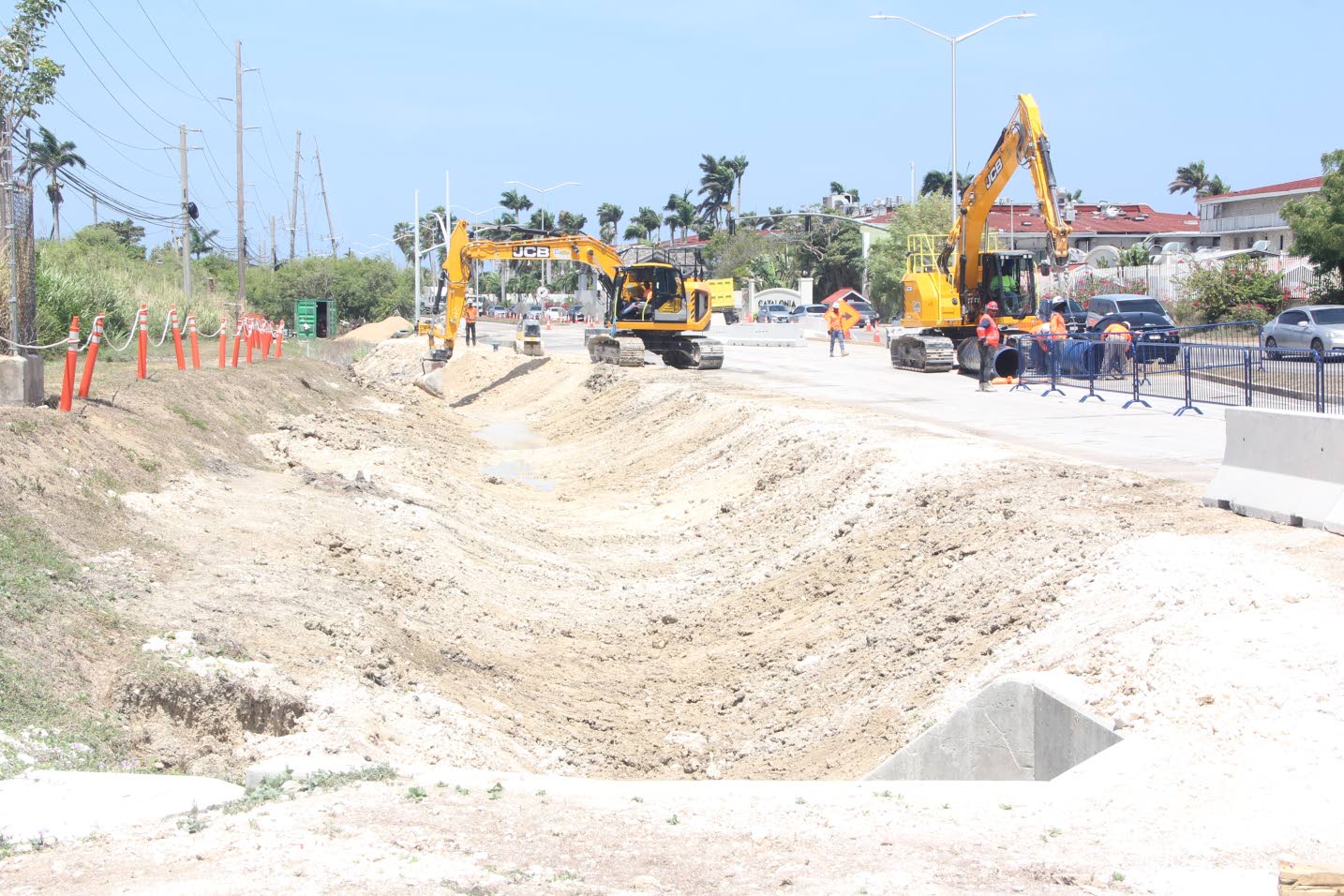
Work being done on transmission lines being laid along the North Coast Highway as part of the US$450-million Western Water Resilience Project.
“This is a full redesign and rebuild of the north-western water transmission corridor. We are putting in pipes, enhancing the treatment facility and we building in the storage,” Samuda said.
Work is being done by the French company Vinci Construction.
“Absolutely pleased with the progress. What was reported to me is that we have passed the 17 per cent threshold, so the project is still in its infancy in a sense. But I am pleased that we are on track in line with the schedule,” the minister said.
“We expect to enter phase two between May and June next year with the commencement of the upgrades of the treatment plant as well,” he added.
The project also includes upgrading of the Martha Brae and Great River water treatment plants, construction of a new treatment plant at the Roaring River in Westmoreland, expansion of the production capacity across four treatment plants, new pumping and booster stations, and significant increases in water storage.
When completed, the project will serve a wide corridor of beneficiaries spanning major towns, including Savanna-la-Mar, Negril, Montego Bay, Falmouth, Runaway Bay, St Ann’s Bay and Ocho Rios, as well as Lucea, Green Island, Little London, Ironshore, Coral Gardens, Rose Hall and Discovery Bay, among others.
According to Samuda, upgrades to the Martha Brae and Great River treatment plants will add an additional 10 million gallons of water along the corridor. He also pointed out that upgrade works will be carried out at the Logwood Treatment Plant, while designs are being completed for new storage facilities along the corridor at points of elevation that will gravity-feed communities once completed.


