



Woodcats invests $30m to boost efficiency
Woodcats International Limited is using a slowdown in manufacturing and weaker demand for pallets to accelerate automation and develop new revenue streams, as a range of economic pressures weigh on its core market.
The company has invested more than US$200,000, or about $30 million, in new equipment as part of a two-phase push to increase production efficiency and automate its operations.
General Manager Peter Douglas said the first phase of the investment has already improved production efficiency, led by the installation of a new four-head band saw.
“It produces a bit more than twice what the previous machines we had cutting produced, and it uses half of the labour,” Douglas told the Jamaica Observer.
The machine was ordered before Woodcats’ listing on the Jamaica Stock Exchange earlier this year and arrived in April. It forms part of a broader equipment upgrade that also includes a re-saw machine, wood-shaving machine, bagging unit, and wood shredder.
Woodcats is now about 50 per cent automated, with the next phase of its expansion aimed at mechanising pallet-nailing operations. The company has already identified the equipment it intends to purchase, pending board approval.
![DOUGLAS...we’re certainly not happy in the direction that it [share price] is going, but we are confident that the work that we are doing behind the scenes [will see] the price... reversed.](/jamaicaobserver/news/wp-content/uploads/sites/4/2026/08/image_1-335.jpg)
DOUGLAS…we’re certainly not happy in the direction that it [share price] is going, but we are confident that the work that we are doing behind the scenes [will see] the price… reversed.
The investment push comes against a weak demand environment for pallets, leaving Woodcats heavily exposed to conditions in the manufacturing and export sectors. Pallets account for the lion’s share of the company’s revenue, while manufacturers and distributors make up about 90 per cent of its customer base.
Douglas said customers have been contending with softer production and demand, alongside higher logistics and freight costs and disruptions affecting shipping. Export activity has also weakened, while the fallout from Hurricane Melissa has weighed on production and overseas sales.
Agriculture, another source of demand, has faced drought conditions associated with El Niño. For Woodcats, the transmission is direct: when manufacturers produce less and exporters ship fewer goods, fewer pallets are required.
“There’s a general downturn in demand across the economy,” Douglas said.
The weakness is reflected in Woodcats’ financial performance. For the six months ended June 30, revenue fell 19.9 per cent while net profit declined 34.5 per cent compared with the corresponding period last year.
“Demand for pallets has somewhat been soft. So we are using the opportunity now to concentrate on efficiencies,” he said. “We’re basically preparing ourselves to be more efficient when the demand rises. So we’ll be basically using less labour to produce more.”
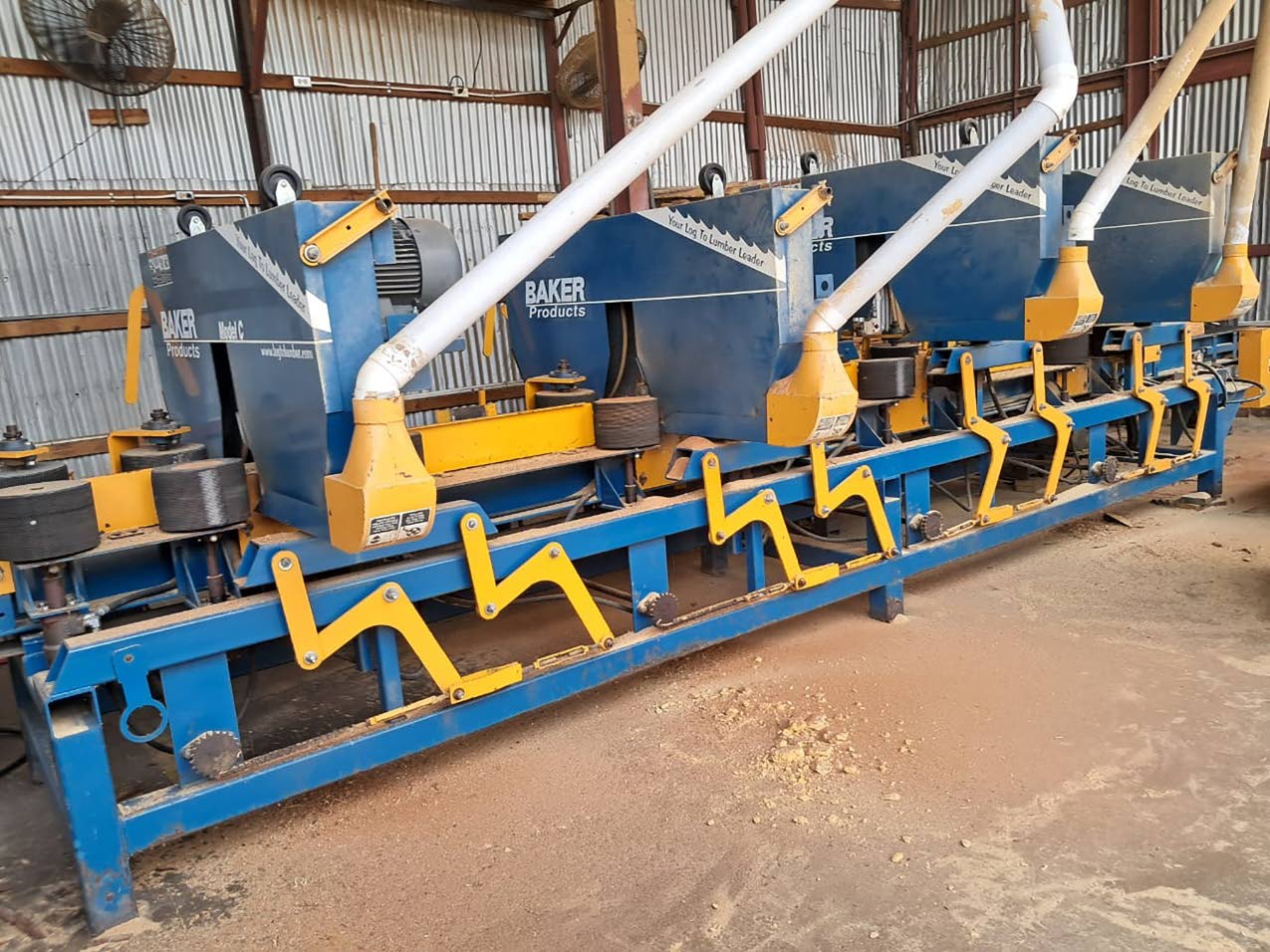
A 4 head band saw, one of the new machines acquired by Woodcats to improve production efficiency.
Douglas said the efficiency gains are helping Woodcats manage higher logistics and freight costs, allowing the company to absorb a significant portion of those increases without passing them on to customers. At the same time, Woodcats is seeking to reduce its reliance on pallet sales by generating revenue from timber by-products, including sawdust, wood shavings and garden mulch. The company’s waste-to-revenue initiative has so far fallen below target, according to its financial statements. Douglas said demand for sawdust and wood shavings has been particularly weak because their main customers are agricultural exporters, an industry that has remained subdued since Hurricane Melissa. Garden mulch, however, has shown some improvement.
“As soon as that industry, that export side, comes back, then we should be seeing some uptick in our waste to revenues,” he told the BusinessWeek.
Beyond these products, Woodcats is also exploring other value-added wood products as it seeks to broaden its customer and revenue base. Douglas expects the efficiency investments and diversification efforts to begin having a more visible impact on its financial performance from the October-to-December quarter.
“We’re not waiting for the pallet revenues to come back up. We are actively looking at other diversifications,” Douglas said. “We are just more than a pallet company.”
Meanwhile, Woodcats’ share price has fallen 44.4 per cent since its listing, from $0.90 to $0.50 at Wednesday’s close. Douglas said management was unhappy with the stock’s performance but remained confident that the company’s investments would eventually be reflected in its valuation.
“We’re certainly not happy in the direction that it is going, but we are confident that the work that we are doing behind the scenes [will see] the price… reversed,” he said.


