



Larger than life
Howard ‘Big Mac’ McIntosh merges sport, entertainment and national pride
WHEN Howard “Big Mac” McIntosh walks into a room, he doesn’t blend in. He stands out — tall, imposing, larger than life. When he speaks, people don’t just hear. They listen.
McIntosh has been a respected voice in sport and entertainment, and his contribution to both — locally and regionally — cannot be measured. And it has not gone unnoticed.
When he got the call that he would be recognised by the Jamaican Government for his toil in the vineyard of local sport, his heart skipped a beat. Literally. And when he saw his name on the published list, he gasped.
“I was pleasantly surprised. Really. This is an incredibly moving moment for me. I feel deeply humbled and profoundly grateful to be recognised for doing work that I always considered a labour of love,” he said, failing to tame the swell of emotions.
“To be recognised by my own country for that work is the highest honour. I share this with every sport administrator, volunteer, community worker and all creatives, who build sport and the creative industries every day.”
McIntosh added: “This has never been about me; it has been about Jamaica. I have been blessed to work with amazing people who believe that sport and the creative industries can change people’s lives.”
The experienced sport administrator, executive and organiser will be conferred with the Order of Distinction (Commander Class) for his contribution to the development of sport.
McIntosh and 139 other Jamaicans are set to receive their instruments of office at this year’s National Honours and Awards Ceremony at King’s House on Heroes’ Day on Monday, October 19.
McIntosh, 64, has already dreamt of the day, and his special moment.
“I’m going to give a ‘boasy’ walk to the stage, but with reverence. I’m a fun-loving person and plan to enjoy the event and the entire day,” he declared.
A St George’s College alumnus, he says the recognition is also being claimed by the “special people” in his life.
“My mom [Aylair McIntosh] and my children [Kia, Malik and Tor], and wife Yvonne are especially proud. I have some really good friends as well that are very proud of my achievement,” he gushed.
McIntosh, who currently works with Concacaf as director-Caribbean, Member Associations, has made his mark on the Jamaican sporting landscape in a significant way, starting with his work at the Sports Development Foundation. He was a founding director and deputy chairman of the State-run body.
“The SDF allowed me to assist many sporting disciplines. I am very proud of being a part of the formative stage of that institution,” he shared. “I’m very proud of assisting in funding the Road to France programme. I’m also proud of my role in building the Mona Hockey Field and helping many students get scholarships to overseas colleges.”
But before that, the Howard University and University of Chicago graduate’s introduction to sport started on the field of play as a forward and midfielder. McIntosh played SDC Under-13 football, then Colts and Manning Cup football for St George’s College.
His broad sporting talent also manifested itself in cricket, where he played in the Sunlight Cup. He competed in swimming as well at his high school alma mater and Y-Speedos swim club.
But it was football that truly stole his heart and has held it captive. He could have quit the game in the formative years of his football career after a heartbreaking moment. But his passion and love saw him past the disappointment.
“I hated John Barnes as he came to STGC as a first-former and took my spot on the Colts team,” McIntosh said, reflecting on how the Jamaican-born Liverpool and England legend knocked him to the bench.
“However, I got to know him and we actually became good friends. I admired him for his achievements in football and even worked with him when he eventually became the coach of Jamaica. John is a great guy and I also knew his father, Colonel Ken Barnes, very well.”
McIntosh may not have reached the heady heights of John Barnes’ incredible playing career, but he quietly charted his own course in the game.
“I played at Howard University on the soccer team, and then with DC Strikers, Chicago Jets (player/coach), and then the Real Mona Masters as player and coach. We actually won that league,” he noted.
McIntosh may not have worn the Jamaican shirt as a player, but he has scored as a highly respected administrator and executive. His fingerprints are all over some of Jamaica’s most successful football moments.
His input in the golden era of Jamaica’s football — 1998 Senior World Cup, 1999 Under-17 World Cup, and Under-20 World Cup 2001 — cannot be overstated.
“I’m proud to say I was a member of the JFF (Jamaica Football Federation) board and chairman of the Technical Development Committee during this time. As you know, Captain [Horace] Burrell was the visionary and the dreamer, Rene Simoes was the technical genius and spiritual driver, while Horace Reid was the administrator.
“I was also the fund-raiser and principal organiser of the Reggae Boyz matches, bringing together the music and sport,” McIntosh said.
The former banker thinks that the country did not fully capitalise on the France ‘98 World Cup qualification, just as it continues to come up short in taking advantage of its sporting successes across the board.
“We’ve not done enough, to be honest. To date, we have not truly measured the impact of qualifying for 1998. In the same way, we have not measured Usain Bolt’s impact,” he reasoned. “A serious commitment needs to be made by the country to invest in sport. Then we will be better able to capitalise on these opportunities.”
Born and raised in Kingston, McIntosh’s fingerprints are just as visible at the club level as they are on the national stage. Whether pulling strings behind the scenes for Jamaica Premier League champions Portmore United or guiding his beloved club Real Mona FC, he has lived the gritty realities of the local game.
That ground-level experience is exactly what fuelled his drive to help build out the club platform through the Premier League Clubs Association, the Professional Football Association of Jamaica, and Professional Football Jamaica Limited.
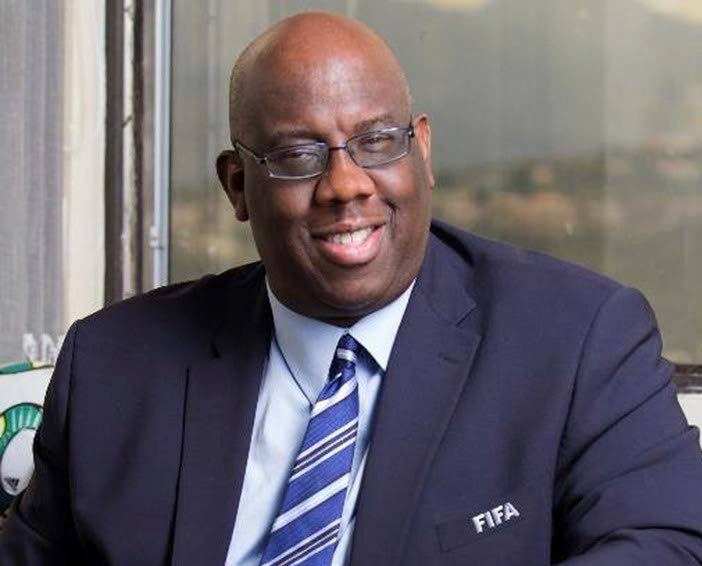
Howard McIntosh
Yet, some two decades of pushing the club platform forward, he remains fiercely dissatisfied with the state of affairs.
“It’s hard to be happy at this stage. We need the infrastructure and greater support for the only professional league in the country. I’m happy with how the coaches are being developed though,” he said.
McIntosh’s vision for Jamaica’s football is multifaceted.
“My vision is to see the development of the football economy and make Jamaica a consistent FIFA World Cup qualifier and a regional leader in football development.
“I also want to see football as a source of national pride and a sustainable economic industry creating jobs that all involved in the football ecosystem earn a living wage,” he asserted.
That knack for building from the ground up is precisely why Concacaf came calling. Today, as director — Caribbean Member Associations, his responsibilities are as diverse as they are far-reaching — overseeing governance and financial management for 28 countries, while managing the confederation’s One Concacaf grant programme for all 41 nations.
But for McIntosh, the hefty job title is less important than the ground-level impact. He prefers to let the results speak for themselves.
“I have been working with many people to assist with the development of the game in the region. The best persons to speak to my contribution would be the member associations, the presidents, general secretaries and Concacaf’s council members.
“I smiled when I saw what has happened in Curacao with their World Cup qualification, and Suriname with their pro league. I am also happy with the progress of Guyana and St Lucia, and the general improvements in the region. I can smile because I think I may have helped the boys and girls in the region to dream,” McIntosh stated.
Concacaf is seen today as a more attractive brand and football-centric confederation, after the storms of the corruption scandals of 2016.
“Concacaf has made many tremendous strides in the last 10 years. The organisation has moved from being morally bankrupt, and financially unstable, delivering little in terms of football and technical development.
“It is now an organisation that puts football first with thriving competitions, including an expanded Caribbean Cup with much greater financial contribution. Concacaf has a new image, is more financially stable and is a much more united football family,” McIntosh explained.
McIntosh takes pride that he’s part of a process that is revolutionising the game in the Caribbean and the wider Concacaf.
He believes that boys and girls should not only dream of making it in the game, but be assured by the fact that the infrastructure is in place for self-actualisation.
“We have more people making careers in the sport from the region than ever before. Just look at the growth in the JFF’s staff complement. Our job now is to create even more opportunities. I believe a great platform now exists for others to achieve their dreams and ambitions in sport—things that I could never dream of when I was younger,” he said.
So much has been achieved at the national, regional, and confederation levels. Still, there is so much work to be done. McIntosh sees himself remaining a force for change in this fluid process.
“I will continue to make a contribution as long as I am able to and allowed to. National development has always been central to my life. I will continue to contribute in any way I can,” he shared.
If football has McIntosh’s heart, then entertainment has his soul. He has allowed two of Jamaica’s most endearing passions to define him.
“I decided long ago that sports and entertainment were two of the areas where most opportunities could be provided for young black people, plus I was passionate about both areas. So I have been fortunate to be able to pursue two of my passions in my life and contribute, help people better their lives and create wealth,” he noted.
His role in the industry is just as varied and deep as his football involvement. Perhaps another national award is in the stars for him.
McIntosh is a co-owner of Bodyguard Sound System, plus he was involved in different ways with Reggae Sunsplash, Reggae Sumfest, Sting and many shows and concerts, local and foreign.
“I am a founding member and first deputy chairman of the Jamaica Reggae Industry Association (JARIA), an organisation which requires the support and involvement of all persons in the music industry,” he said.
McIntosh has also served on the boards of the Jamaica Tourist Board, Tourism Enhancement Fund, Jamaica Cultural Development Commission (JCDC) and GC Foster College.
“I now serve as chairman of the Entertainment Advisory Board and the Sports & Entertainment Network Linkage Committee in the Ministry of Tourism. Those two involvements allow me to contribute in my small way to Reggae Month, Jamaica Carnival and JAMROCK Summer, the best period of entertainment and cultural offerings anywhere in this region of the world between the start of Sumfest to Grand Gala,” he stated.
Sports and entertainment, McIntosh says, remains a resource whose potential is yet to be fathomed. Jamaica continues to miss out on the potential economic benefits of the twinned industry.
“The estimated contribution of sports and entertainment to GDP (gross domestic product) is approximately nine per cent, employing in excess of 90,000 persons.
“Our events industry continues to succeed with inadequate infrastructure. To make these two areas of our economy more successful and lead to greater contribution to our national economy to create more access to wealth, three critical things are needed—appropriate infrastructure, legislation and greater funding. These two sectors have more entrepreneurs than any other areas in our country.
“People do not know that based on police permits issued, we are averaging over 20,000 events annually, and this is without adequate infrastructure. Can you imagine if we had it? We are the event capital of the region.
“We just need the commitment from the country and the opportunity given to sugar, banana, bauxite, tourism and the BPO [business processing outsourcing] sector to be given to sports and entertainment,” McIntosh insisted.


