



Jamaica to develop seafood fraud technology
JAMAICA is set to put the Caribbean at the forefront of a global push to develop technology capable of detecting seafood fraud, with the Scientific Research Council (SRC) leading the country’s participation in research into mislabelled fish, adulteration, and false claims about freshness.
The SRC is the only Caribbean representative participating in the five-year coordinated research project which brings together about 25 to 30 countries under an initiative led by the International Atomic Energy Agency (IAEA) in collaboration with the Food and Agriculture Organization (FAO). The project follows an FAO assessment of fraud within the global fisheries industry, valued at about US$160 billion. The assessment found that approximately 20 per cent of the industry is affected by fraud.
“That works out to be just about one in every five seafood products that are on the market that would be susceptible to fraud,” said Ray-Anne Shaw Phillips, team leader of the SRC’s Analytical Services Department.
In a sit-down interview with the Jamaica Observer at the SRC’s Hope Gardens Complex in Kingston, the team outlined the work ahead and explained that seafood fraud can include mislabelling one species of fish as another, adulteration, mixing different species, using chemicals to make fish appear fresher, and making false claims about where or how fish was caught.
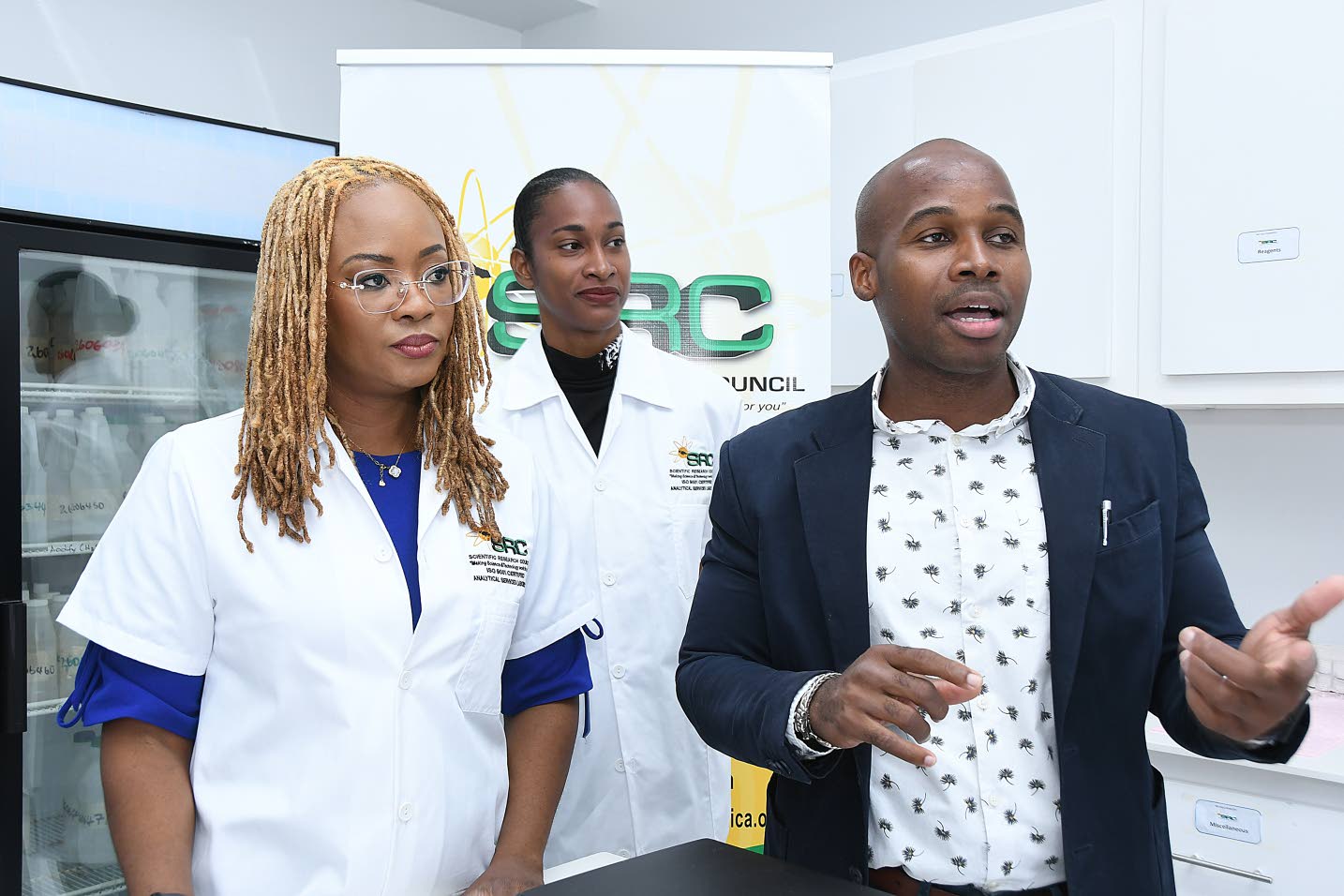
From left: The SRC team, including Executive Director Dr Charah Watson, Analytical Services Department Team Leader Ray-Anne Shaw Phillips, and Divisional Manager Research and Development Dr Ryan Francis discuss the council’s research into seafood fraud. (Photo: Karl Mclarty)
Examples include selling tilapia as salmon, mixing tuna with other fish, or treating fish with substances such as formaldehyde, sulphites and nitrates to improve its appearance or extend its shelf life.
The SRC became involved after the IAEA invited member states to participate in a coordinated research project examining food fraud within their respective regions, and developing analytical methods to detect it. The objective is not only to identify whether fraud is occurring in Jamaica but also to develop methods that can be applied more broadly across participating countries.
“With this project, we are getting new equipment that we didn’t have before or didn’t have access to that will help us to do the necessary research work analysis that is necessary,” said SRC Executive Director Dr Charah Watson.
The project received a grant of about €24,000 for this aspect of the research, and the SRC has already procured the equipment needed for the work. The first stage of the project included a coordination meeting and training session at the IAEA in July, when representatives from participating countries worked towards developing common approaches to the research.
“We have now come up with some amount of harmonised approaches and methodologies. So this is now a task for us to come back here, and to meet with your own teams, and come up with your own project design and project work plans,” Phillips told the
BusinessWeek.
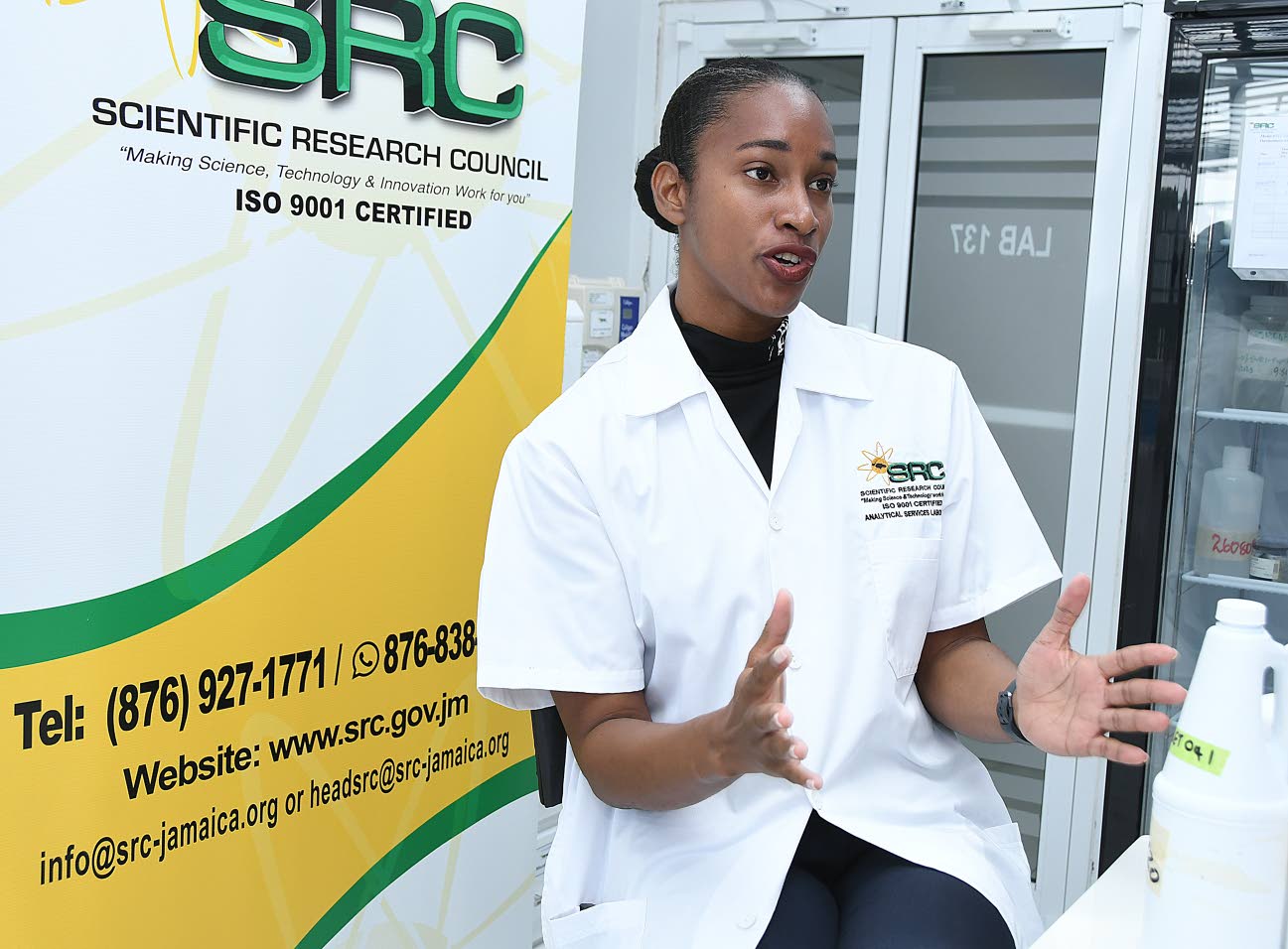
PHILLIPS…that works out to be just about one in every five seafood products that are on the market that would be susceptible to fraud (Photo: Karl Mclarty)
For Jamaica, the initial research for the next 12 months will focus on seafood, with the SRC looking specifically at snapper and parrotfish. The five-year project will begin with approximately 120 fish samples to develop the analytical model before expanding sampling across Jamaica’s geographic regions. The SRC will work with fishermen in four regions to obtain samples at different stages, beginning with freshly caught fish and continuing through chilled and frozen storage. The samples will then be tested over time to establish how the characteristics of the fish change. The aim is to develop a model that can determine the freshness of a new fish sample and provide an indication of how it has been handled. Phillips said the model could eventually determine whether a fish is about a day old or two weeks old and whether it had been chilled or frozen.
The research will also examine whether fish has been treated with adulterants, including formaldehyde, which can make fish appear fresher by improving its colour and appearance. The technology will use a combination of microbiological and chemical testing, alongside Fourier-Transform Near-Infrared (FT-NIR) technology. The FT-NIR equipment will take spectral readings of the fish at different stages. That information will then be combined with the microbiological and chemical data to develop the analytical model. The research is also intended to address the information available to consumers about the products they are purchasing.
“The challenge I have is labelling,” Watson said. “If you are not declaring what is on there, and if consumers have an expectation that this thing is free from compound A or B, whether compound A or B is safe, the consumer wants to know.”
Watson said this becomes particularly important when products are marketed as fresh or as containing no preservatives. The technology being developed is intended to provide a way of verifying both the type of fish and its freshness, rather than relying solely on claims made on the product. The SRC said the technology will be non-destructive, meaning a product can be tested without destroying it, and it could eventually be useful beyond regulators, including businesses involved in manufacturing and processing.
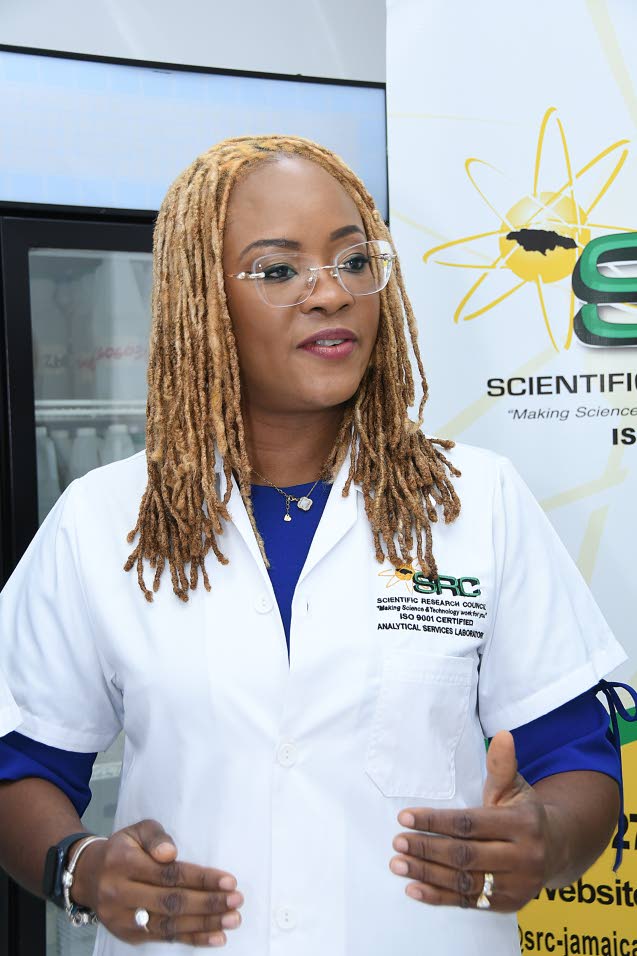
WATSON…we don’t have the data, and that is the issue. If you don’t have data you cannot speak confidently. So we cannot stand on our soapbox and say, ‘Jamaican fish is the best fish, the freshest.’ We can’t. And we could very well have that. And, therefore, there’s a missed opportunity of not having the information to support the quality of our products (Photo: Karl Mclarty)
“The technology is relatively easy to utilise and is accessible, so you can utilise it in your own business if you are a large manufacturer, or processor of fish and fish products or any other material that we will be applying the technology to for authentication or verification purposes,” she said.
The SRC expects to have preliminary findings by 2027, including the methodology developed and initial data from the sampling and analysis of fish products. But Watson said the research also addresses a broader gap — the lack of data needed to confidently assess the quality of Jamaica’s seafood.
“What it is? We don’t have the data, and that is the issue. If you don’t have data you cannot speak confidently. So we cannot stand on our soapbox and say, ‘Jamaican fish is the best fish, the freshest.’ We can’t. And we could very well have that. And, therefore, there’s a missed opportunity of not having the information to support the quality of our products,” Watson said.
Once developed, the technology will be passed on to regulators and made available beyond Jamaica as the research addresses a regional challenge. The work could also eventually extend beyond seafood to other food products, including canned fish, honey, seasonings and turmeric, as the SRC builds on the analytical methods developed through the project.


