



Jamaica deserves more than selective outrage
Reclaiming “We the People” in the Jamaican Political Experience
A Response to Dr Michael Abrahams’ Column: “Jamaica Deserves a Better Opposition” (August 18, 2026)
In his Gleaner commentary published on August 18, 2026, titled ‘Jamaica deserves a better Opposition’, Dr Michael Abrahams raises legitimate ethical concerns regarding recent controversies within the People’s National Party (PNP). He points to the troubling leaked audio recordings of National Executive Council (NEC) members discussing strategies to undermine the National Reconstruction and Resilience Authority (NaRRA) and smear its CEO, Major General Antony Anderson. He further highlights the ill-advised remarks by Member of Parliament Isat Buchanan regarding recent happenings in Coopers Pen, where he allegedly encouraged residents to “chop di line” — a colloquial reference to fraudulent misrepresentation — amidst traumatic home demolitions.
Dr Abrahams is correct to assert that a functional democracy requires a principled Opposition and that political opportunism damages public trust. However, his analysis falls into a familiar trap of Jamaican political commentary: intellectual dishonesty through selective outrage. By evaluating the PNP exclusively through its worst optics while ignoring its active, robust, and often brilliant legislative participation in Parliament, Dr Abrahams presents a totallising narrative that paints the entire party as useless. I always will believe that one “bright and sunny day in July does not a summer make”.
Sadly, Dr Abrahams’s article, and subsequent responses to it, made no mention of a PNP press conference, circa June 18, 2026, during which PNP president, Opposition Leader Mark Golding stated expressly that “…while NaRRA has many governance flaws, it is now the law of the land, so we [the PNP] will monitor and report on its functioning and implementation of government projects…” The omission is interesting because Mark Golding and the PNP’s official position is ex-ante the troubling leaked audio recordings of NEC members discussing strategies to undermine NaRRA and smear its CEO, Major General Antony Anderson.
In our Westminster model of parliamentary democracy, the Opposition bears the constitutional duty to interrogate, challenge, and resist executive overreach. Yet, an insidiously hypocritical standard has taken root: When the Opposition vigorously opposes, critics denounce it as obstructionist and hyper-partisan; when it seeks compromise or stumbles, critics brand it as ineffective and disorganised. It is the classic Jamaican democratic dilemma — damned if it does, and damned if it does not.
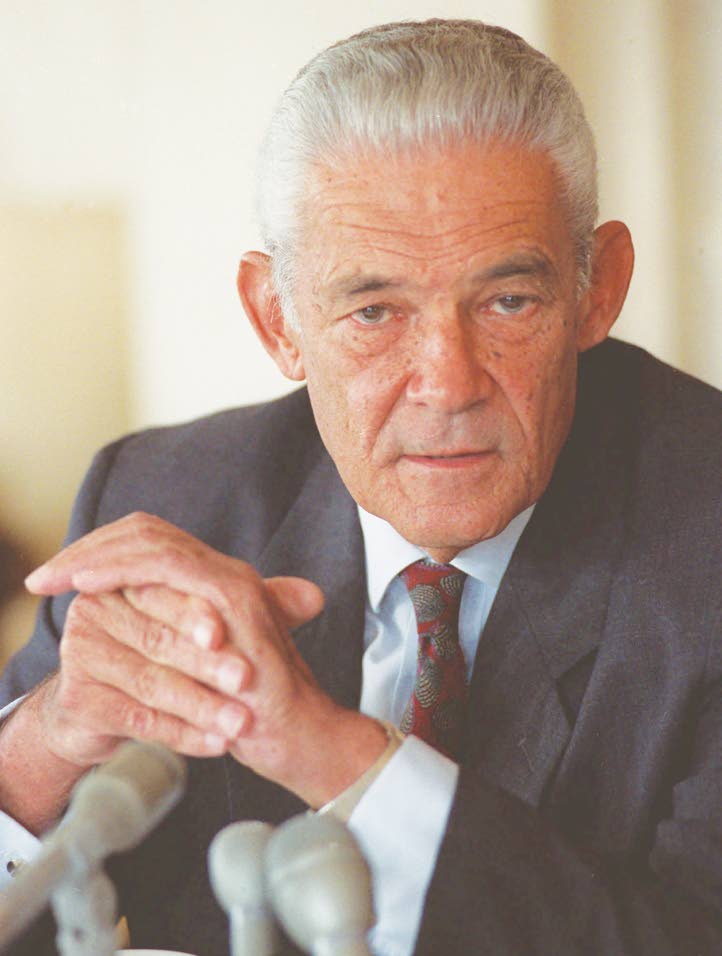
Michael Manley
To understand why Jamaica’s governance feels fractured, we must look beyond isolated party missteps and examine the broader systemic ecosystem: Our historical two-party duopoly, growing political apathy, executive arrogance, media bias, and the surrendering of civic sovereignty by We the People.
Parliamentary Robustness and the Westminster Catch-22 position
Dr Abrahams’s column completely omits the PNP’s substantive contributions within the bicameral parliamentary space. A rigorous assessment of an Opposition cannot ignore its performance on committee floors, its legal challenges against unconstitutional executive action, or its line-by-line scrutiny of critical legislation.
Under the Westminster system, the ruling party holds administrative authority, but the Opposition acts as the primary institutional check. Over successive parliamentary sessions, the Opposition PNP has repeatedly demonstrated legislative brilliance — exposing flaws in hasty legislation, advocating for fundamental human rights, and defending constitutional integrity against executive overreach.
When commentators collapse the entirety of an Opposition’s parliamentary record into a handful of media-driven scandals, they perform a disservice to public discourse. If the Opposition pushes back forcefully against Government bills, commentators accuse it of “opposing for opposing sake”. If it does not push back, people readily accuse it of being asleep at the wheel. This damned if you do, damned if you do not dynamic creates a distorted public narrative where executive overreach is normalised while parliamentary resistance is vilified.
Historical Context: From 1938 to 2026 and the Legacy of Destabilisation
It is unwise to understand Jamaica’s contemporary political landscape in a vacuum — context matters. The roots of our democracy lie in the labour movement of the late 1930s, culminating in the founding of the People’s National Party (PNP) in 1938 and the Jamaica Labour Party (JLP) in 1943, followed by Universal Adult Suffrage in 1944. For over eight decades this two-party system has dominated Jamaican politics. Third parties have never won a general election, despite repeated attempts by well-meaning citizens.
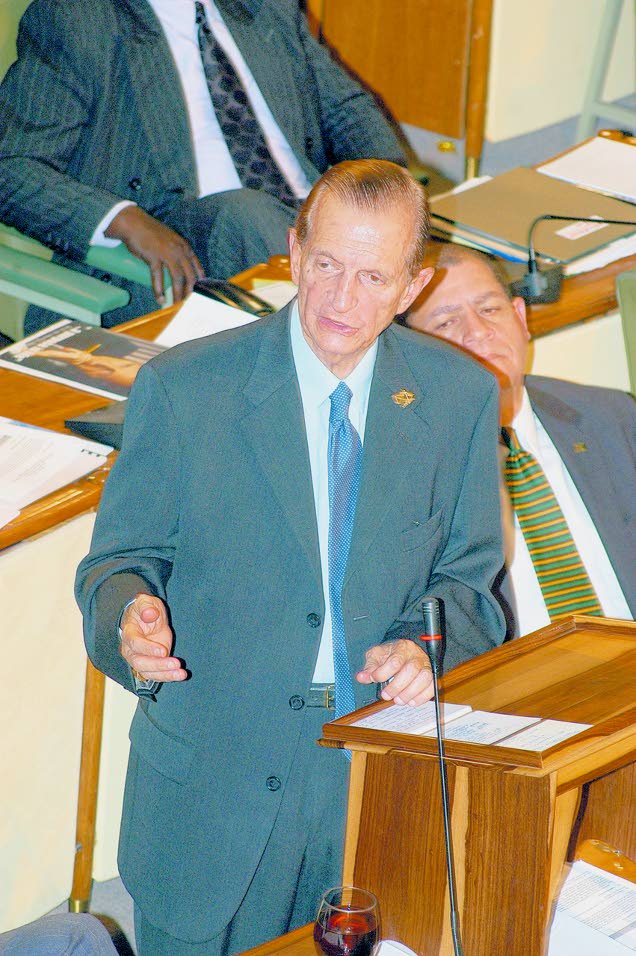
Edward Seaga
However, modern commentary frequently suffers from historical amnesia regarding how political polarisation was weaponised. In the 1970s, the Opposition JLP, aided and abetted by external forces including the US Central Intelligence Agency (CIA), engaged in a systematic campaign to sabotage Michael Manley’s PNP Government. This destabilisation caused immense socio-economic destruction, hardship, and political violence, all predicated on the manufactured threat that the PNP was converting Jamaica into a communist State.
Decades later, former JLP Leader Edward Seaga admitted the truth in public reflections: He knew Michael Manley was no communist because Manley lacked the rigid discipline to be one. The anti-communist narrative was simply a strategic tool to seize political power. The means were devastating, the ends were purely opportunistic, and the residual socio-economic impacts of that political violence and economic sabotage linger to this day.
Yet, contemporary columnists and media figures rarely discuss these dark chapters or examine how historical sabotage shaped institutional distrust and apathy. Instead, they go beyond what is reasonable, necessary, or right to flatten history. Too many of them treat current political failings on the part of the current JLP Government as isolated moral defects rather than products of a long-standing, polarised duopoly.
Voter Apathy and the Collapse of voter Turnout: The Numbers Tell the Story
The chronic polarisation of Jamaica’s two-party duopoly has not produced an empowered electorate; it has produced mass disillusionment and political apathy. A look at electoral data from 2016 to 2025 reveals an alarming trend:
• 2016 General Elections: Voter turnout stood at just 48.37 per cent. The JLP won with 436,972 votes to the PNP’s 433,735 votes — a margin of just over 3,000 votes. Third parties combined received a paltry 1,233 votes, significantly less than the 9,875 rejected ballots.
• 2020 General Elections (COVID-19 Pandemic): Voter turnout plummeted to 37.85 per cent. Third parties garnered only 1,183 votes, once again eclipsed by 8,806 rejected ballots.
• 2025 General Elections: Voter turnout remained stagnated at 39.96 per cent. The ruling JLP secured victory with 412,705 votes against the PNP’s 401,398 votes. Third parties collected 2,221 votes, while 13,705 ballots were rejected.
These figures reveal a profound truth: The majority of registered Jamaican voters choose to stay home. Furthermore, in every single election between 2016 and 2025, rejected ballots outnumber total third-party votes by significant margins. The electorate is expressing a quiet, devastating veto. Jamaicans are disengaging from a system they perceive as tribal, corrupt, and deaf to their needs.
Dr Michael Abrahams
Executive Arrogance and the Fall of the Fourth Estate
This systemic apathy has allowed executive power to consolidate without meaningful consensus. The current JLP Administration has displayed an open disdain for bipartisanship — not the performative kind, but the genuine collaborative governance required to solve complex national issues. Rather than engaging constructively with the Opposition, civil society organisations, or non-governmental organisations, the Administration routinely chastises critical voices, dismissing them as mere “branches of the Opposition”.
Compounding this executive arrogance is the degradation of the media environment. Traditionally, the press acts as the Fourth Estate — a vital pillar of democracy providing objective oversight. Today, key sections of Jamaican media operate closer to a “Sixth Estate” — acting as partisan conduits that amplify Government praise while magnifying Opposition errors. When media entities openly declare, “our commitment is not to be objective, it is to be fair”, yet practice selective outrage, intellectual dishonesty, and vindictiveness, public debate becomes toxic. Minor missteps by the Opposition are analysed endlessly, while major executive scandals, policy failures, and governance abuses are glossed over or sanitised.
We the People: Affective Polarisation and Reclaiming Civic Sovereignty
To break this cycle, we must incorporate a broader framework of democratic theory. As political scholars point out in discussions on affective polarisation, modern voters increasingly view opposing political parties not merely as incorrect on policy, but as existential threats to the nation. This intense tribalism fosters deep distrust in public institutions, replaces honest debate with partisan hostility, and turns compromise into a perceived act of weakness.
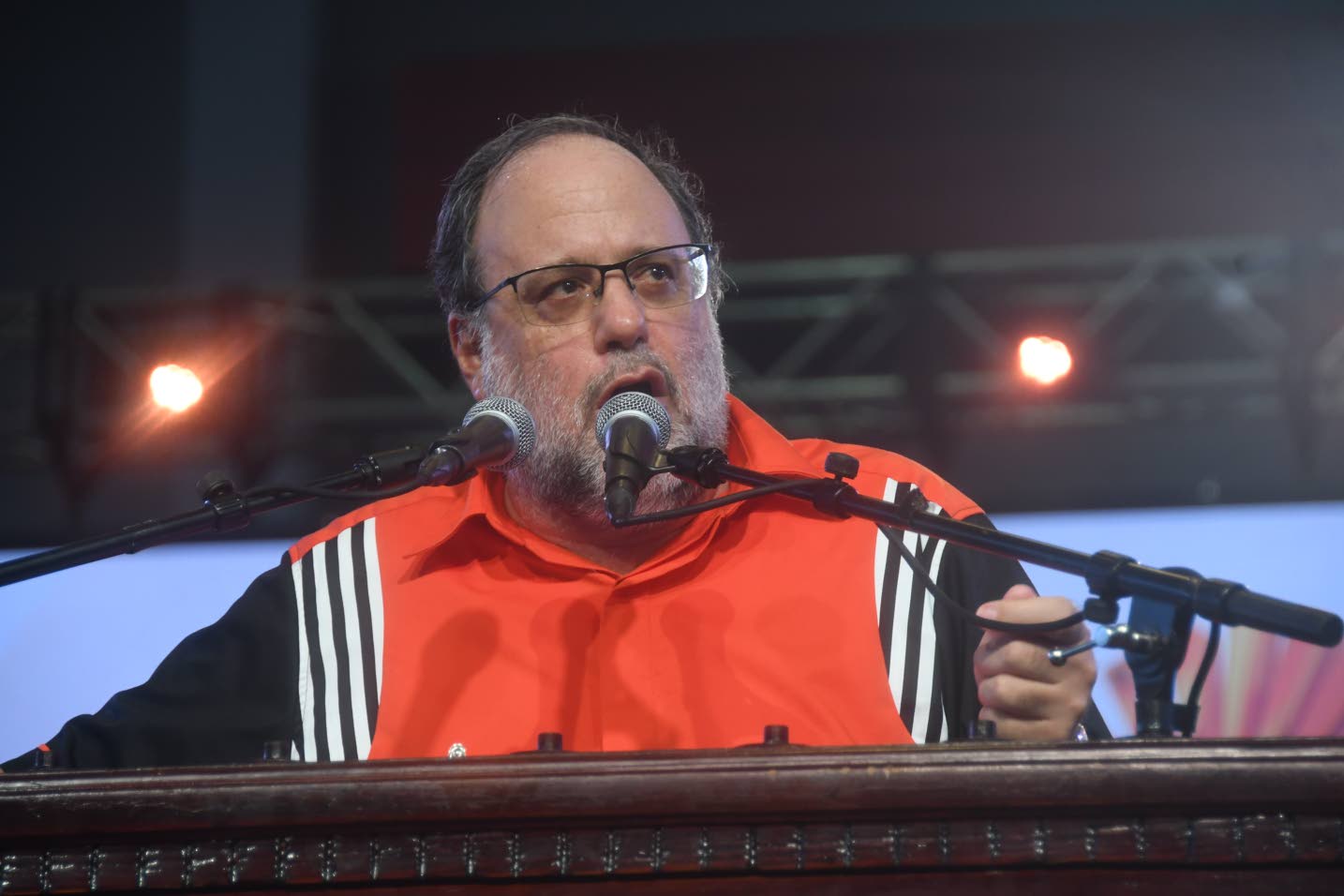
Mark Golding
In Jamaica, this dynamic has birthed political fragmentation and democratic romanticism. We look to politicians and political parties as messianic saviours, expecting them to deliver us from socio-economic hardship, while we usuriously surrender our own civic responsibility. To counter this, we must anchor our democracy in the concept of ‘We the People’ through a tripartite dynamic:
1) The Sovereign Public: Citizens are the primary source of political legitimacy. Ultimate power rests with the people, not elected elites, adorned in the cloth of Most Honourable this and Honourable that.
2) The Government: Holds temporary administrative authority and must justify its decisions openly before the public. Dr Alfred Dawes made this point abundantly clear during one of his parliamentary presentations in July 2026.
3) The Opposition: Serves as a constitutional challenger, subject to the same public scrutiny, but essential for holding power accountable. Active citizenship requires continuous oversight — monitoring budgets, defending institutional integrity, rejecting partisan echo chambers, and demanding transparency daily, not just once every five years at the ballot box. When citizens act merely as spectators in a partisan war, political elites exploit their anger and fear, while genuine governance stalls.
Jamaica Deserves an Active Citizenry
Dr Michael Abrahams is correct that Jamaica deserves a better Opposition. But that is only half the truth. Jamaica also deserves a better Government, a more objective media, and a more active, unyielding electorate. It is intellectually lazy to dismiss the Opposition as entirely useless based on isolated scandals while ignoring its vital parliamentary work and the systemic flaws of our political model. Ethical accountability must apply equally across the board — to the governing party, the Opposition, the media, and the public.
Until We the People stop looking to political parties as saviours and start asserting our role as the ultimate sovereign power, Jamaica will remain trapped in tribal factionalism, media-driven outrage, and voter despair. Democracy is not a spectator sport. It is time we demand accountability from all who seek to lead. We the people cannot continue hiding behind the convenience of fear of our own shadow yet still expect change. For as Napoleon Bonaparte said: “When you set out to take Vienna, take Vienna…”
Send comments to the Jamaica Observer or directly to Burnscg@aol.com
Christopher Burns


