



Distress signal
Survey results show mental health problems among children building for 16 years, says educator
THE 2026 Global School-Based Student Health Survey’s finding of increased suicidal thoughts and attempts among students in grades nine to 11 — with girls outpacing boys in both — is “a distress signal from our children” and a warning of a crisis that “did not happen overnight”, according to a child and adolescent development expert.
“When more than one in three grade 11 girls says she has thought about ending her life, and nearly one in three grade 9 girls says she has actually tried, we are not looking at an anomaly, we are looking at a generation in crisis,” Therrain Davis, lecturer in the Child and Adolescent Development Programme at the University of Technology, Jamaica’s College of Health Sciences, told the Jamaica Observer on Friday.
According to researchers, in comparing the 2010, 2017 and 2026 survey results, “mental health indicators have worsened over time with more students reporting suicidal thoughts, suicidal planning, suicide attempts, anxiety and depression”.
For Davis, the crisis now unveiled had been announcing itself from over a decade ago.
“The survey compared data from 2010, 2017, and 2026. Each wave brought worse news. More suicidal thoughts, more anxiety, more depression. That means this has been building for at least 16 years while, as a society, we have largely looked away,” the scholar noted.
She said several factors account for the findings.
“Many of our young people are carrying wounds they cannot name — abuse, neglect, violence in the home or the community. These experiences do not stay in the past. They follow children into classrooms, into friendships, into the way they see themselves and the world. Research tells us that children who grow up in these conditions are significantly more likely to experience depression, anxiety, and suicidal thoughts. Jamaica’s own data confirms this pattern. Yet our systems, schools, health services, communities are rarely set up to recognise or respond to this kind of pain,” the educator reasoned.
According to Davis, the “enormous amounts of time” spent online with almost no guidance is another fatal factor.
“The survey found that nearly nine in 10 students have a mobile phone, and two in three spend three or more hours on screens every single school day. Only 39 per cent have parents who set rules around social media. This matters because the research is clear: Heavy social media use, especially for girls, is linked to rising depression, anxiety, sleep problems, harmful comparisons, and cyberbullying. The Internet is not neutral territory for a hurting teenager,” the university lecturer declared.
She also argued that the stigma attached to people experiencing mental health challenges in Jamaica is another hurdle.
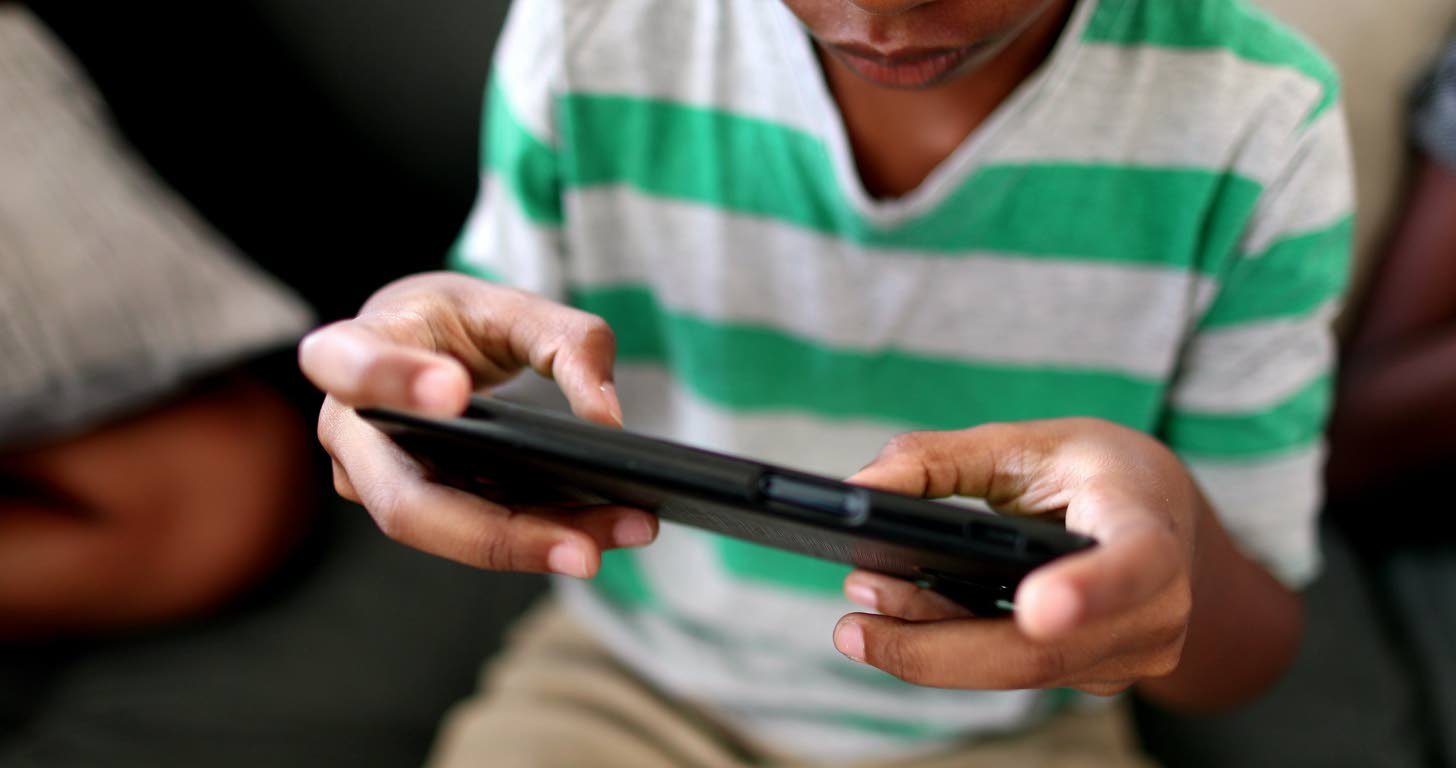
The 2026 Global School-Based Student Health Survey found that nearly nine in 10 students have a mobile phone, and two in three spend three or more hours on screens every single school day. Photo: Adobe stock
“In Jamaica, mental health struggles are still too often treated as weakness, madness, or something to hide. That silence costs lives. Young people who need help are not getting it, not because they do not want it but because the judgment is too great and the services too few,” Davis said.
She, however, noted that while dire, the problem is “not without solutions” as “other countries and communities have faced similar crises and pulled back from the edge”.
“Here is what the evidence shows works: Start in schools. Schools are where our children spend most of their waking hours [so] they are the most logical places to provide early mental health support: counselling, safe spaces to talk, trained teachers who can spot a child who is struggling. A school counsellor should not be a luxury. Right now, it largely is,” Davis said.
Other proven solutions, she said, include training parents and communities how to talk about mental health, recognise warning signs, and set healthy boundaries around screen time.
Additionally, Davis advanced as another solution making it easier to ask for help through anti-stigma campaigns that speak in the language and culture of Jamaican communities, with buy-in from churches, community organisations, schools, and media.
Creating clear pathways for children in crisis to find help, so that referrals actually work with minimal wait times and service availability across communities, is another strategy.
In addition, Davis said “what lies beneath” must be addressed, as mental ill-health does not exist in a vacuum and is fed by poverty, violence, and unstable homes.
“The release of this survey is an opportunity not to write reports that gather dust, but to act. Every child who checked ‘yes’ to suicidal thoughts on that questionnaire is someone’s daughter, son, niece, nephew, student, or neighbour. The question is not whether Jamaica can afford to respond. The question is whether we can afford not to,” Davis emphasised.
“Policymakers must move beyond awareness to investment in school-based mental health services, in trained professionals, in community programmes, and in the families — who are the first line of support for every young person. But this is not only a Government responsibility; it belongs to all of us. Check on the young people in your life. Have the hard conversations. Ask directly, ‘Are you okay?’ and mean it. Remove the shame. Create space. Listen,” she added.
Said Davis: “Our children are telling us something. The only question is whether we are willing to hear it — and to act before more lives are lost.”


