



What is the plan for church land? Pt 1
This is the first of a two-part article.
THE Jamaican church has rarely been short of land, buildings or influence. Its properties sit in almost every town, village and inner-city community: sanctuaries, rectories, schoolrooms, assembly halls, burial grounds, car parks, and, in some cases, undeveloped parcels accumulated over generations.
What Jamaica does not have is a reliable public inventory showing how much property religious organisations own, how much is actively being used and whether any of it could support housing or community development.
That absence is becoming increasingly difficult to ignore.
On August 17, the Advocates for the Church and Community Movement called for Jamaica to confront what it described as the “massively unjust” landlessness inherited from slavery. It proposed parish- or county-level land committees involving churches and civil society organisations to help address land access and informal settlements while respecting private property rights.
Less than two weeks later, the Jamaica Umbrella Groups of Churches appealed to the country to pray, conserve water and support vulnerable communities as drought placed additional pressure on households, farmers and livelihoods.
Following Hurricane Melissa, more than 1,600 churches were reportedly affected. Among them was Mount Reece Methodist in Cambridge, St James.
Both interventions are important. They also raise a more uncomfortable question: If the Church intends to help Jamaica tackle landlessness, homelessness and household vulnerability, should it first establish what land, property and investment capacity it already controls?
The issue is not whether churches should surrender their sanctuaries or sell property simply because it has commercial value; nor should every patch of churchyard be covered with concrete.
The point is whether some religious institutions may be sitting on land and buildings capable of producing homes, rental income and community infrastructure while thousands of Jamaicans struggle to find somewhere safe and affordable to live.
PUBLIC SUPPORT BRINGS PUBLIC QUESTIONS
Following Hurricane Melissa, more than 1,600 churches were reportedly affected. Many had served as shelters, distribution centres and places of refuge before, during and after the disaster. Recognising this community role, the Government allocated $75 million to the Social Development Commission for the Community Church Clean-Up and Restoration Initiative. By June, 84 churches in St James had received more than $16 million. Another $18.7 million was awarded to restore 102 churches in Westmoreland, while qualifying churches in other affected parishes also received assistance.
The grants acknowledge an important reality: In many Jamaican communities, a church is part of the country’s social infrastructure. It is where residents meet, seek counselling, collect supplies, and organise a response when formal institutions are absent or overwhelmed.
But public investment in religious property should begin a wider conversation about how those assets serve communities outside worship hours.
If taxpayers help restore a church hall, could it be designed to function as a certified hurricane shelter? Could it include rainwater storage, solar power and an accessible bathroom? Could part of the site accommodate an emergency housing unit, senior cottage, counselling centre, or small rental development?
That would not diminish the religious purpose of the property. It could strengthen it.
AN INSTITUTION PEOPLE STILL TRUST
A 2025 survey of residents in 10 marginalised communities across Kingston and St Andrew found that the Church is the most trusted institution. Some 63.3 per cent of respondents identified it as an organisation they trusted, with pastors described as mediators, counsellors and sources of moral guidance. That degree of trust has economic value, even if it does not appear on a balance sheet.
Housing projects frequently stall because residents distrust developers, politicians or public agencies. Churches can sometimes reach households that formal institutions struggle to engage. They know which elderly resident is living under a failing roof, which family has occupied land for decades without a title and which young couple is paying most of its income to rent one room. Churches can convene residents, explain proposals and help distinguish genuine community development from opportunistic speculation.
Yet trust alone does not build houses. It must be combined with land, professional expertise, transparent governance, and finance.
That is where the Church’s potential role becomes more significant.
WHAT DOES THE CHURCH ACTUALLY OWN?
It is frequently claimed that churches are among Jamaica’s largest landowners, sometimes even described as second only to the Government. That assertion has circulated for years, but there appears to be no comprehensive, publicly accessible national register confirming it.
It should, therefore, not be repeated as fact without evidence.
What can be seen is that religious organisations collectively occupy a substantial physical footprint. Jamaica has thousands of congregations, including long-established denominations that acquired land during and after slavery, as well as newer ministries that have purchased property more recently.
The Church’s connection to Jamaican land is also historical. Baptist missionaries helped establish free villages in which formerly enslaved people could acquire homes and avoid dependence on plantation owners. Faith and landownership were, therefore, once joined in a practical project of freedom.
Today, however, it is difficult to determine how much church property is fully occupied, occasionally used, rented commercially, held for future expansion, or no longer suited to the needs of a shrinking congregation.
That lack of information protects no one. It prevents denominations from seeing their portfolios clearly and stops the public from understanding what partnerships may be possible.
Jamaica does not need a compulsory seizure programme. It needs an honest audit.
Each major denomination could begin by recording:
• Every parcel and building it owns;
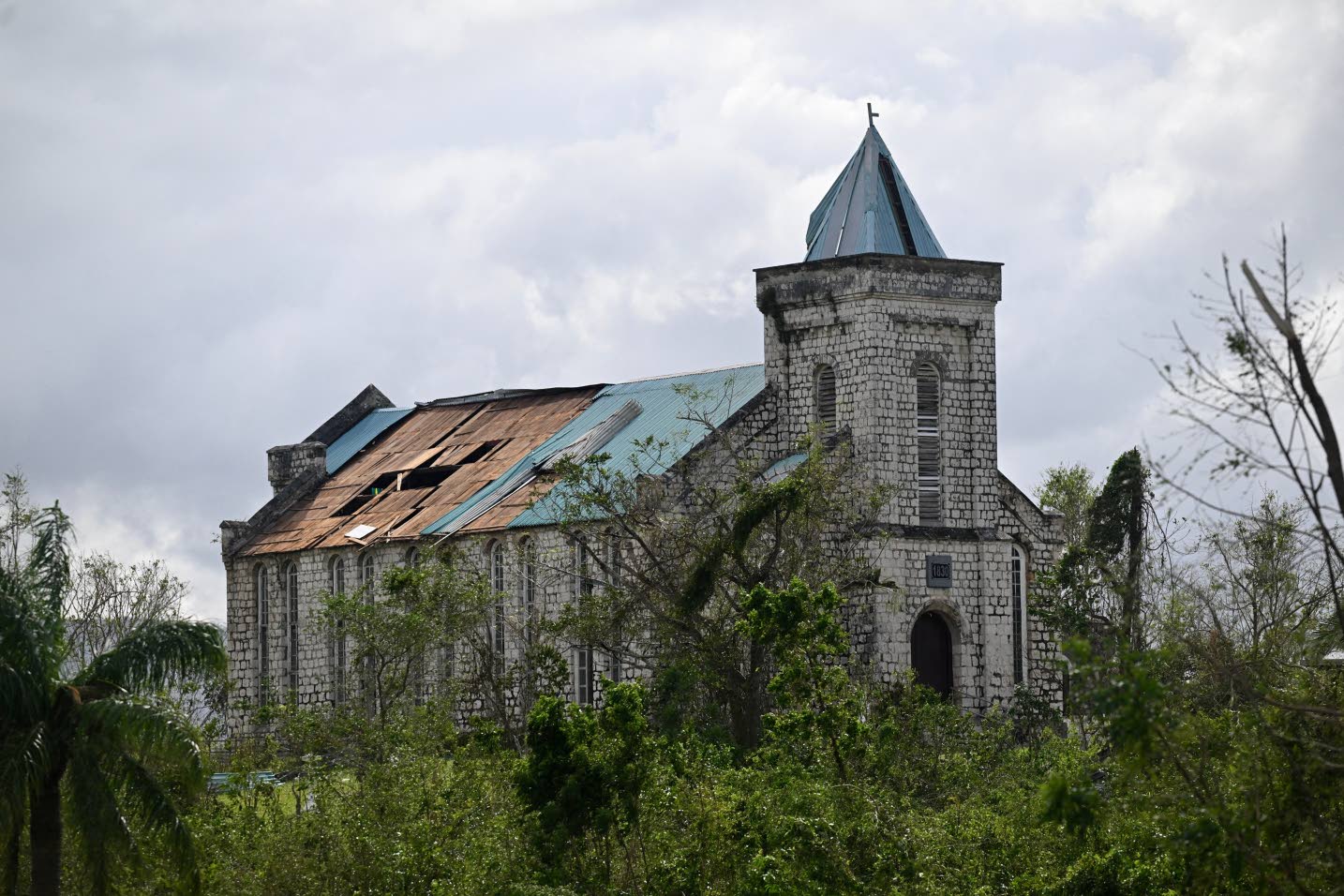
A church with sections of its roof damaged is seen following the passage of Hurricane Melissa, outside Santa Cruz, St Elizabeth, on October 29, 2025. (Photo: AFP)
• The registered owner shown on the title;
• Current occupancy and frequency of use;
• Structural condition and insurance status;
• Whether the property earns income;
• Whether any portion is vacant or underused;
• Planning, access, drainage, and infrastructure constraints;
• Potential for housing or another community use.
Some congregations may discover that they possess valuable assets but lack the money to repair them. Others may find that land acquired for expansion decades ago is no longer required. In some cases, the title may still be held by trustees who have died, an organisation that has changed its name, or a legal entity that no longer functions properly.
Before development can begin, ownership must be clear.
Reprinted with permission from Dean Jones, founder of jamaica-homes.com.


