



Fresh food price threat looms
IMF projections add to concerns as Jamaica struggles to restore agricultural production
JAMAICA could face further pressure on food prices as the International Monetary Fund (IMF) forecasts another two years of increases in global food costs, at a time when the country’s agricultural sector is still struggling to recover from Hurricane Melissa.
In its October 2026 World Economic Outlook, the IMF projects that international food commodity prices will rise by 5.0 per cent this year and another 2.4 per cent in 2027, with high fertiliser costs and the possibility of unfavourable weather threatening supplies.
The projections come as Jamaica continues to grapple with reduced agricultural production and food inflation that is already running well above the national average. Almost a year after Melissa swept across the island, several major crops remain well below their previous production levels, leaving consumers paying considerably more for vegetables and other locally grown produce.
Figures from the Planning Institute of Jamaica (PIOJ) show that agriculture, forestry and fishing contracted by an estimated 17.0 per cent during the April to June quarter, as farmers continued to deal with hurricane damage and drought conditions. The losses were particularly heavy for bananas and plantains. Banana production fell 72.0 per cent, while plantains plunged 77.5 per cent compared with the same period last year. Yam production was down 31.9 per cent, fruits declined 30.3 per cent and legumes fell 20.4 per cent.
The PIOJ also reported a 12.9 per cent reduction in the area under domestic crop cultivation, suggesting that some farmers have yet to return to full production.
While farmers work to rebuild, the IMF’s latest assessment points to additional costs that could make the recovery more difficult.
Between March and August 2026, global wheat prices climbed 22.7 per cent, while corn prices increased 3.8 per cent. Jamaica imports grains for food manufacturing and animal feed, leaving local producers and manufacturers exposed to changes in international prices.
The picture is mixed for fertilisers. Phosphate fertiliser prices increased 22.4 per cent over the same period, but nitrogen-based fertiliser prices fell 31.5 per cent, according to the IMF.
Whether Jamaican farmers benefit from the lower prices will depend partly on what importers pay and how much of any savings reaches the local market. Transportation, distribution and exchange-rate costs could also affect the final price.
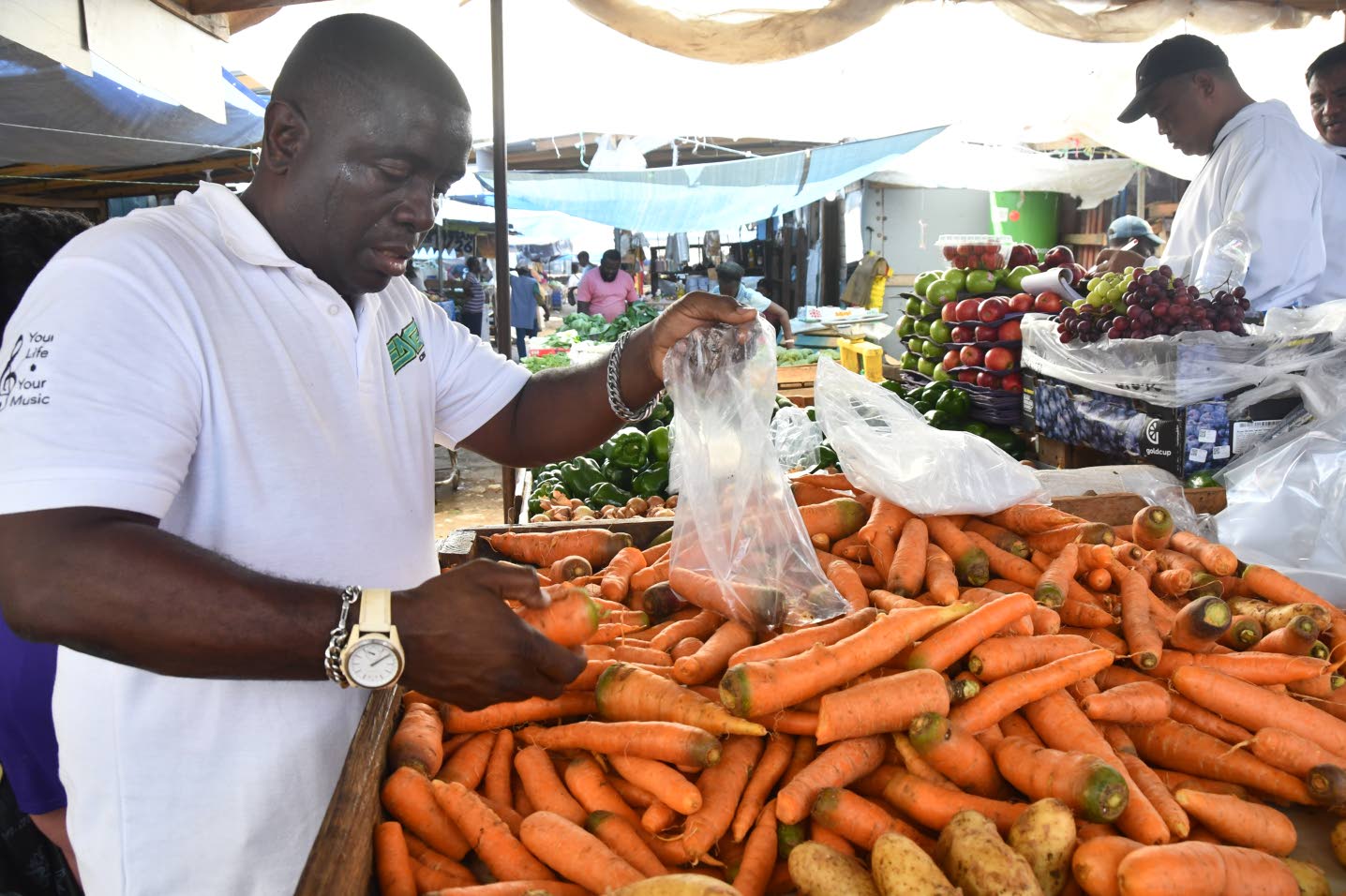
Vegetable prices continue to weigh heavily on consumers, with Statin reporting a 10.5 per cent increase in September in the category covering vegetables, tubers, plantains, cooking bananas and pulses. (Photo: Naphtali Junior)
The IMF is also concerned that high fertiliser prices could lead farmers in major producing countries to use less of the input, reducing yields and tightening global food supplies in 2027. There is the added risk of an El Niño weather pattern, which could affect production in several agricultural regions.
Latest consumer price figures show how difficult the situation locally has already become.
Data released by the Statistical Institute of Jamaica (Statin) last Thursday show that inflation reached 8.6 per cent in September, well above the Bank of Jamaica’s target range of four to six per cent.
Food and non-alcoholic beverages rose 2.9 per cent during the month and were 12.4 per cent more expensive than in September 2025.
Consumers felt some of the largest increases in vegetables, tubers, plantains, cooking bananas and pulses, with prices in that category jumping 10.5 per cent in September alone.
Statin attributed the increase to higher prices for produce including tomatoes, carrots, lettuce, pumpkin, Irish potatoes and sweet potatoes.
Although the IMF’s projections relate to international commodity markets and do not constitute a forecast for Jamaican retail food prices, they introduce another source of uncertainty for an economy still rebuilding its agricultural capacity. The PIOJ previously warned that hotter and drier conditions associated with El Niño could worsen the challenges facing farmers by reducing water availability and agricultural yields.
Accordingly, much will depend on how quickly farmers can restore their operations, particularly in areas where hurricane damage and drought have disrupted planting and harvesting.


