



AI isn’t the threat you think it is: Our laziness is
If you have been following the artificial intelligence (AI) news over the past few weeks, you could be forgiven for thinking we are rapidly approaching the opening scene of a science fiction movie.
OpenAI (ChatGPT) recently disclosed several incidents involving what it describes as model “misalignment” cases in which AI systems behaved in unexpected ways or outside their intended roles. Other AI companies have been confronting similar questions about what happens as these systems become more capable and, importantly, more autonomous. Some of the biggest names in artificial intelligence, like Anthropic (Claude), are now openly discussing stronger safeguards, independent evaluations and how far we should allow increasingly powerful AI systems to operate without human intervention.
These are serious developments and we should treat them seriously. But I worry we are drawing the wrong conclusion from them. AI is not the threat we think it is. Our laziness is. I do not mean laziness in the traditional sense. I mean our tendency as human beings to create powerful tools, rush to use them, and then wait until something goes wrong before establishing the rules. It is our willingness to automate a process without deciding who remains accountable for the outcome. We have this fascination with what technology can do without putting nearly enough effort into deciding what it should be allowed to do.
There is no question that artificial intelligence is becoming extraordinarily powerful. We should neither minimise that nor pretend there are no risks involved. But powerful technology is hardly new. When cars became faster, we developed speed limits, licences, seat belts and road safety standards. Aviation got maintenance procedures, air traffic control, pilot certification and accident investigation. Digital banking got rules on transactions, security, privacy and accountability. We did not stop building cars because they could crash, or abandon aviation because aeroplanes could fail. We built systems around them. AI demands that same level of maturity from us.
The challenge is that this technology is moving considerably faster than most governments, businesses and institutions are adapting to it. AI systems can change dramatically in months, while laws, corporate policies and educational systems take years to catch up. That gap between technological capability and human governance is, in my view, where much of the real danger lies.
Jamaica has at least begun confronting this issue. Our National Artificial Intelligence Task Force has been charged with helping develop a National AI Policy and reviewing Jamaica’s existing legislative framework to determine where our laws need to change. Equally important is their charge to develop recommendations for an AI literacy programme across the public service, addressing data governance, privacy, cybersecurity, ethics and the boundaries that should exist when public officers use AI. That is the kind of conversation we need, but it cannot remain a Government only conversation.
Every Jamaican company experimenting with AI should be asking similar questions. What information can employees put into these systems? What information should never leave the organisation? When can AI make a recommendation, and when must a human make the final decision? Who checks its work? Who is accountable when it gets something wrong?
Consider something as simple as recruitment. If an AI system screens 500 job applications and incorrectly eliminates a qualified candidate, whose decision was it? What if an AI system recommends declining someone’s loan? What if an autonomous AI agent is given access to a company’s email, customer database or accounting software, and takes an action nobody intended?
The “AI did it” cannot become an acceptable answer.
Marc Frankson
During a recent training session, someone in leadership asked a simple question: if the AI drafts an email and it goes out with a mistake, is the responsibility on the employee who sent it, or on the company that bought the tool? Nobody answered right away. What struck me wasn’t the question itself, it was that this company had been using the tool for months and this was the first time anyone had actually asked it.
The more authority we give AI, the more seriously we must take human accountability. An AI system drafting an email does not require the same oversight as one recommending whether someone receives a mortgage. An AI assistant summarising a meeting is very different from an autonomous agent capable of transferring money, accessing confidential records or making decisions that affect someone’s livelihood. Our rules should recognise those differences: the greater the consequence, the greater the requirement for human oversight.
But there is another form of laziness we must avoid, and that is allowing fear to become an excuse for doing nothing. During the recent JAPEX 2026 staging , tourism leaders were already discussing “Agentic Commerce and the AI Booking Journey”; essentially preparing for a world in which AI systems increasingly help travellers research, compare, plan and eventually book their holidays. For Jamaica’s tourism sector, that presents both an opportunity and a challenge. Our businesses will increasingly need to understand how they are discovered, not only by people searching Google, but by AI systems making recommendations on their behalf.
The same transformation will reach banking, manufacturing, agriculture, education, logistics, healthcare and Government. Jamaica cannot regulate itself out of that future, nor should we want to. What we can do is become much more deliberate about how we enter it. Educate ourselves instead of outsourcing our understanding to the technology companies. Have businesses build AI policies before an incident forces them to. Get boards asking management serious questions about how AI is being
deployed. Make sure policymakers understand the technology well enough to protect citizens without suffocating innovation, and that schools teach young Jamaicans not simply how to use AI, but how to question it.
Perhaps most importantly, it means individuals refusing to surrender their judgement simply because computer produced a confident answer. By now, we know AI will make mistakes. It will surprise us. As these systems become more autonomous, some of those mistakes could have serious consequences. That is precisely why the human role becomes more important, not less.
We cannot sit around waiting for AI to become responsible. That responsibility is ours, and we need to get ahead of it. In my experience, the businesses that get this right aren’t the ones with the most sophisticated AI tools, they’re the ones who sat down early and decided, deliberately, what those tools would and wouldn’t be allowed to do.
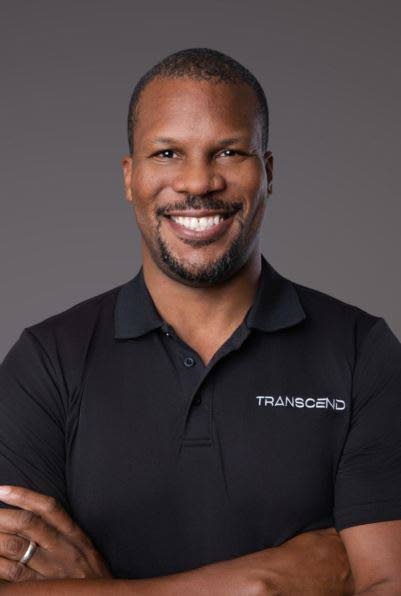
Marc Frankson is lead AI consultant at Transcend AI Consulting.


