



Lessons from a CEO: Gary ‘Butch’ Hendrickson
JAMAICAN manufacturers risk falling behind global competitors if they continue resisting foreign expertise and modern technology, according to National Baking Company Chairman Gary “Butch” Hendrickson, who says knowledge transfer has been one of the biggest drivers of his company’s success.
Standing before a room filled with manufacturers at the recent Manufacturing 360 conference, Hendrickson spoke less like a corporate executive delivering a presentation and more like someone reflecting on decades of hard-earned lessons from the factory floor.
“I am the single greatest beneficiary of the transfer of baking knowledge in this country. I guarantee it; I bet money on it,” he said confidently.
Reflecting on the 1960s, Hendrickson recalled when Continental Baking Company attempted to acquire his family’s baking business, National Baking Company. His father declined the offer, but the company later acquired a roughly 41 per cent stake instead. That partnership brought new technology, foreign engineers and upgraded production systems into the Half-Way-Tree Road, St Andrew, operation. Although Hendrickson admitted he was not deeply interested in the business at the time, the exposure to international production methods and engineering expertise quietly shaped his understanding of manufacturing over the years. To him, the experience reinforced why Jamaican manufacturers should become more open to bringing in outside expertise rather than resisting it.
“If we don’t do that, we won’t be able to compete; that’s a fact. It can’t be a personal thing, and we are going to have to bring in experts and teach,” he shared.
According to Hendrickson, too many local businesses still take a narrow approach to growth by trying to solve every operational challenge internally instead of learning from people and companies already operating at a higher level.
“For us to manufacture in this country, I don’t care how small you are; if you don’t think you need technology, you are wasting your time,” he said.
The National Bakery boss also stressed that technology is essential to running an efficient business; however, not just any technology. In sharing another personal story with the audience, Hendrickson recalled travelling to Shanghai with his wife in 2014, where he purchased three pieces of equipment to bring back to Jamaica. Two were later discarded after failing to meet the standards needed for the company’s Half-Way-Tree operations.
“Go and find the best tech, not just the biggest machine or the fastest, but the most efficient machine for the application,” he said.
Drawing comparisons between international markets, Hendrickson said some of the most effective business ideas can come from simply observing how industries operate overseas and adapting those practices locally. He also pushed back against the idea that Jamaican manufacturers cannot compete globally, arguing that businesses first need to identify where they can realistically excel and then commit to becoming the best within that space.
“We look at our industries and say we can’t, but we can. You have to say you must,” he told the audience. “Find where you can compete and be the best at what you do.”
Even as manufacturers continue facing rising input costs and global trade pressures, Hendrickson said productivity and efficiency, rather than excessive cost-cutting, should remain the primary focus for businesses trying to survive and grow. Pointing to the recent imposition of a 10 per cent tariff on the region by the United States administration, the company’s first response was not to immediately raise prices but to look internally for areas where efficiencies could be improved.
When questioned about what makes a business worth supporting under his ‘Bold Ones’ initiative, Hendrickson said the requirements remain straightforward: proper records, financial structure and tax compliance. Small and medium-sized manufacturers were encouraged to formalise their operations if they hope to access financing and scale sustainably. Referencing his experience at EXIM Bank, Hendrickson noted that many businesses applying for grants and loans often lacked proper bookkeeping systems or tax compliance.
“It’s the best way to be trusted by the institutions you approach for financing,” he said.
Despite the challenges facing the sector, Hendrickson insisted Jamaican manufacturers are more capable than many believe once they are willing to embrace learning, efficiency and innovation.
“Remember after it’s all over and done with, a fi wi country,” he said. “We need to take our country seriously.”
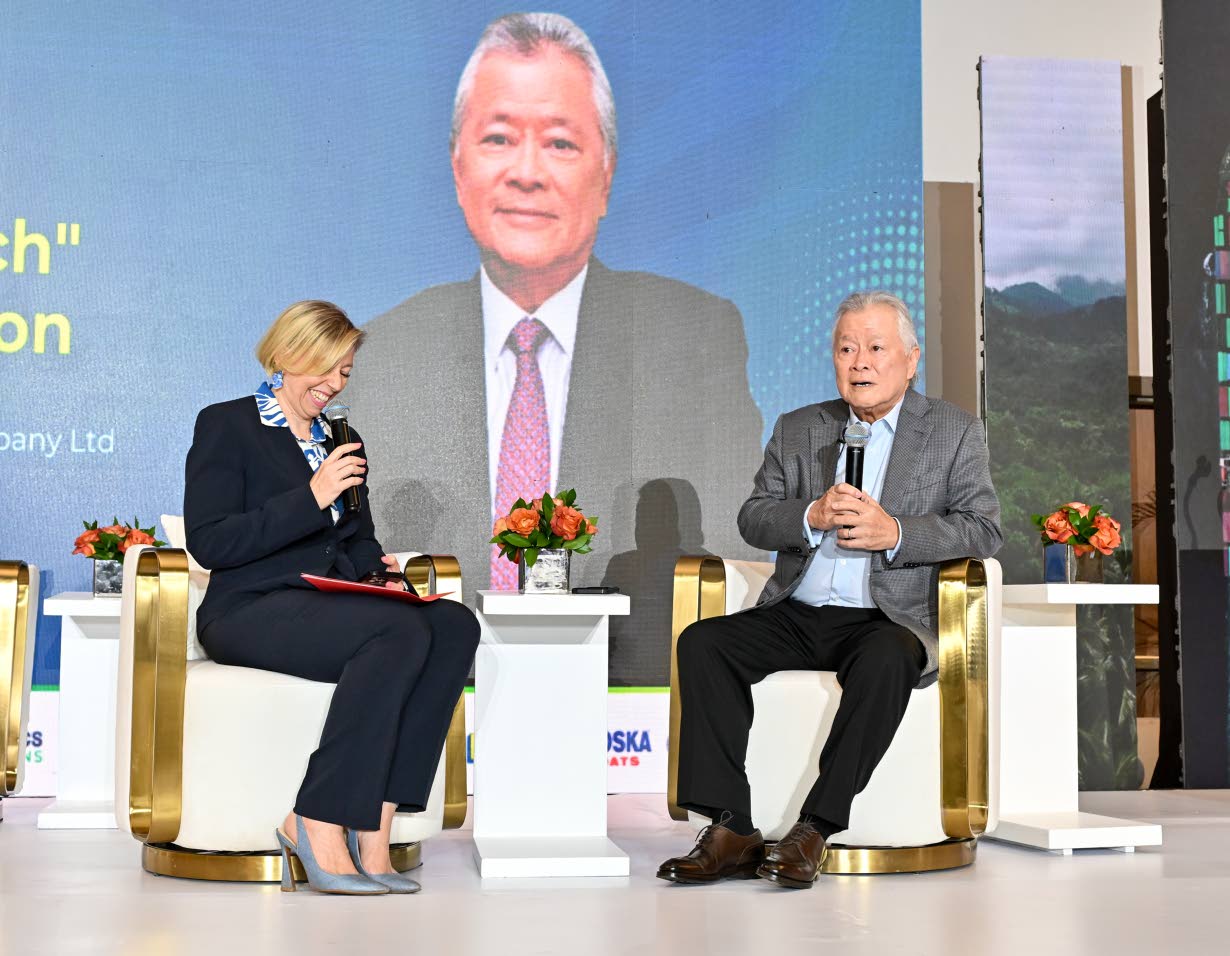
Kathryn Silvera (left), president of the Jamaica Manufacturers and Exporters Association (JMEA), in discussion with Gary “Butch” Hendrickson, chairman and chief executive officer of Continental Baking Company Limited, during the recent Manufacturing 360 conference in Kingston.


