



From ‘Superman’ to survival: How fatherhood helped Paul Gray rebuild after suffering a stroke
WHEN Paul Gray logged on to a meeting on January 31, 2025, everything appeared business as usual. As an executive leader at JMMB Group, he was doing what he had done for years: guiding discussions, assessing risks, making decisions. But beneath the surface, something was wrong.
Midway through the meeting, Gray became disoriented. Words slipped away as quickly as they came. Conversations vanished from memory seconds after they were spoken. Still, he pressed on, professional, focused, determined to perform.
It wasn’t until the meeting ended and he struggled to make sense of simple conversations that the truth became unavoidable. “I knew something was wrong with me,” he recalled.
That day, Gray had suffered a stroke. What he did not yet realise was that one of the most defining moments of his journey would come not in a boardroom or hospital but the following morning, sitting beside his youngest daughter, Tonie-Ann.
A father first
Long before the stroke, Gray had already decided what kind of man and father he wanted to be. “When I started having children, I made a commitment that my kids would never be able to say their father wasn’t there,” he said. It was a promise shaped by observation of friends who grew up without fathers present and reinforced by his own upbringing.
That commitment guided real decisions. Early in his career, and after having his first child, Sydnie, Gray made a deliberate choice: no matter how demanding his job became, he would remain present in his child’s life. He even adjusted his work schedule, leaving meetings early, when necessary, to pick up his daughter from school. “There will be no dereliction of duty,” he said. “My child will not miss me.”
For Gray, fatherhood went beyond financial provision. “The money is not all,” he explained. “What are your children going to remember? That is what matters.”
The moment everything changed
The day after his stroke, reality hit. Sitting in bed, Gray’s youngest daughter, Tonie-Ann, brought him a sheet of basic mathematics problems containing simple exercises meant to assess his condition. To anyone else, they were straightforward. To Gray, they were disorienting. “This is my thing,” he remembered thinking. “Math is who I am.”
But he couldn’t do it. Numbers blurred. Logic broke down. Even the simplest calculations made no sense. “That’s when it hit me,” he said. For the first time, he broke down in front of his daughters. “My girls had never seen me cry.”
All three of his daughters – Sydnie, Britnie-Ann, and Tonie-Ann – were there in that moment, but it was Sydnie — who was preparing to begin her role as a medical intern at the University Hospital of the West Indies (UHWI) the following Monday — who instinctively stepped into action. Drawing on her training, she provided preliminary guidance to her sisters on what to do, becoming a steadying presence and guiding force during those early, uncertain hours
As his daughters gathered around him, confused, emotional, trying to comfort him, Gray faced something deeper than fear: the possibility that the person he knew himself to be might be gone. But even in that moment, instinct took over. “I told myself, pull yourself together. Your daughters are watching you.” He steadied himself, held them close, and found clarity amid the chaos. “I realised, I’m still here. There’s something to work with.”
When the mind turns against you
If the stroke was the shock, what followed was the true battle. “At first, it felt like peace,” Gray said. “Then, the darkness and demons came.”
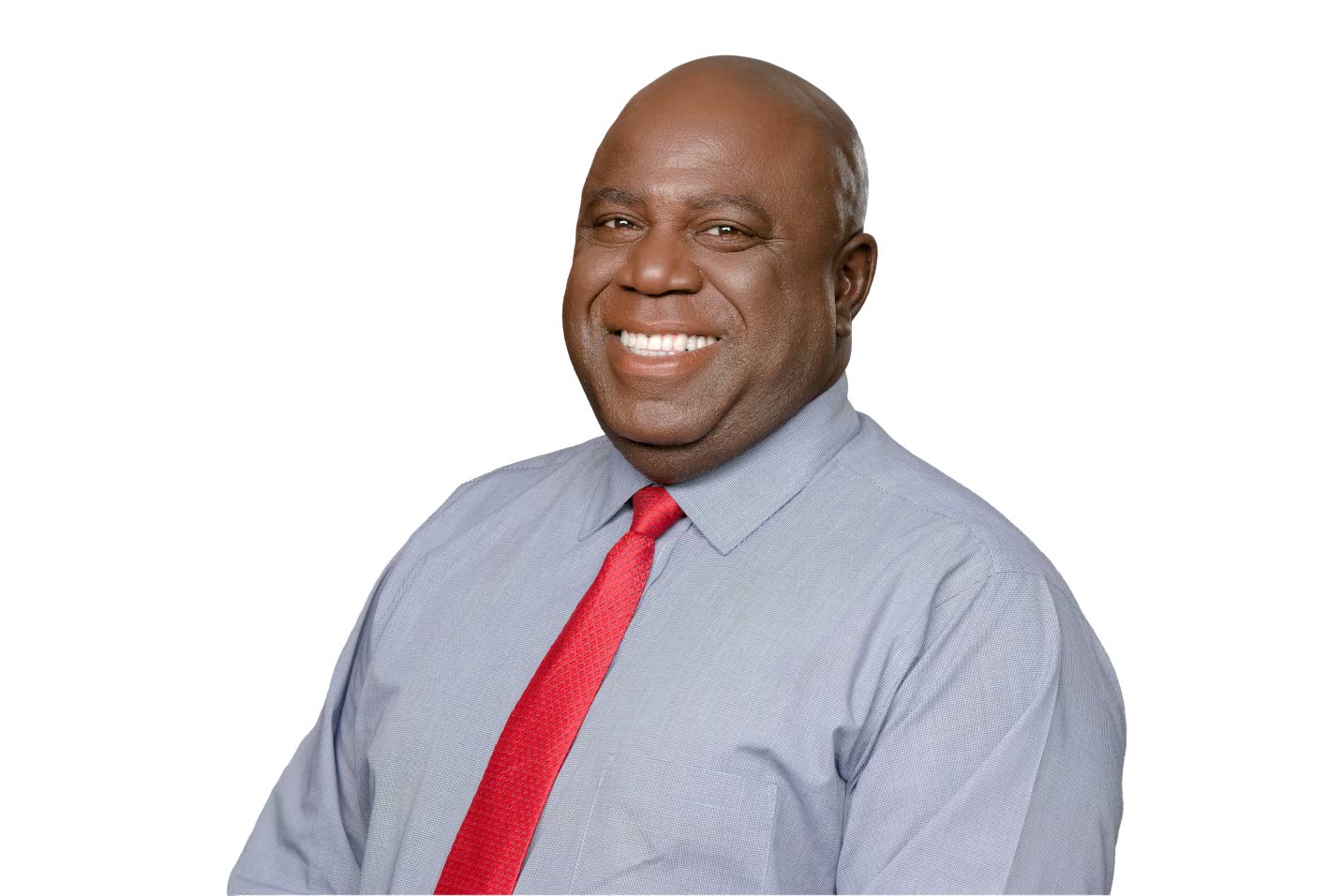
Long before the stroke, Gray had already decided what kind of man and father he wanted to be.
In the weeks that followed, he experienced intense neurological depression, something far beyond ordinary stress or sadness. Dark thoughts surfaced. Fear intensified. The mind that had once anchored him began to work against him. “It’s not something you can explain unless you go through it,” he said.
He describes moments where even the things he loved — family, hobbies, daily routines — triggered intense stress instead of comfort. “I had to keep reminding myself: this is neurological. This is not me.” That distinction became critical in his survival.
Fighting back
Gray chose to fight. He immersed himself in therapy, relearning cognitive functions step by step. He pushed himself into routines, even when his brain resisted. And he developed a deliberate strategy to manage his thoughts. “When negative thoughts came, I had to actively redirect,” he explained. His anchor became his children. “I would think about them — their faces, their achievements — and it helped stabilise me.”
Progress came slowly, then suddenly. One day, during a therapy session, he completed a simple exercise with ease, something he had been unable to do just weeks before. “She [the therapist] said, ‘You’re on your way back,’” he recalled. “That meant everything.”
Today, Gray has returned to work and regained much of his cognitive strength. But the experience has transformed how he sees life, leadership and masculinity. “For men, we’re taught to push through, to provide, to be strong,” he said. “But being strong also means being present and taking care of your mental health.”
A different kind of victory
Gray is clear: this is not a story about returning to who he was before. “This is my new normal,” he said.
But it is a life grounded in something stronger than performance or position. Because in the midst of confusion, fear, and recovery, one thing remained constant: the promise he made to his children. “To be there,” he said simply.
In the end, it was not just medical care or determination that carried him through; it was purpose. And for Paul Gray, that purpose has always begun with family.
A message to men
Reflecting on his journey, Gray believes more men need to pay attention to their physical health and what’s happening internally.
“We push through everything,” he said. “We ignore the signs. We tell ourselves we’re strong. But strength also means knowing when to stop, when to check in, and when to ask for help.”
For him, speaking openly is part of that responsibility. “If something feels off physically or mentally, don’t brush it aside,” he added. “Talk to someone. Get checked. Because what you’re trying to power through could cost you everything.”
His message is simple, but urgent: be present, not just for others, but for yourself, because sometimes, the strongest thing a man can do is to speak up and take care of his health before it’s too late.


