



‘Inadequate’
IFC slams some Gov’t explanations for revenue shortfalls
THE Independent Fiscal Commission (IFC) has raised fresh concerns about the Government’s fiscal management, challenging several finance ministry explanations for missed revenue targets and warning that Jamaica lacks a clear, legislated pathway to return the country’s debt to the legally mandated ceiling of 60 per cent of gross domestic product (GDP).
In its latest statement on fiscal performance tabled in Parliament recently, the fiscal watchdog questioned the credibility of several explanations provided by the Ministry of Finance and the Public Service (MoFPS) for significant revenue shortfalls during the 2025/26 financial year and suggested that weaknesses remain in the Government’s forecasting and fiscal planning processes.
The commission’s concerns come against the backdrop of a difficult fiscal year in which Hurricane Melissa triggered an estimated $2 trillion in damage and losses, forcing the suspension of Jamaica’s fiscal rules.
While acknowledging the extraordinary impact of the hurricane, the IFC said the suspension of the fiscal rules has exposed a major gap in Jamaica’s fiscal framework.
“With the fiscal rules suspended through end-March 2027, the absence of a legislated timeline for returning debt to the 60 per cent of GDP ceiling remains a significant policy gap, leaving the fiscal adjustment path without a clear statutory anchor,” the commission said.
The commission said the forthcoming fiscal policy Paper (FPP), which is the government’s annual blueprint for managing the public finances, should clearly set out how Jamaica intends to return debt to the statutory ceiling of 60 per cent of GDP in keeping with the requirements of the Financial Administration and Audit (FAA) Act.
The warning comes as the Government projects increased spending on recovery and reconstruction efforts through the newly established National Reconstruction and Resilience Authority (NaRRA), which was created following Hurricane Melissa to oversee rebuilding efforts.
But while the IFC acknowledged that fiscal expansion could support economic recovery, it noted that key details remain unclear.
“The passage of the National Reconstruction and Resilience Authority Act has established the institutional framework for the entity mandated to oversee and accelerate the Government of Jamaica’s reconstruction efforts. However, NaRRA’s operational and expenditure plans are yet to be determined to enable the IFC to assess their credibility and robustness,” the report stated.
Beyond the broader fiscal framework, the commission reserved some of its sharpest criticism for explanations submitted by the finance ministry regarding revenue performance.
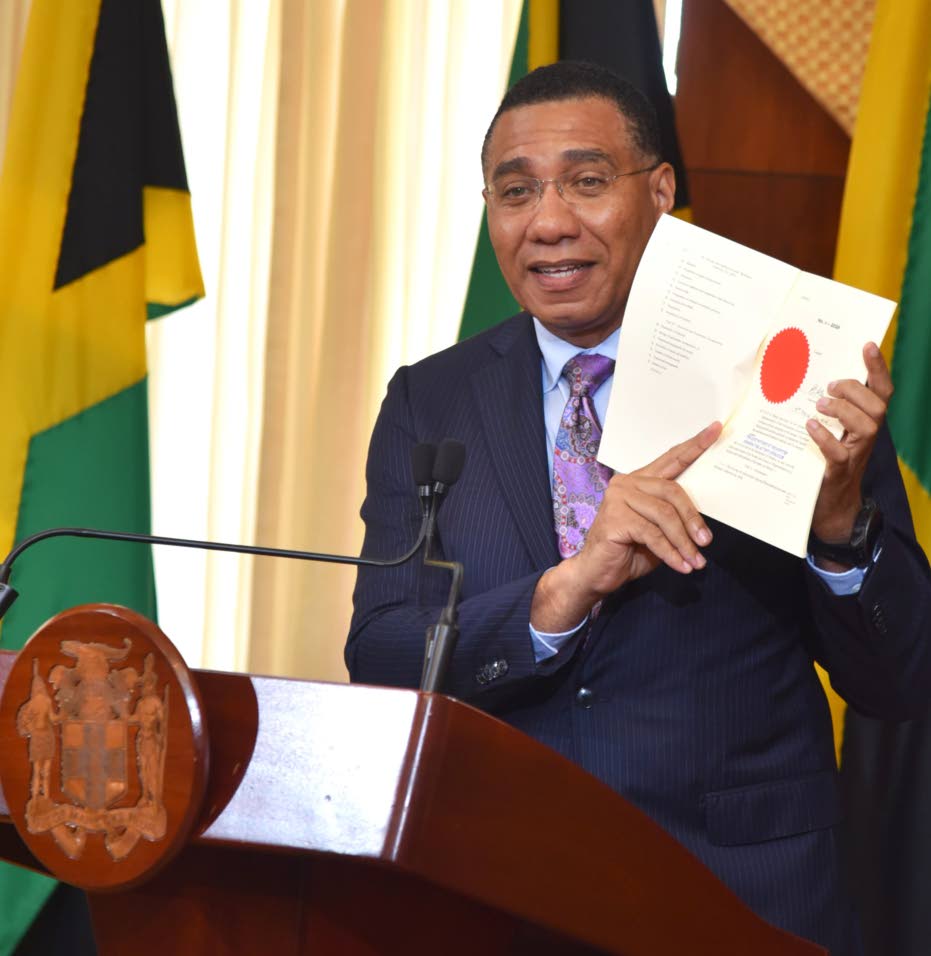
Prime Minister Dr Andrew Holness displays a copy of the National Reconstruction and Resilience Authority (NaRRA) Act during a May 27 post-cabinet press briefing at Jamaica House. The Independent Fiscal Commission says NaRRA’s operational and expenditure plans are yet to be determined to enable the commission to assess their credibility.
Tax revenue for the fiscal year totalled $879.5 billion, falling approximately $70 billion below the original budget target of $949.5 billion.
The ministry attributed some of the shortfalls to Hurricane Melissa, weaker economic activity, and administrative changes, including the decision to move the corporate income tax filing deadline from March to April.
However, the IFC signalled that some of the explanations did not fully withstand scrutiny.
In reviewing a shortfall in collections from self-employed taxpayers classified under “other individuals”, the ministry cited hurricane-related disruptions and higher-than-expected tax refunds.
The IFC accepted that Hurricane Melissa likely affected collections but questioned the Government’s approach to forecasting refunds.
“It is puzzling that the MoFPS does not project refunds while simultaneously claiming that ‘higher-than-anticipated refund payments’ contributed to the shortfall. It is incumbent on the ministry to adopt a methodology for projecting refunds since it is a regular payment,” the commission said.
The commission was even more critical when examining underperformance in revenue from certain licences.
Responding to a shortfall in collections from hotel, gaming and tourist-related licences, the ministry pointed to the impact of Hurricane Melissa and reduced tourism activity.
But the IFC was unconvinced.
“Explanation is inadequate,” it said, adding that the absence of excess receipts from the Spectrum Management Authority suggested “a possible underlying deficit before Hurricane Melissa”.
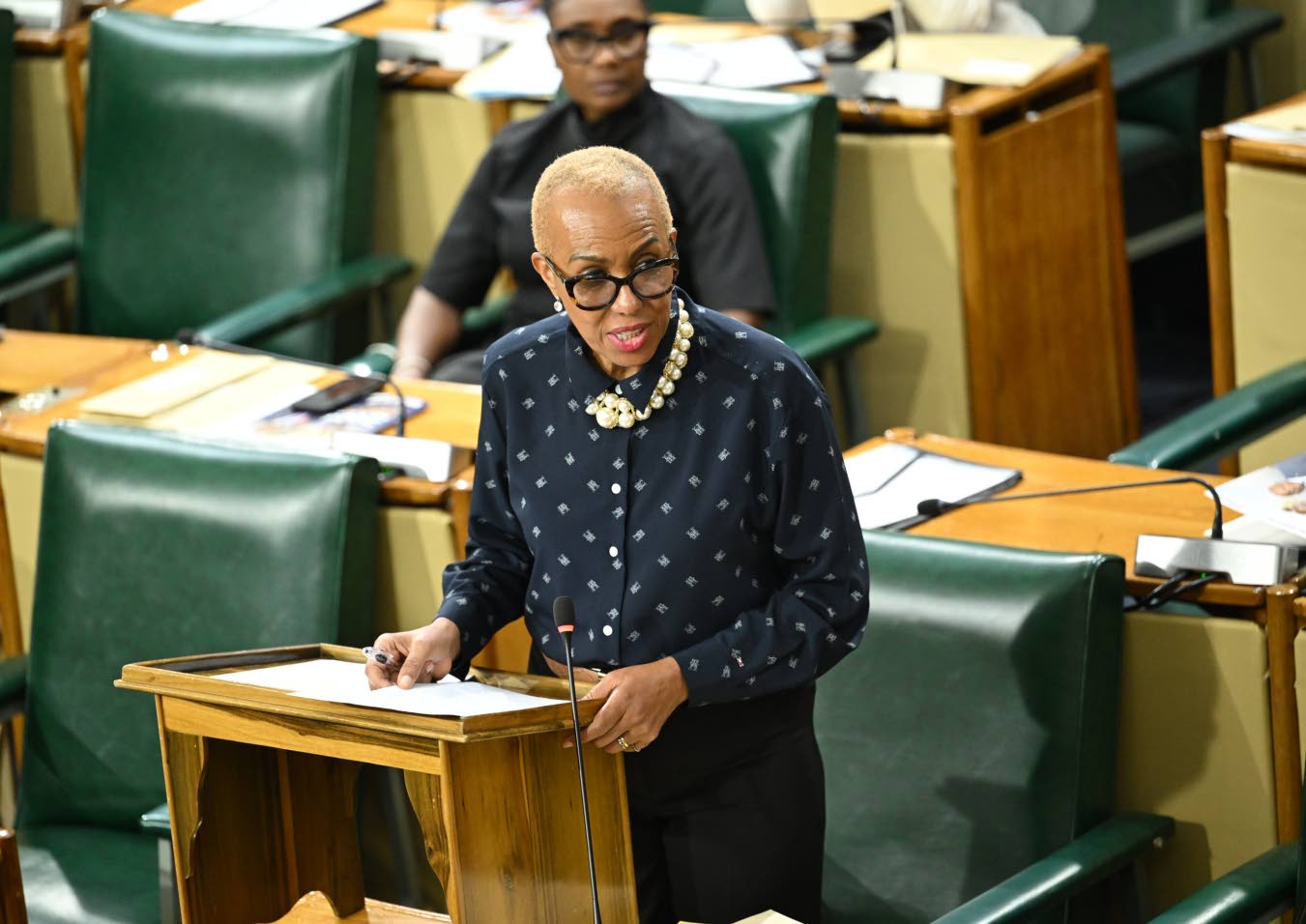
In its latest statement on fiscal performance tabled in Parliament recently, the Independent Fiscal Commission questioned the credibility of several explanations provided by the Ministry of Finance and the Public Service, which is headed by Minister Fayval Williams.
The commission also challenged the ministry’s explanation for stronger-than-expected collections from the contractors’ levy, which officials partly attributed to reconstruction activity following the hurricane.
Again, the IFC was not persuaded.
According to the commission, the explanation was unconvincing given that construction sector activity had weakened during sections of the fiscal year.
The commission argued that the ministry should implement practical measures to address compliance challenges, and improve the accuracy of its forecasting methodology.
Elsewhere, the watchdog described some Government explanations as only “partially reasonable”, including explanations relating to corporate income tax collections, travel tax receipts, and non-tax revenues.
The report’s findings point to a broader concern within the commission about the reliability of fiscal forecasting and the quality of information used to explain major deviations from budget targets.
The IFC also noted that while Hurricane Melissa, undoubtedly, disrupted economic activity and public finances, some revenue weaknesses appeared to pre-date the disaster, raising questions about whether all the shortfalls can be attributed to the storm.
Despite those concerns, the commission acknowledged that Jamaica’s overall fiscal performance was stronger than expected following the hurricane.
The specified public sector recorded a fiscal deficit of $34.4 billion — substantially better than the revised deficit of $129.2 billion projected after Melissa — while inflation remained within the Bank of Jamaica’s target range and economic activity performed better than revised forecasts had anticipated.
Even so, the IFC warned that stronger-than-expected outcomes should not distract policymakers from addressing weaknesses in the fiscal framework.


