



More the merrier
JFF boss Michael Ricketts supports proposal to increase World Cup spots to 64
Jamaica Football Federation (JFF) President Michael Ricketts supports FIFA’s consideration of expanding the next World Cup to 64 teams.
The tournament, hosted this summer by the United States, Mexico, and Canada, is the first to feature 48 teams, with previous editions limited to 32 since 1998. That was also the year of Jamaica’s only appearance, where the Reggae Boyz finished third in Group H, behind Argentina and fellow debutants Croatia, and ahead of Japan, who also debuted that year.
The next World Cup will be hosted predominantly in Spain, Portugal, and Morocco, with matches held in Uruguay, Paraguay, and Argentina to mark the tournament’s 100th year. A tournament with six nations requires greater infrastructure to host more teams and offers an opportunity for revenue expansion, although FIFA President Gianni Infantino stresses that the body is a non-profit entity. He expects this summer’s tournament to generate around US$16 billion (around $2.5 trillion) to US$17 billion (J$2.6 trillion).
RICKETTS… once the numbers increase, I’m going to support it because it gives us a greater chance.
When asked whether FIFA wants to expand to 64 teams, Infantino said the proposal, first mentioned in March 2025, will be “examined and discussed”.
“We can see that the quality of the teams is extremely high, and it’s getting higher and higher everywhere in the world,” Infantino told Swiss broadcaster Blue Sport. “If you don’t give smaller countries the chance to participate in the World Cup, they also lose the incentive to keep improving.”
The Jamaica Observer spoke to Ricketts on Tuesday afternoon, moments after he witnessed European champions Spain comprehensively beat World Cup favourites France 2-0. His view on the result was pragmatic, finding similarities between the game and Jamaica’s failed World Cup qualifying campaign in which they finished behind Curacao during the Concacaf stage of qualifying, then lost the Intercontinental play-off final to DR Congo. Ricketts was, however, hopeful and focused on a long-term build, buoyed by the prospect of more spaces available for future tournaments.
“Today, France lost 2-0, and the most ardent Spain supporter could never predict that they could beat France so convincingly,” he told the Observer. “But that’s the nature of the sport. The breaks just didn’t go our way throughout the qualifying round. Hence we did not qualify.”
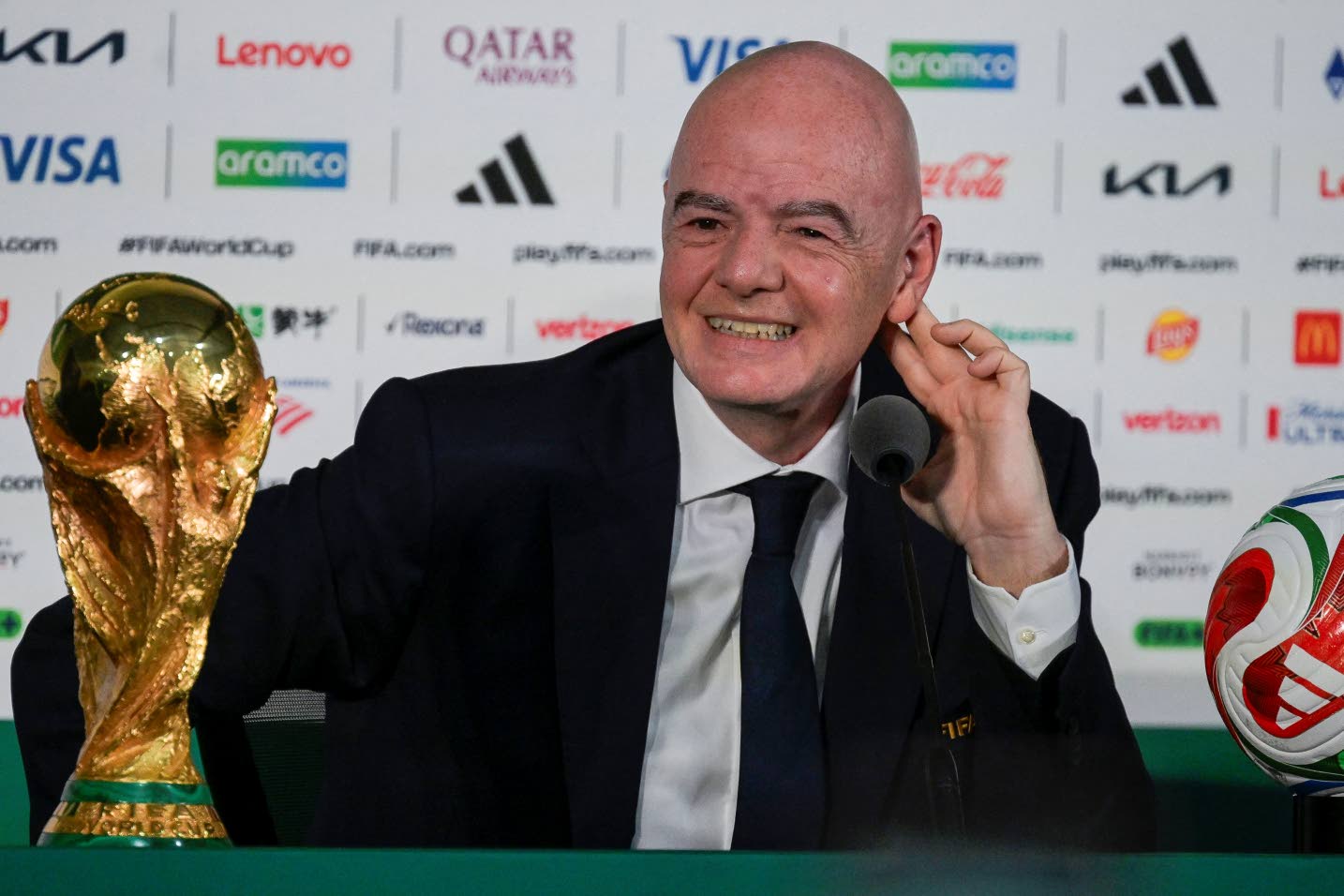
FIFA President Gianni Infantino (Photo: AFP)
He may have a point about France. Football is highly unpredictable, and in tight qualifying groups, one surprise result can completely derail a team. An expanded format offers a potential buffer so that one bad day does not destroy years of structural progress.
Ricketts stressed that he does not see this as just a chance to ease public scrutiny on the JFF after the blunder of the last campaign, but as a potential lifeline for Jamaican football. He says that for a nation fighting for its return to the biggest global spectacle in football, bigger is not just better; it is a necessity.
“Once the numbers increase I’m going to support it, because it gives us a greater chance,” he said. “Qualifying for a World Cup is not easy, it’s not easy, and things have to go your way.
“You just have to be at your very best, and it has to be best practices from a technical perspective, from an administrative perspective, from a refereeing perspective. You just have to get everything right, and that didn’t happen for us.”
At the Concacaf stage of qualifying, while questions can fairly be raised about the Reggae Boyz’s level of performance under then head Coach Steve McClaren — including a 2-0 loss in Curacao, a 1-1 draw with Trinidad and Tobago, and a final 0-0 draw with Curacao in Kingston — Jamaica missed qualification by a single point.
Their subsequent play-off game against DR Congo was decided controversially, as the lone goal deep into extra time raised questions about whether Axel Tuanzebe handled the ball when scoring from a corner kick.
Although many would argue that Jamaica had their best chance of qualifying for a World Cup in that campaign, being the top-ranked team in their group and not having to face the three pre-qualified World Cup hosts, this was a new format of qualifying for the region. An expansion could mean a further change to that structure when qualifying starts in September 2027. The JFF already has its eye on this, with a younger core of players recruited for participation in the Unity Cup held in May, amid the ongoing search for a permanent head coach.
“We are trying to rebuild,” Ricketts said. “We have a set of youngsters who already are showing the level of loyalty and commitment that when you get that from these players, you’re bound to get good results. So that’s where we are right now.”
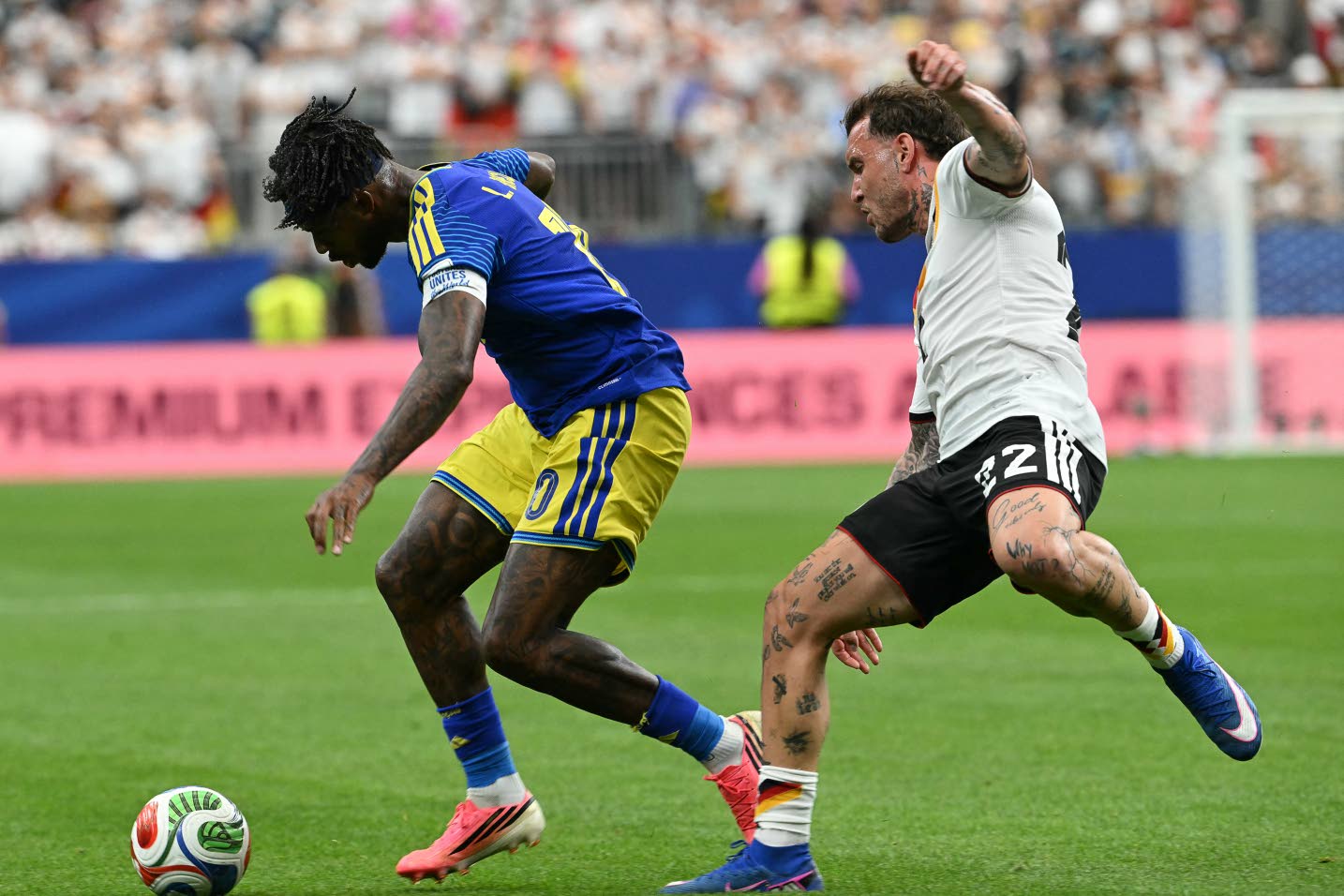
Curacao’s Leandro Bacuna and Germany’s David Raum fight for the ball during the World Cup Group E football match at the Houston Stadium in the United States on June 14, 2026. (Photo: AFP)
Ricketts’ views are likely to be shared by his 40 counterparts across Concacaf, but interestingly, Concacaf’s own president, Victor Montagliani, disagrees.
“I don’t believe expanding the men’s World Cup to 64 teams is the right move for the tournament itself and the broader football ecosystem, from national teams to club competitions, leagues, and players,” Montagliani told
ESPN in April 2025. UEFA President Aleksander Čeferin echoed this opinion that month, describing the proposal as a “bad idea”.
For the JFF and other developing federations, a 64-team competition presents more opportunity for funding the growth of the sport in their respective territories. Yet this opportunity for smaller nations creates a threat for more developed ones, especially those that host Europe’s elite domestic leagues. European clubs have long complained about an ever-expanding football calendar, and this proposal will only amplify those complaints.
The crux of the issue is player welfare. At 32 teams, the World Cup consisted of 64 games across roughly 32 days. This summer, that moved to 104 games over 39 days. The world’s elite players are already operating at a physical deficit before they even arrive at a national team camp.
FIFA’s own research and studies by FIFPRO (the global players’ union) show that back-to-back seasons with less than four weeks of complete break, led to a significant spike in soft-tissue injuries and catastrophic ligament tears. Adding 16 more teams also means more venues, longer flights, and rapid changes in climate and time zones, which severely disrupt player sleep cycles and immune systems.
Ultimately, both sides of the argument raise valid points. While some say there is simply too much football being played in the modern era, the modern game is also a global game, one that must consider the survival and dreams of developing nations.
Although FIFA’s 77th General Congress, set for March 2027 in Rabat, Morocco, will primarily focus on its presidential election, the highly contentious matter of World Cup expansion is a topic expected to dominate debates at the event.


