



The Europeanisation of the Samba
The very first FIFA World Cup I watched was in 1978, when Argentina lifted the trophy with players such as Daniel Passarella, Alberto Tarantini, Osvaldo Ardiles, Ricardo Villa, and the incomparable Mario Kempes. I instantly fell in love with football and wanted nothing more than to play the game like those great players.
The tournament coincided with my entering first form at Kingston College (KC), and football became my world. Having already played at the primary-school level, I dreamed of one day making a name for myself in the sport. Those dreams, however, took an unexpected turn when I joined the Kingston College Chapel Choir. The moment I heard the majestic sound of the famous KC Chapel organ, I fell in love with choral music, and my ambitions of becoming a footballer gradually faded.
Although singing became my primary focus, my passion for sport never diminished. I continued to follow cricket, table tennis, football, and track and field, among others, because I had my sights set on becoming a sports journalist.
Just as my promising football career never materialised, neither did my ambition to pursue journalism. What remained, however, was my passion for analysing sport. From a very young age, I realised that I was never driven solely by emotion; instead, I always sought to understand the reasons behind the outcome of sporting events. I was fascinated by tactics, strategy, preparation, and the small details that separated victory from defeat.
Then came 1982.
A young, fearless footballer was about to burst onto the international stage. Diego Maradona was the name on everyone’s lips. At just 21 years old, he was expected to turn the football world upside down as the heir apparent to the great Pelé.
Ironically, 1982 was also the year I truly discovered Brazil. Led by the elegant Sócrates, Brazil boasted an extraordinary collection of talent that included Oscar, Zico, Falcão, Éder, and Cerezo. To say they took the football world by storm would be an understatement. Although this style of football had long been part of Brazil’s identity, much of the world was only now witnessing a brand of football that allowed players the freedom to express their natural ability while functioning as a disciplined and cohesive unit.
It was football played with rhythm, imagination, and flair.
They dismantled almost every opponent they faced, including my beloved Argentina. I still remember the heartbreak of watching Diego Maradona shed tears after being shown a straight red card in the 85th minute as Brazil cruised to a memorable 3–1 victory.
As a 16-year-old, I was devastated by Argentina’s elimination. Yet, despite my disappointment, I found myself captivated by the football Brazil played. Even today, many pundits and historians struggle to explain how one of the greatest teams ever assembled failed to win the World Cup.
From that moment onwards, I made a conscious effort to watch football with an open mind. I tried to analyse matches objectively rather than emotionally, always searching for the reasons behind success and failure.
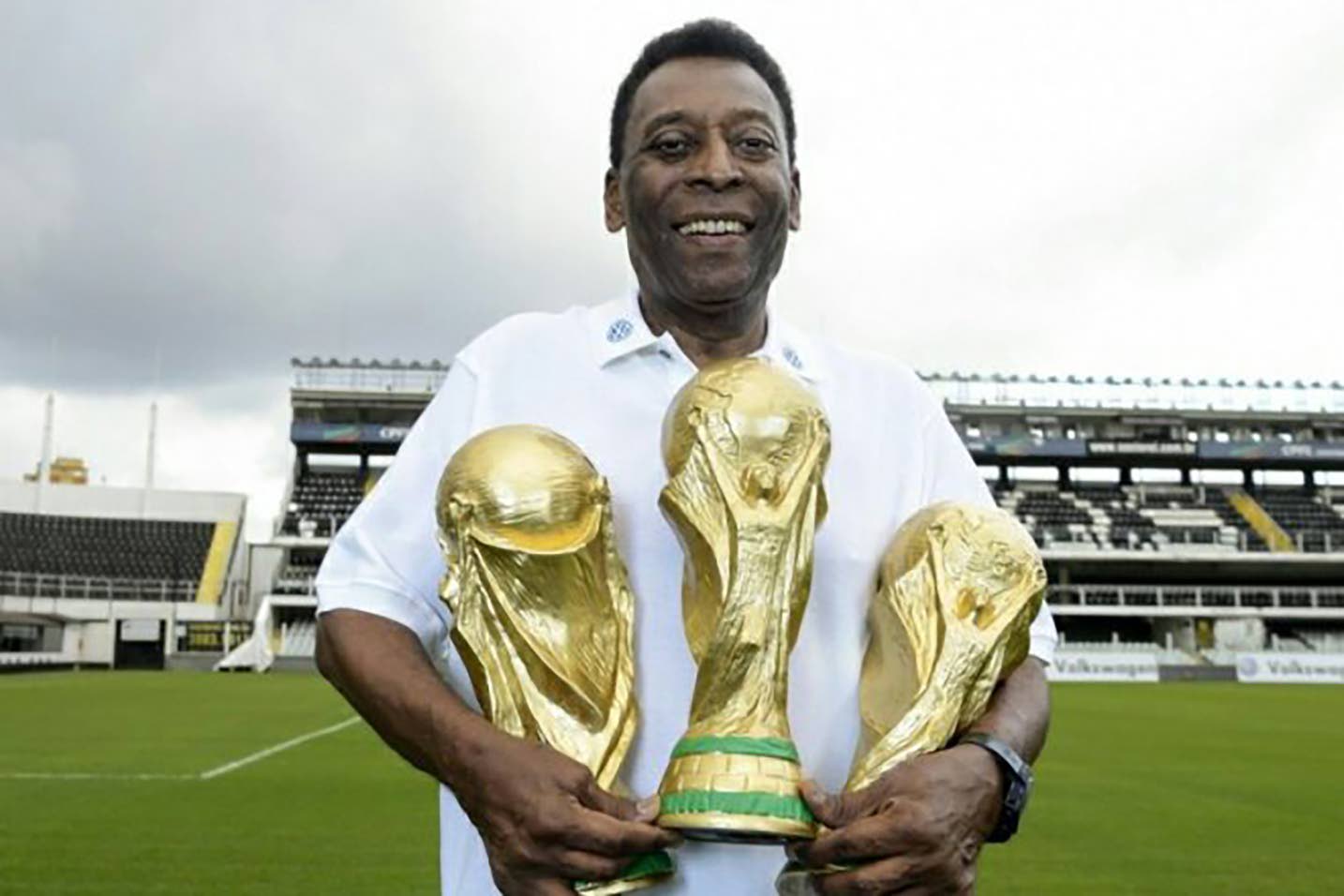
Pelé with the three World Cup trophies he helped Brazil to win in 1958, 1962, and 1970.
Fast-forward to 2002. Brazil’s performance at the FIFA World Cup in South Korea and Japan remains one of the greatest campaigns in football history. Under Coach Luiz Felipe Scolari, Brazil recovered from a difficult qualifying campaign to win a record fifth World Cup by winning every one of their seven matches.
The freedom with which Ronaldo, Ronaldinho, Rivaldo, Cafu, and Roberto Carlos played could only be described as poetry in motion. They glided effortlessly past defenders, scored almost at will, and dismantled some of the world’s best defences through breathtaking skill, movement, and understanding. Their football was beautiful, effective, and unmistakably Brazilian.
What stood out most during those glorious years was Brazil’s identity. The Samba style remained at the heart of everything they did. Their football was expressive, creative, fearless, and technically brilliant. It was a style that entertained millions and struck fear into opponents around the world.
When Brazil lifted the trophy in 2002, South America had won nine of the 17 FIFA World Cups contested since the tournament began in 1930. Even more remarkable was the fact that those nine titles had been shared by only three nations. Brazil had captured five, while Uruguay and Argentina had won two each.
This remarkable dominance by just three South American countries contrasted sharply with Europe. Between 1930 and 2002, 30 different European nations had participated in the FIFA World Cup finals, compared with only nine South American nations. Yet, despite Europe’s far greater representation, only five European nations had managed to win the tournament during that period. Italy and Germany had each won three titles, while England and France had won one apiece.
Those statistics reveal a fascinating contrast. South America achieved extraordinary success through the sustained excellence of only three footballing nations, while Europe relied on a much broader pool of competing countries to eventually match South America’s total of eight World Cup victories by 2002.
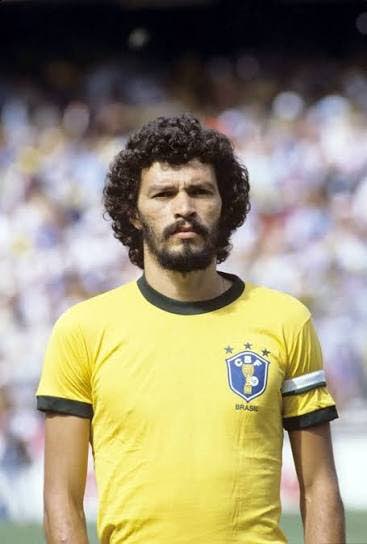
Sócrates
The question, then, is this: If Brazil’s Samba style had produced so much success and admiration, why did the country gradually abandon the very footballing philosophy that made it the envy of the world? This is the story of the Europeanisation of the Samba.
The transformation did not begin with a single defeat or a single coach. It was a gradual process that unfolded over more than two decades. By the time Brazil lifted its fifth World Cup in 2002, the seeds of change had already been planted. Ironically, while the world celebrated one of the greatest Brazilian teams ever assembled, Brazil was already beginning to move away from the very footballing philosophy that had made it famous.
The first major catalyst was the migration of Brazilian footballers to Europe. For decades, Brazil’s finest players developed and matured in domestic football. Legends, such as Pelé, Zico, Sócrates, Falcão, Rivellino, and Jairzinho, became established stars before making the move abroad, if they moved at all. They grew up immersed in the culture of Brazilian football in which creativity was encouraged, risk was rewarded, and individual expression was considered an essential part of the game.
By the late 1990s and early 2000s, that landscape had changed dramatically. European clubs had become financial powerhouses. Television revenue exploded following the creation of competitions such as the UEFA Champions League and the rapid commercialisation of football. Wealthy clubs in England, Spain, Italy, Germany, and France could now afford to recruit Brazil’s brightest talents before they had fully developed. Instead of spending six or seven years refining their craft in Brazil, many players were leaving as teenagers. Their football education increasingly took place in Europe rather than South America. That mattered.
European football emphasised structure over spontaneity, tactical discipline over improvisation, pressing over possession, and defensive organisation over artistic freedom. Players were expected to fit into carefully designed systems in which every movement had a purpose. Individual brilliance was welcomed, but only if it served the collective plan.
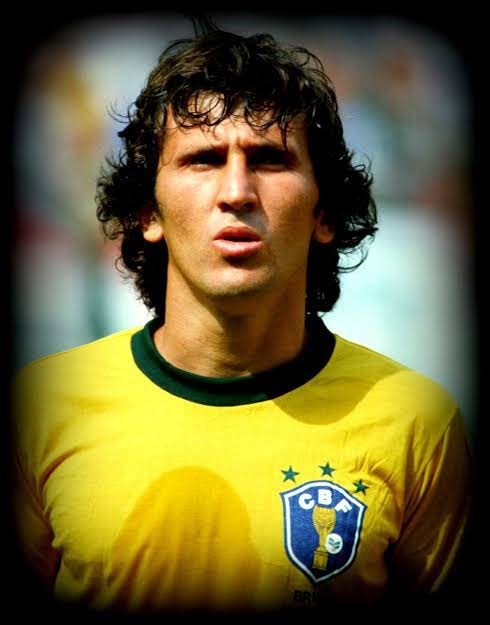
Zico
Slowly, but surely, Brazilian footballers began adapting to those demands. The joyful dribbler became the efficient winger. The adventurous full back became a tactically disciplined defender. The attacking midfielder became another cog in a structured pressing system. Little by little the traditional Samba rhythm became less visible.
Another major influence came from coaching philosophy. Brazilian coaches once built teams around gifted footballers, trusting their intelligence and creativity to solve problems during matches. Tactical preparation certainly existed, but it rarely restricted flair. European coaching took a different approach. Managers, such as Arrigo Sacchi, Fabio Capello, Carlo Ancelotti, José Mourinho, and later Pep Guardiola demonstrated that matches could often be won through superior organisation, coordinated pressing, positional discipline, and meticulous preparation. Their success reshaped football around the world. Brazil was not immune.
Coaches increasingly became concerned with maintaining defensive shape, controlling space and limiting mistakes. Training sessions became more tactical, more scientific, and more analytical. Fitness, video analysis, and sports science assumed greater importance.
None of these developments were inherently negative. In many respects, they made Brazilian players more complete professionals. Modern football demands extraordinary physical conditioning, tactical awareness, and versatility. Brazilian footballers became better prepared to compete in Europe’s elite leagues because they embraced those qualities.
Yet there was a price. The instinctive freedom that once defined Brazilian football gradually diminished. The football that had enchanted the world in 1970, inspired admiration in 1982, and triumphed in 2002 became increasingly difficult to recognise. The famous jogo bonito — the beautiful game — gave way to a more cautious and calculated style.
Young players were no longer judged solely by how many defenders they could beat or how creatively they could solve problems. They were judged by their tactical discipline, defensive contribution, pressing intensity, and positional awareness. Creativity became secondary to efficiency, and the consequences became increasingly evident on football’s biggest stage.
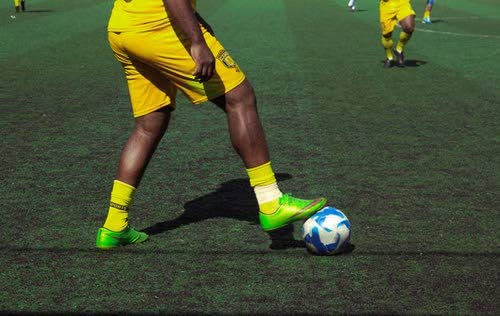
During Brazil’s glorious years, the Samba style remained at the heart of everything they did.
In 2006, Brazil arrived in Germany with perhaps the most gifted collection of attacking talent in world football. Ronaldo, Ronaldinho, Kaká, and Adriano formed what many believed would become an unstoppable quartet. Instead, the team looked disconnected, physically unprepared, and tactically uncertain. France comfortably eliminated them in the quarter-finals.
By 2010 and 2014, Brazil had become even more pragmatic. The emphasis shifted towards defensive stability and athleticism rather than technical expression. While the team remained competitive, it no longer played with the freedom that generations of supporters had come to expect.
Then came July 8, 2014. The 7–1 defeat to Germany in the World Cup semi-final was more than a football match. It became a symbol of identity lost.
Ironically, Germany defeated Brazil by playing a style of football that combined technical excellence with collective organisation — qualities that Brazil itself had once embodied. Many observers focused on the score line, but the deeper story was philosophical. Brazil had spent years attempting to imitate Europe, only to discover that Europe had mastered many of the creative principles that Brazil had once taught the world.
Hector Hall is a multimedia specialist at the Jamaica Library Service. He has extensive knowledge of sports, politics, current affairs, and a wide range of other subjects. His keen analytical skills and passion for research have enabled him to provide thoughtful insights on issues of national and international interest.
Hector Halll


