



Caribbean doing more evaluations but failing to use findings
The Caribbean is getting better at evaluating its programmes and policies, but experts say the region is still struggling with the more important task of using those findings to improve decision-making and outcomes.
Susan Branker Greene, vice-president of Caribbean Evaluators International, said governments and development organisations are spending thousands of dollars and significant man-hours collecting and analysing data, consulting stakeholders, and producing evaluation reports, only for the process, too often, to end there.
“We have become better at doing evaluations than using them,” Greene said during the inaugural Caribbean Evaluation Space, hosted by the Caribbean Development Bank last week.
She said the key issue is what happens between an evaluation producing recommendations and translating them into action. Even when an evaluation is completed and its recommendations are accepted or endorsed, there may be no clear ownership of what happens next, including who is responsible for implementation, what resources are required, and what the timeline should be.
“Completing an evaluation is an evaluation output. It’s the output of an evaluation. But using it is an institutional responsibility,” she said.
Camille Spencer, programme director for monitoring and evaluation at Trinidad and Tobago’s Ministry of Planning, Economic Affairs and Development, identified culture as one of the barriers to using evidence, pointing to a tendency among decision-makers to reject findings that conflict with their existing beliefs. She also highlighted a broader issue of trust, with locally produced evaluations and practitioners sometimes receiving less credibility than those from international agencies, even when they produce similar findings.
“Sometimes the evidence is telling you a story, but you refuse to believe it because that can’t be true,” she said.
Beyond questions of trust, Spencer pointed to limited capacity and fragmented data systems as other challenges facing governments across the region. Some government units, she noted, have only a small number of people responsible for multiple functions, while data collection can be inconsistent, outdated, or unreliable. She argued that these common challenges make greater regional cooperation necessary, allowing Caribbean countries to share evaluation findings, resources, and lessons rather than repeatedly tackling similar problems on their own.
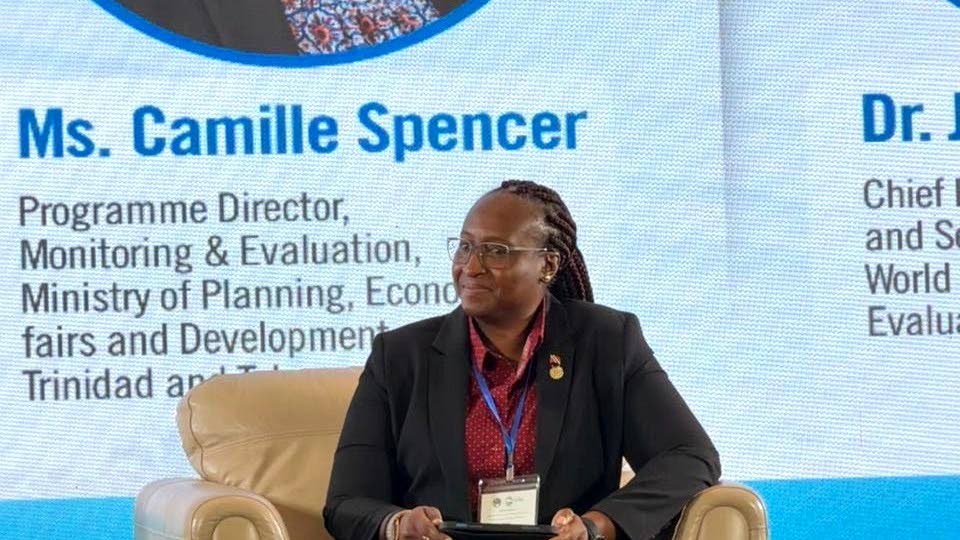
SPENCER…sometimes the evidence is telling you a story, but you refuse to believe it because that can’t be true.
“We can no longer afford to keep relearning the same lessons in isolation,” she said.
That cooperation, Spencer said, could help the region move from reacting to challenges to preparing for them, particularly amid natural disasters, scarce funding, and changing political realities.
“If we don’t do it now, then when?” Spencer asked.
But sharing evidence is only part of the challenge. Greene pointed to what she described as a behavioural barrier, with institutions often moving from one programme, project, or report to another without stopping to assess what worked, what didn’t work, why it didn’t work, and what should be done differently.
“If we don’t deliberately create that safe space to reflect, a report by itself will not create the learning,” Greene said.
Greene also placed responsibility on evaluators to ensure their findings are understood and usable, noting that a lengthy evaluation report has limited value if decision-makers cannot easily identify the key findings, understand their implications, or determine what needs to happen next. That could mean producing shorter evaluation briefs and presentations, engaging stakeholders in discussions about the findings, and ensuring recommendations provide a clear pathway from evidence to action. Ultimately, Greene argued, the value of an evaluation should be measured by what happens after the report is completed.
“If an evaluation produces credible findings, useful lessons, and actionable recommendations, but nothing changes as a result, can we really say that the evaluation has fulfilled its purpose?” Greene asked.


