



Rooting for resilience
Students cultivate a greener future through RE-LEAF initiative with Sandals Foundation
AS part of activities commemorating World Environment Day on June 5, almost 30 students from New Hope Primary and Kings Primary School joined farmers, Forestry Department representatives, environmental wardens, and the Sandals Foundation to plant fruit trees in Whitehouse, Westmoreland.
The activity formed part of the foundation’s support of Jamaica’s Reforestation, Ecological Enhancement and Landscape Framework (RE-LEAF) initiative.
As part of its commitment, the philanthropic organisation has distributed 360 fruit trees to schools and farmers to aid landscape restoration and food security efforts.
A variety of food trees including breadfruit, ackee, jackfruit, mango, avocado, soursop, and Otaheite apple were distributed to Culloden Early Childhood Institution, Whitehouse Basic School, New Hope Primary School, Kings Primary School, Petersville Primary School, and Petersville Early Childhood Institution — as well as to members of the Westmoreland Organic Farmers Association — to increase access to locally grown produce.
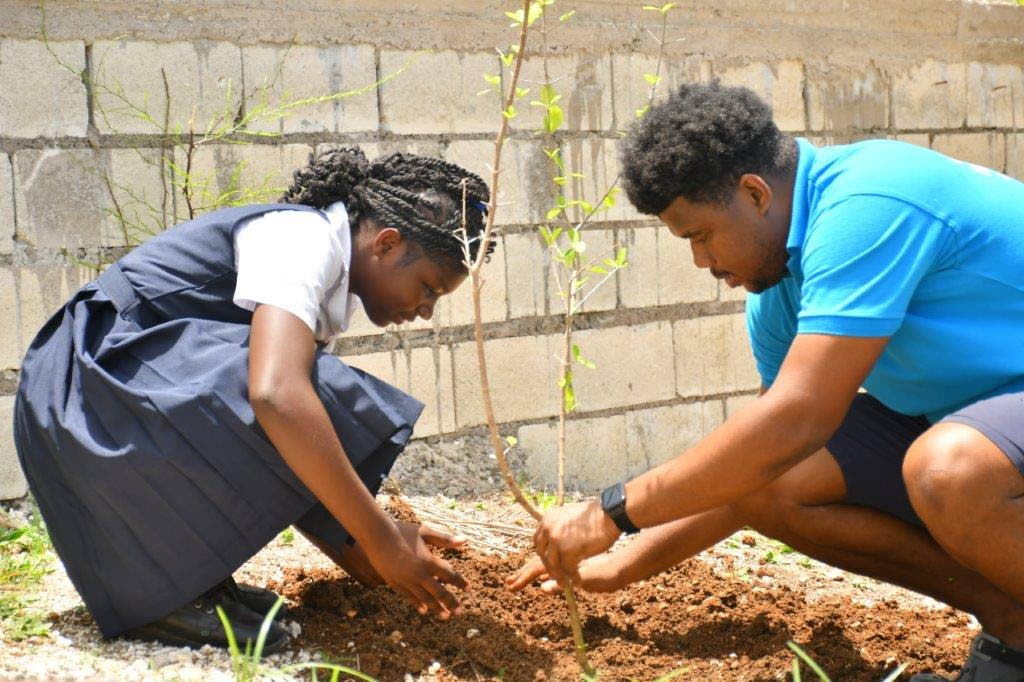
Jada Myers (left) of New Hope Primary School and Sanctuary Warden Diego Salmon work together to plant a fruit tree during the RE-LEAF initiative in Whitehouse, Westmoreland. The activity connected students with conservation leaders to promote environmental stewardship and sustainable practices.
Heidi Clarke, executive director of the Sandals Foundation, said the organisation’s choice of trees was a deliberate effort to build the resilience of the communities.
“We chose fruit trees because in addition to helping to restore green space sand biodiversity — they sustain a community’s food security,” said Clarke.
Recently, Whitehouse farmers joined students of Kings and New Hope primary schools, Forestry Department representatives, and Sandals Foundation environmental wardens to plant 20 trees — demonstrating a community approach to their landscape restoration efforts.
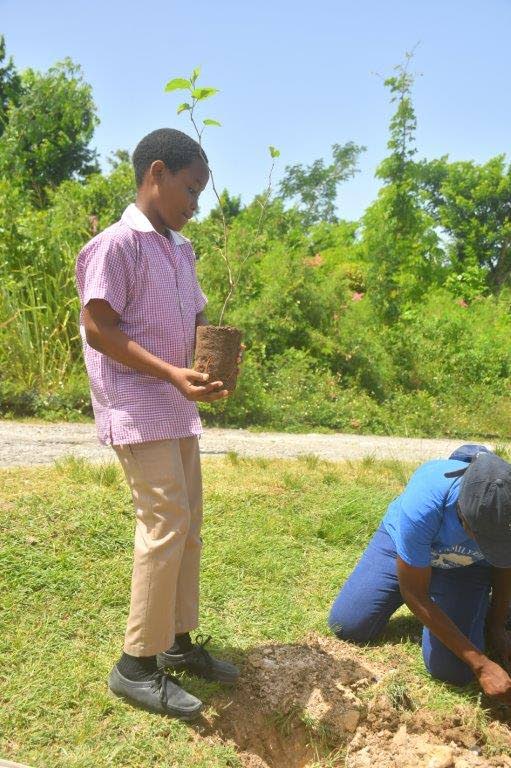
Elijah Bowman of Kings Primary School prepares a fruit tree seedling for planting during the RE-LEAF initiative in Whitehouse, Westmoreland.
“Reforestation is about much more than planting trees,” said Georgia Scarlett, environmental manager at the Sandals Foundation.
“It is also about ensuring future generations understand their role in protecting the natural resources that sustain our communities. By placing fruit trees in schools and farming communities we are creating opportunities for learning, nourishment, and long-term environmental stewardship,” added Scarlett.
For Caribbean communities facing growing pressure on food systems, green spaces, and natural resources, the project offers a practical model for local action.
By placing fruit trees in schools and farming communities, the initiative gives residents more than seedlings. It gives them a direct role in producing food, restoring shade, and protecting the environment their children will inherit.


